Table of Contents
Table of Contents
Alfalfa Forage
All Available Resources On This Topic
Standlee has created and actively maintains a wealth of resources about alfalfa forage. Be sure to find all these resources on this page or simply click the button below to see them.
VIEW ALL RESOURCESAlfalfa is a versatile forage that can support a wide range of feeding goals, but it isn’t the right choice for every animal. Understanding its nutritional profile, benefits, and best uses for different species can help you determine whether it belongs in your horse or livestock feed program.
Alfalfa at a Glance
- A perennial legume
- Crude protein can be 15 to 25%, depending on maturity at harvest
- Calcium value is high, often several times more than grass hays
- Lower in nonstructural carbohydrates (NSC) and higher in digestible energy than cool-season grasses
- Best suited for growing, lactating, and performance animals and hard keepers
- Available hay formats include compressed bales, chopped, cubes, and pellets
What Is Alfalfa?
Alfalfa (Medicago sativa) is a popular legume forage commonly fed to horses, livestock, and small companion animals that is rich in nutrients including protein, calories, and vitamins and minerals such as vitamin A and calcium. It has been cultivated for thousands of years and is now grown on nearly every continent. In many other parts of the world outside the United States, alfalfa is known as lucerne.
As a legume, alfalfa is typically higher in protein and calcium than timothy grass, orchardgrass, or teff grass.
How Is Alfalfa Grown?
Alfalfa requires deep, well-drained, loamy soil with a neutral pH of 6.5 to 7.0. A mature plant develops a taproot that extends several feet into the soil, providing strong drought tolerance and enabling multiple harvests within a single growing season.
That same root system hosts rhizobia bacteria that pull nitrogen from the air and fix it in the soil, building fertility for future crops.
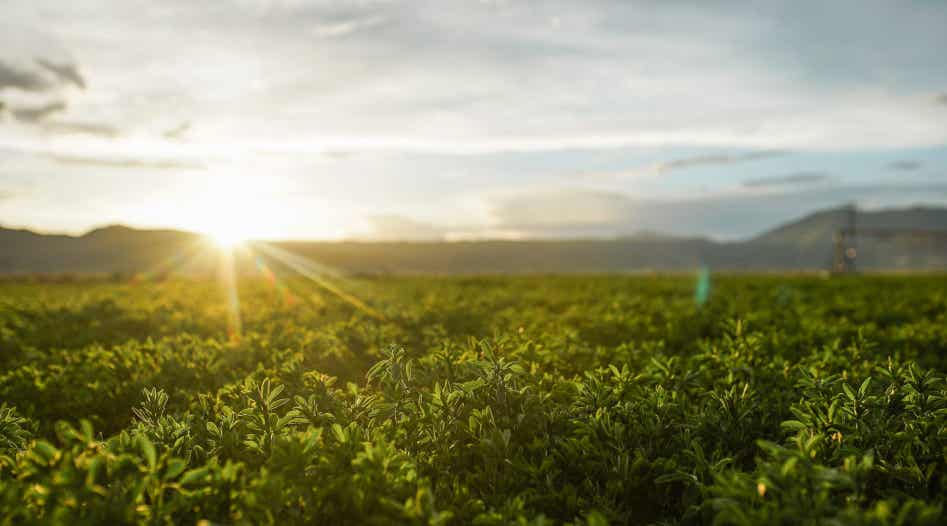
Standlee grows its alfalfa in southern Idaho's high desert, where volcanic soil, controlled irrigation, and a dry climate combine to produce a consistently leafy, nutrient-dense plant. These fields are frequently rotated into no-till timothy production, allowing the nitrogen alfalfa leaves behind to nourish the next crop.
Nutritional Profile of Alfalfa
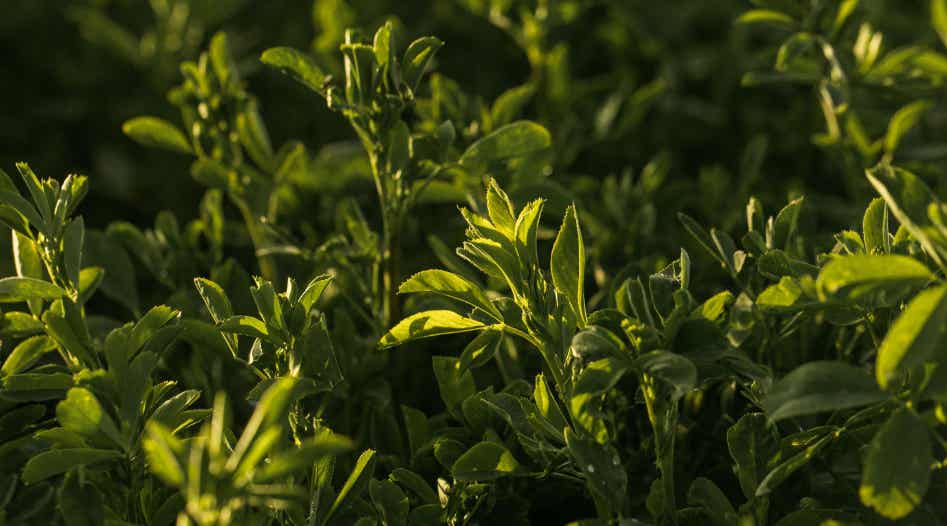
Alfalfa is one of the most nutrient dense options available. Compared with many cool-season grass forages, it generally contains more crude protein, digestible energy, and calcium while remaining lower in nonstructural carbohydrates.
- Protein: 15 to 25%, highest in earlier cuttings taken before the plant flowers
- Fiber: Lower than in grass forages, later cuttings have more stem and fiber than earlier ones
- Calcium: Notably high, often several times higher than grass hays
- Phosphorus: Comparatively moderate
- Energy: Higher digestible energy than grass forages, making it an efficient calorie source
- Potassium: Higher than cool-season grass hays
The table below shows the guaranteed minimum amount of crude protein and fat, along with the maximum crude fiber values for Standlee alfalfa products. While guaranteed analysis values provide a useful comparison between products, they represent only a portion of Standlee alfalfa’s overall nutritional profile. For a deeper look at how these numbers translate into real feeding benefits, see Standlee's nutritional breakdown of alfalfa for horses.
| Nutrient | Amount |
|---|---|
| Crude Protein | Min 16% |
| Crude Fat | Min 1.5% |
| Crude Fiber | Max 30% |
Alfalfa Uses by Species
Since alfalfa is naturally higher in protein, digestible energy, and calcium than many grass hays, it is often fed during life stages or production periods when nutrient requirements are greatest for many different species.
Horses
For horses, alfalfa is commonly used to increase the nutrient density of the forage portion of the diet. The higher digestible energy and quality protein helps support growing horses, performance horses, broodmares during late gestation and lactation, and underweight horses. Additionally, thinner horses more prone to or diagnosed with insulin dysregulation, laminitis, or other metabolic conditions will benefit from the lower nonstructural carbohydrates in alfalfa.
Because alfalfa is naturally higher in calcium with moderate phosphorus, diets containing large amounts of alfalfa should be balanced to maintain an appropriate calcium-to-phosphorus ratio, particularly for growing horses to minimize the risk of developmental orthopedic disease (DOD). Additionally, alfalfa should be avoided for horses diagnosed with hyperkalemic periodic paralysis (HYPP) due to its high potassium value.
Cattle, Sheep, and Goats
Alfalfa is frequently incorporated into feeding programs for beef cattle, dairy cattle, sheep, and goats for its high protein concentration and digestible energy. It is particularly suited for growing animals, lactating females, and other ruminant species with increased energy and protein requirements.
Feeding alfalfa, alongside other forage sources that provide additional effective fiber, to cattle, sheep, and goats helps mitigate risks associated with its rapid digestion in the rumen. This combination helps support normal rumen function while supplying the nutrients needed for efficient growth and milk production.
Fresh alfalfa pasture may increase the risk of frothy bloat, so gradual adaptation and appropriate grazing management are important.
Rabbits
Alfalfa is generally reserved for young, growing rabbits because the higher protein and calcium concentrations support skeletal development and growth. Mature rabbits do better on lower-calcium grass hay because they process calcium very efficiently.
Benefits for Livestock
Alfalfa offers several practical advantages over grass forage alone.
- Higher nutrient density: Alfalfa's protein content and quality surpass those of common grass forages, supporting growth, lactation, and performance.
- Supports Forage Foundation feeding: Because alfalfa provides more digestible energy than many grass hays, it can help meet increased calorie needs while maintaining forage as the foundation of the diet.
- Supports gastric health: In horses, alfalfa hay has been shown to raise gastric pH and reduce the severity of squamous ulceration compared with a straight grass hay diet, which is why it is often included in a feed program for managing gastric ulcers.
- Highly palatable: Alfalfa's taste and texture make it one of the most readily accepted forages across species, supporting consistent intake.
How Is Alfalfa Fed?
Alfalfa is fed as long-stem baled hay or processed into chopped, cubed, or pelleted forms, often combined with grass forage for animal diets needing a more moderate nutrient profile while still supplying additional protein and calories. For a broader look at building a full feeding program around forage for horses, see Standlee's complete guide to feeding a horse.
When feeding alternative formats, soaking alfalfa cubes and pellets increases water intake for horses and other livestock. This can be especially helpful for animals with poor dentition, senior horses, and those that bolt their feed.
Regardless of format, any new forage should be introduced gradually over 10-14 days rather than replacing the current forage all at once. Abrupt dietary changes are a well-established trigger for digestive upset across species.
How Much Alfalfa Should You Feed?
The amount of alfalfa depends on each individual animal’s body weight, life stage, activity level and if there are any other special health conditions to consider. Horses and other livestock with higher caloric needs will benefit from more alfalfa in the diet.
If adding alfalfa cubes or pellets to the diet, remember that a pound of forage is a pound of forage regardless of form, so a pound of long-stem baled hay is equal to a pound of hay pellets or hay cubes.
Use the Standlee Feed Calculator to estimate a starting ration and consult a veterinarian or a qualified equine or livestock nutritionist before making significant changes to the diet.
Alfalfa Formats
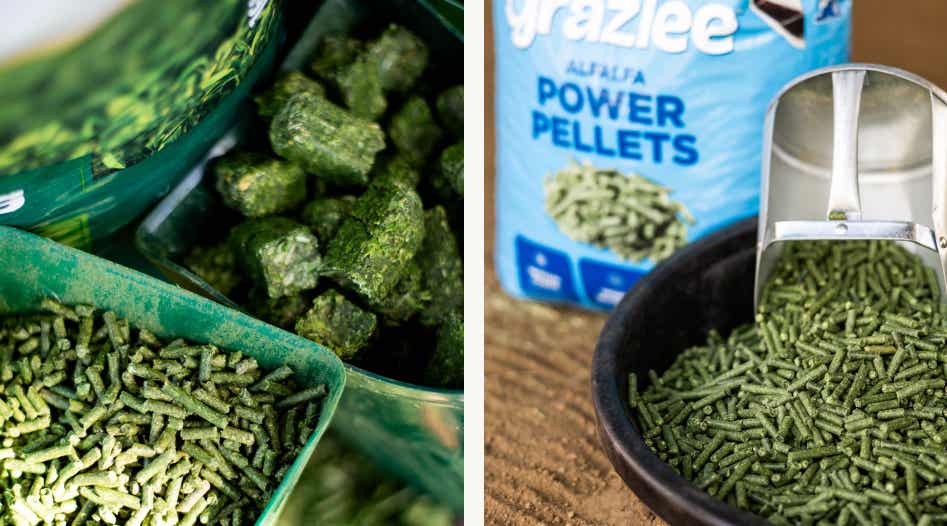
Alfalfa is available in several formats, each suited to different feeding goals, storage capabilities, and preferences. For a complete guide to different forage formats, read the Forage Forms Guide.
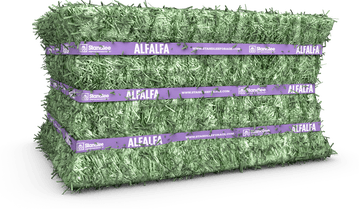
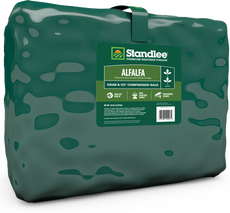
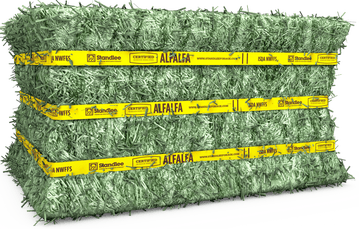
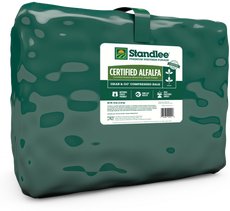
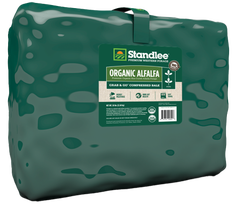
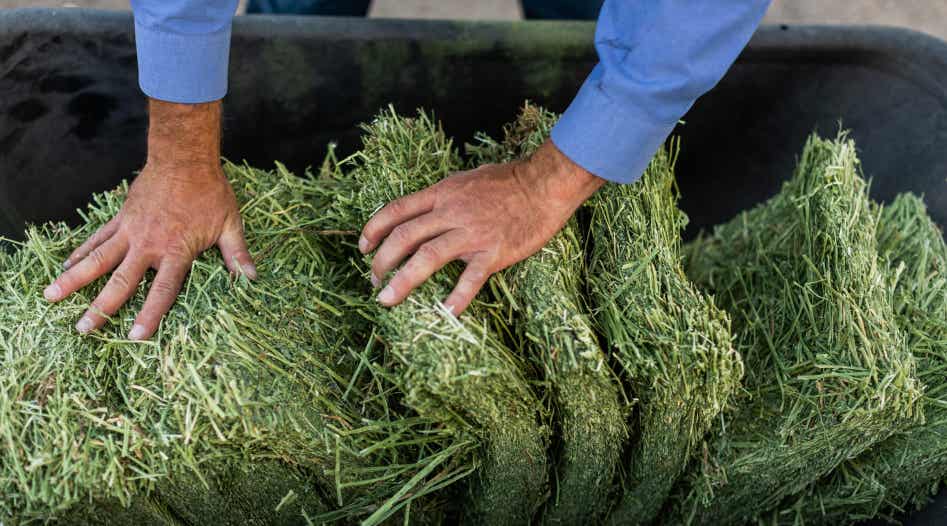
- Compressed bales: Full-size, long-stem hay compressed for easier handling and storage. See feeding tips for compressed bales.
- Hand-selected hay: Loose, long-stem hay, hand-selected for quality and suited to feeding small animals.
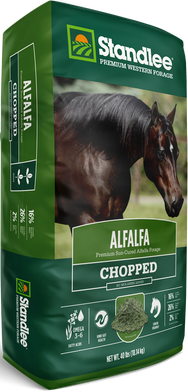
- Chopped forage: Hay cut into shorter lengths for animals with dental limitations or for easier mixing into rations. See our chopped-forage guide for horses.
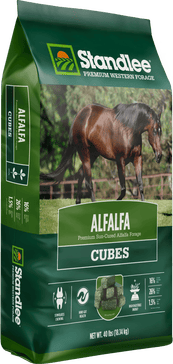
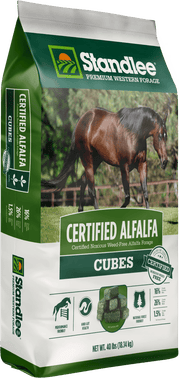
- Cubes: Coarsely ground and compressed into a denser, more measurable form. Read about the benefits of feeding cubes in our guide to hay cubes for horses.
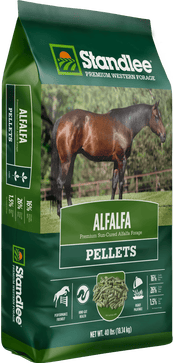
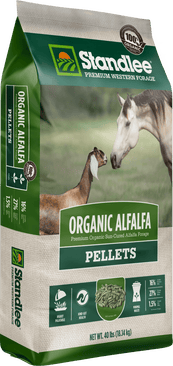
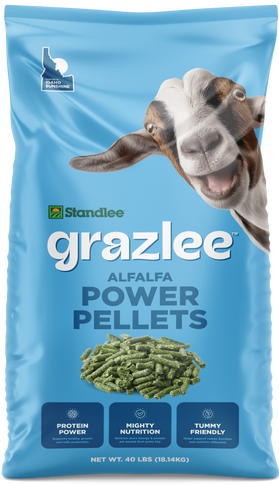
- Pellets: Finely ground and pelleted for consistent, easy-to-portion feeding with minimal waste. Learn more in the scoop on forage pellets and why feed forage pellets or cubes.
Frequently Asked Questions
Does alfalfa cause excess energy or "hot" behavior?
Not inherently. Alfalfa provides more calories than grass hay, and diets that are too high in calories can lead to excess energy. Alfalfa itself does not cause “hot” behavior when fed in appropriate amounts for a particular animal’s requirements.
Can all species eat alfalfa safely?
Most can, but the appropriate amount varies by species and life stage. Overweight horses and horses with HYPP should avoid alfalfa. Mature rabbits and some adult male small ruminants are commonly fed low-calcium grass forage instead of alfalfa to avoid excess calcium intake.
Are alfalfa pellets nutritionally the same as alfalfa hay?
Largely yes. Standlee's nutritional values remain consistent across bale, cube, and pellet forms of the same forage type, though processing can slightly alter digestibility and feeding behavior compared with long-stem hay.
Key Takeaways
- Alfalfa is a legume, not a grass, and has higher protein, calcium, and energy than many common grass forages.
- The nutrient content of alfalfa changes with maturity at harvest; earlier cuttings are leafier and higher in protein.
- Nearly every class of livestock can eat alfalfa, but the appropriate amount varies by species and life stage.
- Alfalfa's buffering properties make it a useful tool for supporting digestive health and reducing acidity during digestion in several species.
- Match alfalfa intake to the animal’s nutrient requirements rather than assuming more alfalfa is always better.
References
- Zhang Y & Wang L. Advances in basic biology of alfalfa (Medicago sativa L.): a comprehensive overview. Horticulture Research. 2025.
- Hoppes SM & Hess L. Calcium metabolism in rabbits. Veterinary Clinics of North America: Exotic Animal Practice. 2020.
- Nadeau JA et al. Evaluation of diet as a cause of gastric ulcers in horses. American Journal of Veterinary Research. 2000.
- Miao X et al. Short-Term Effects of Alfalfa Silage Versus Hay, with or Without Hydrolysable Tannins, on Production Performance, Rumen Fermentation, and Nutrient Digestibility in Mid-Lactation Dairy Cows. Microorganisms. 2025.