Table of Contents
Table of Contents
Mixed Forages
All Available Resources On This Topic
Standlee has created and actively maintains a wealth of resources about mixed forages. Be sure to find all these resources on this page or simply click the button below to see them.
VIEW ALL RESOURCESChoosing the right variety of mixed forages means balancing protein, fiber, digestible energy, and other nutrients to meet your animals’ individual needs. Mixed forages offer a practical middle ground between straight alfalfa and grass hays, making them a popular choice for many horse and other livestock owners.
Learn what mixed forages are, how they’re made, how they compare nutritionally, their benefits for different species and how to determine whether a mixed forage is the right fit for your animal’s feeding program.
Mixed Forages at a Glance
- Combines a legume (typically alfalfa) with one or more grass forages
- Provides moderate protein and calories compared with straight alfalfa
- Common blends include alfalfa/timothy grass, alfalfa/orchardgrass, alfalfa/oat grass
- Suitable for many horses, cattle, sheep, goats and other species
- Available hay formats include compressed bales, chopped, cubes, and pellets
What Are Mixed Forages?
Mixed forages combine legumes, commonly alfalfa, with grass forages into a single product that provides the nutritional benefits of both. They provide moderate protein, digestible fiber, and energy, making them a versatile option for many horses and other livestock.
Standlee blends alfalfa with timothy, orchardgrass, or oat grass to create products with nutrient levels that fall between a straight legume and a straight grass. While grasses are an excellent source of digestible fiber, legumes generally provide higher levels of protein, digestible energy, and calcium, providing a more balanced forage product when combined together.
How Are Mixed Forages Made?
Although alfalfa and grass are often grown together in mixed stands (meaning together in the same field), Standlee grows each variety separately until they reach the ideal maturity, then blends them during processing. This allows tighter control over the ratio and quality of each ingredient than a single co-grown field would.
Nutritional Profile of Mixed Forages
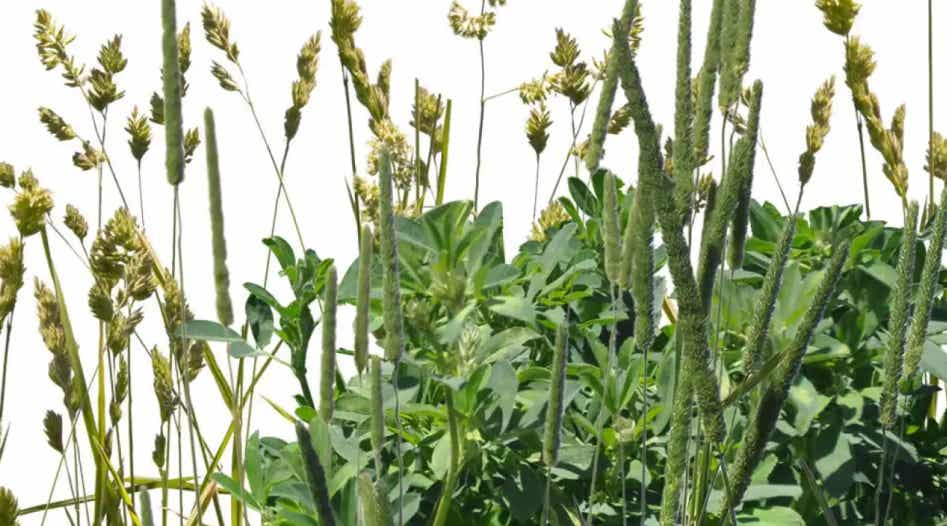
The exact nutrient profile of mixed forages depends on both the plant species and the proportion of legume to grass. The table below shows the guaranteed minimum amount of crude protein and fat, along with the maximum amount of crude fiber for Standlee mixed forages, followed by more in-depth information about the characteristics of each mixed forage type.
| Nutrient | Amount |
|---|---|
| Crude Protein | Min 12% |
| Crude Fat | Min 1.5% |
| Crude Fiber | Max 32% |
Alfalfa/Timothy
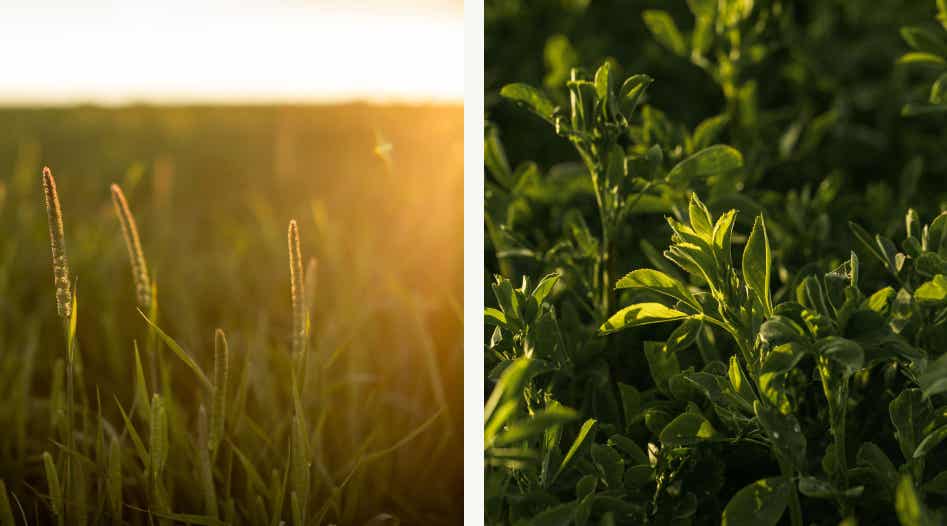
- Crude protein: Moderate, lower than straight alfalfa and higher than straight timothy
- Crude fiber: Moderate to high
- Notable traits: Balances alfalfa's calories and protein with timothy's lower-calorie profile
For more on this specific blend, see Standlee's guide to feeding alfalfa timothy hay to horses.
Alfalfa/Orchard Grass
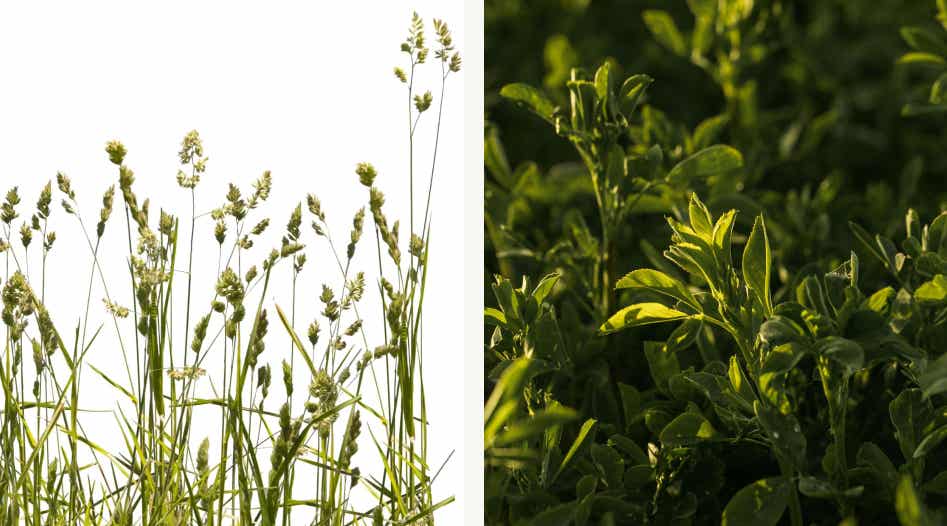
- Crude protein: Moderate to moderately high
- Crude fiber: Moderate
- Notable traits: Captures more of the orchardgrass's higher fiber digestibility than an alfalfa/timothy blend
Learn more about how orchard grass compares to timothy in Standlee's nutritional breakdown of these two grasses.
Alfalfa/Oat Grass
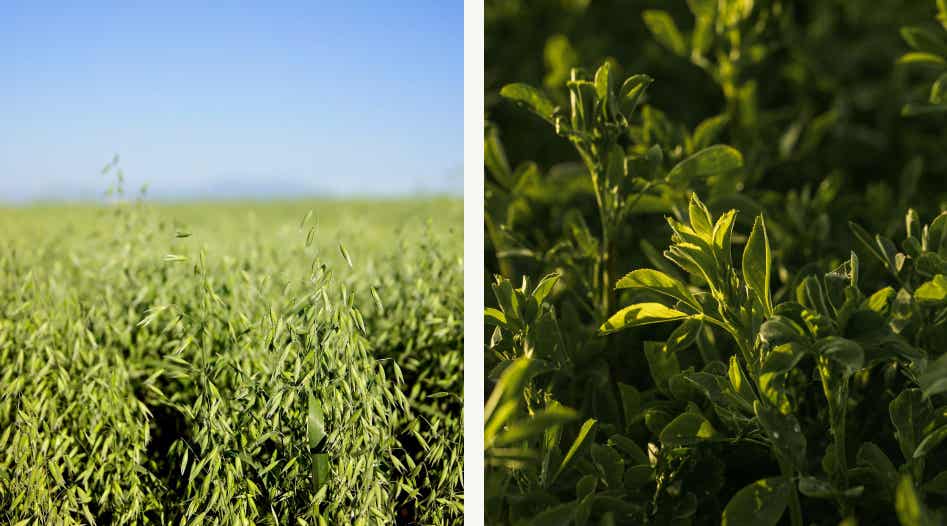
- Crude protein: Moderate
- Crude fiber: High, with low nonstructural carbohydrates
- Notable traits: Oat grass contributes additional amino acids, including lysine, while keeping sugar and starch low
Learn more about the benefits of feeding oat grass hay to horses.
Mixed Forage Uses by Species
Mixed forages are commonly fed to horses, cattle, sheep, and goats because they provide moderate protein and energy without the higher nutrient density of straight alfalfa.
Horses
Feeding mixed forages gives horse owners a way to add some of alfalfa's calories and protein to a ration without feeding a full legume diet. Mixed forages are ideal for those needing a moderate calorie boost including underweight horses, growing horses, performance horses, and late pregnancy or lactating mares.
Cattle, Sheep, and Goats
Alfalfa in mixed forage products provides added protein and digestible energy for ruminants, while the grass component improves fiber digestibility, supporting rumen function from a single forage source. As with straight alfalfa or grass, the ideal blend and ratio depend on the animal's species, life stage, and workload.
Benefits for Livestock
- Balanced nutrition: Blending captures more of alfalfa's protein and calorie density without the full calcium and energy load of a pure legume diet.
- Improved fiber digestibility: Grass fiber is generally more digestible than alfalfa fiber at comparable maturities, so blending the varieties can improve overall fiber digestibility as compared with straight alfalfa.
- Nutritional flexibility: Mixed forages offer a middle ground between straight grass and straight alfalfa, allowing others to better match forage to an animal’s nutrient requirements.
- Lower calcium concentration: Compared with straight alfalfa, blending with grass dilutes the legume's calcium content, which can be beneficial for animals or life stages where lower calcium intake is preferred.
How Are Mixed Forages Fed to Horses and Other Livestock?
Mixed forages are fed as compressed bales, chopped forage, cubes, or pellets, depending on the blend. As with any forage, introduce it gradually over seven to fourteen days rather than switching it in all at once.
Mixed forages also simplify feeding by providing the nutritional benefits of both alfalfa and grass in a single forage product, eliminating the need to purchase and feed separate hay types.
How Much Should You Feed?
Most horses should be fed 1.5-2.5% of their body weight in forage each day, though the ideal amount varies by species, body condition, workload and life stage. For a complete breakdown of feeding recommendations by species, see Standlee's feeding chart.
Use the Standlee Feed Calculator to estimate a starting ration and consult a veterinarian or animal nutritionist before making significant diet changes.
Mixed Forage Formats
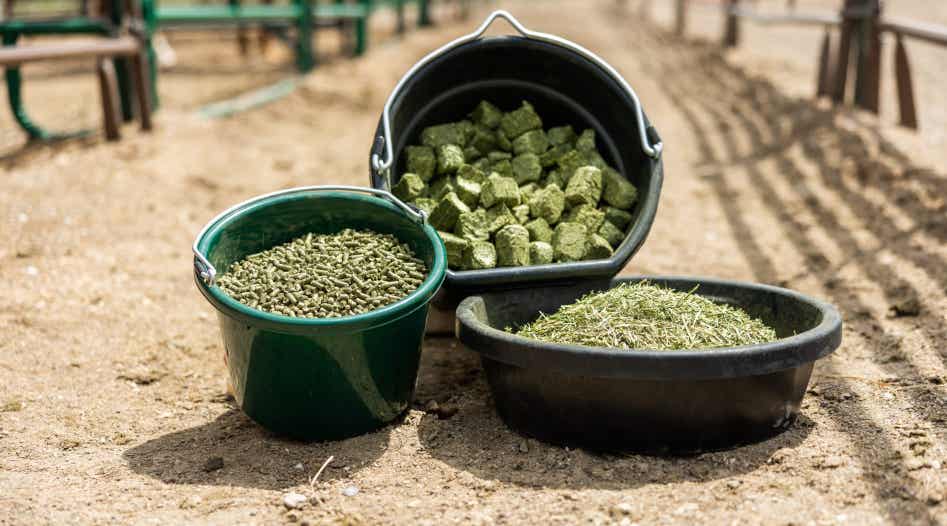
Mixed forages are available in a variety of formats. Availability varies by blend. For a complete guide to forage formats, read the Forage Forms Guide.
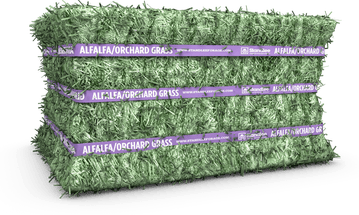
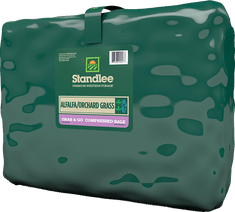
- Compressed bales: Available for Alfalfa/Orchard Grass. See tips for feeding compressed bales.
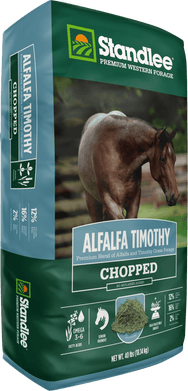
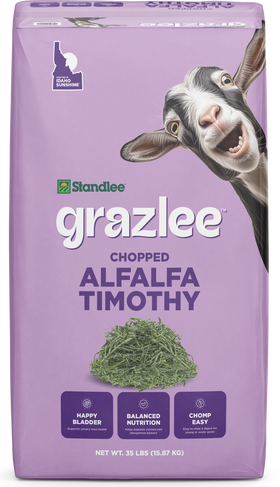
- Chopped forage: Available for Alfalfa/Timothy. See our chopped forage guide.
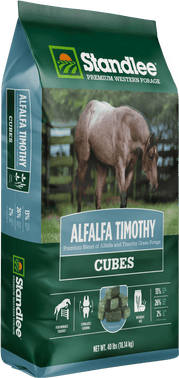
- Cubes: Available for Alfalfa/Timothy. Compare formats in forage cubes and pellets vs. dehydrated hay.
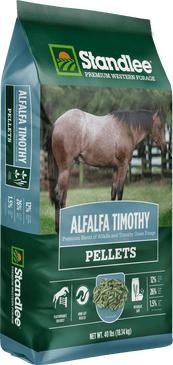
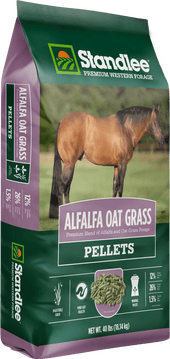
- Pellets: Available for Alfalfa/Timothy and Alfalfa/Oat Grass. Learn more in the scoop on forage pellets and why feed forage pellets or cubes.
Frequently Asked Questions
What is the difference between alfalfa/timothy and alfalfa/orchard grass mixed forages?
Orchard grass tends to have higher protein and calorie content than timothy, so an alfalfa/orchard blend generally has slightly higher protein and energy than an alfalfa/timothy blend at a similar ratio.
How much alfalfa is in a typical mixed forage blend?
Standlee Alfalfa/Timothy Grass Cubes are made up of approximately 60% alfalfa and 40% timothy grass forages.
Can mixed forages replace a full ration of either alfalfa or grass hay?
For many animals, yes. Mixed forages are formulated to work as a primary forage rather than a transitional product, though some animals with higher nutrient needs may still require additional alfalfa.
Are mixed forages better than straight alfalfa or straight grass?
The extended nutritional profile of feeding more than one forage type can be beneficial for the gut health of horses and other livestock. The best option ultimately depends on the species, life stage, body condition, and nutrient requirements.
Key Takeaways
- Mixed forages provide a nutritional balance between straight alfalfa and straight grass.
- Different grass species create different nutritional profiles, so no single blend is best for every animal.
- Consider the species being fed, life stage, body condition, and workload when selecting a mixed forage.
- Compare guaranteed analyses to choose the forage that best meets the feeding goals for your animal.
References
- McDonald I et al. Effects of alfalfa and alfalfa-grass mixtures with nitrogen fertilization on dry matter yield and forage nutritive value. Journal of Animal Science and Technology. 2021.
- Bélanger G, et al. Benefits of mixing timothy with alfalfa for forage yield, nutritive value, and weed suppression in northern environments. Canadian Journal of Plant Science. 2014.
- Xue Z, et al. Combining Orchardgrass and Alfalfa: Effects of Forage Ratios on In Vitro Rumen Degradation and Fermentation Characteristics of Silage Compared with Hay. Animals. 2020.