How to Feed a Horse: The Complete Guide to Forage, Grazing, and Equine Nutrition Management
Learning how to feed a horse properly begins with understanding one simple, but essential, principle: horses are biologically designed to eat forage. Long before modern feeding practices, grain concentrates, and managed barns existed, horses survived as grazing animals that consumed fibrous plants continuously throughout the day. Their digestive system evolved around this pattern of steady forage intake, and even today, forage remains the most important component of the diet and should be the foundation it is built upon.
Starting with a Forage Foundation™ means that every feeding program identifies consistent, high-quality forage to serve as the starting point and primary component of the diet. Whether a horse is a high-performance athlete, a growing horse, a pasture companion, or a senior horse, adequate forage supports digestive health, supplies essential nutrients, serves as a major source of energy, and is a key contributor to overall wellbeing.
Many horse owners focus heavily on grain or supplements when trying to improve condition or performance, but addressing forage first is more impactful because it serves as the nutritional base of the diet. Understanding forage species, forage quality, forage forms, grazing behavior, and feeding management is a critical piece of responsible horse care.
Key Takeaways
- Forage should remain the foundation of every horse’s feeding program.
- Most horses require 1.5–2.5% of their body weight in forage daily.
- Different forage species and forms support different feeding goals and management styles.
- High-quality forage supports digestion, natural grazing behavior, and overall wellbeing.
- Pellets, cubes, chopped forage, pasture, and hay can all contribute to meeting a horse’s daily forage requirement.
- Slow feeding and consistent forage access help mimic natural grazing patterns and support digestive health.
Understanding the Horse’s Digestive System
One of the most important parts of learning how to feed a horse is understanding how the equine digestive system functions. Horses are hindgut fermenters, meaning they rely heavily on microbial fermentation in the cecum and large intestine to digest fiber and extract energy and nutrients from forage.
Unlike humans and many other animals, horses have a relatively small stomach designed for continuous intake rather than large meals. In a natural environment, horses spend much of their day grazing small amounts of forage almost constantly. This steady intake supports a healthy hindgut microbial population, proper gut function, and overall digestive health.
Because horses naturally evolved to consume forage throughout the day, long periods without forage access can negatively impact digestive health and behavior. Inconsistent forage intake may contribute to gastric discomfort, stress, boredom, and the development of stereotypic behaviors such as cribbing or weaving.
This is why forage is not simply filler in the diet. It is essential to the horse’s physical and behavioral wellbeing.
How Much Forage Should a Horse Eat?
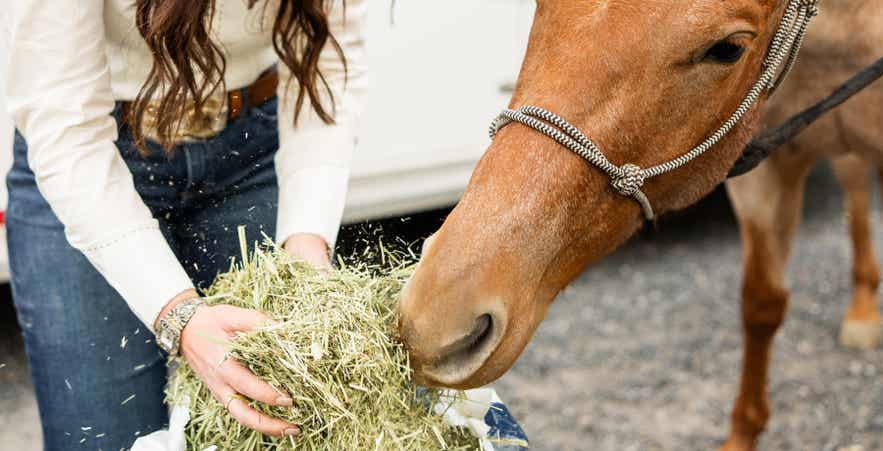
Most horses should consume approximately 1.5% to 2.5% of their body weight in forage daily. A 1,000-pound horse generally requires around 15 to 25 pounds of forage each day depending on age, metabolism, activity level, and body condition goals.
Even horses on weight management programs still require adequate forage intake. Severely restricting forage can disrupt digestive health and increase stress. Instead, proper horse forage management focuses on selecting appropriate forage types and using feeding methods that support slower, more natural consumption patterns.
Performance horses, growing horses, broodmares, and horses needing additional calories may require more nutrient-dense forage options. Horses that are overweight or sensitive to sugar and starch may benefit from forages with lower calorie or non-structural carbohydrate levels.
No matter the horse’s individual needs, the Forage Foundation™ remains central to creating a balanced feeding program.

Join Our Email List Today!
Be the first to get the latest news, promotions, updates and more from Standlee when you join our email list!
By signing up for email, you are agreeing to receive news, offers, and information from Standlee Premium Products, LLC®. You can also visit our Privacy Policy. Easy unsubscribe links are provided in every email.
Understanding Different Forage Species
Horse owners today have access to many different forage varieties, and understanding these options is an important part of knowing how to feed a horse correctly.
Forages generally fall into two categories: legumes and grasses. Legume forages primarily include alfalfa and clover, while grass forages include timothy grass, orchard grass, bermudagrass, ryegrass, teff grass, bluegrass, fescue, and many others.
One of the most common misconceptions in equine nutrition is that certain forage species are automatically harmful or inappropriate for horses. In reality, horses can successfully consume many forage types when they are properly harvested, stored, and introduced gradually.
Alfalfa is one of the most misunderstood forage options. Many horse owners assume alfalfa is excessively high in sugar or too rich for horses, but alfalfa is often lower in sugar and starch than many cool-season grass hays. Because legumes store energy differently than grasses, alfalfa can actually be an excellent forage choice for many horses, particularly those needing additional calories, protein, or support maintaining body condition.
Grass forages are commonly selected for horses requiring more controlled calorie intake or lower-energy diets. However, simply labeling a forage as “grass hay” does not automatically mean it is low in sugar or appropriate for every horse.
The nutritional value of forage is influenced by far more than species alone.
Why Forage Quality Matters
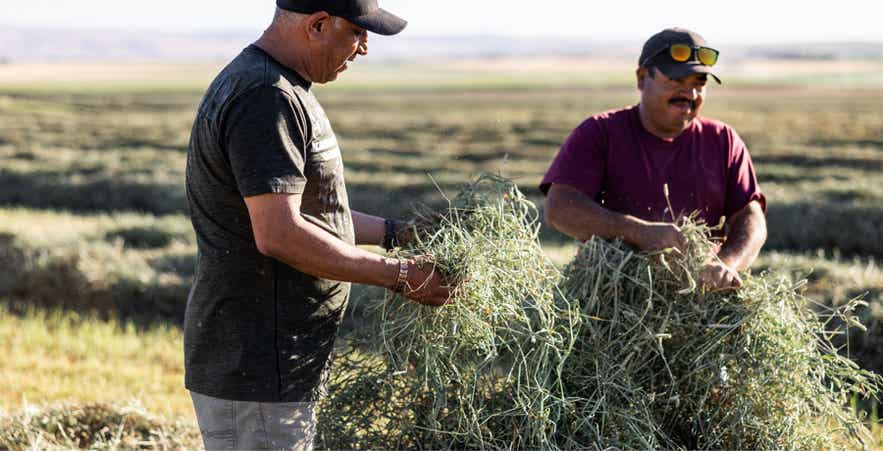
When determining how to feed a horse properly, understanding forage quality should always be a priority. High-quality forage should be clean, consistent, free of mold and excessive dust, and harvested under proper conditions.
Poor-quality forage can negatively impact intake, nutrient availability, respiratory health, and digestive function. Horses consuming dusty or moldy forage may experience respiratory irritation, while lower-quality forage often lacks the digestible fiber and essential nutrients needed to maintain body condition and performance.
For Standlee, forage quality begins in the field. Idaho’s dry climate allows forage to cure quickly and efficiently, helping preserve nutrients while reducing prolonged exposure to damaging moisture and sunlight. This process helps create the consistency horse owners rely on throughout the year.
Consistency is one of the most important aspects of the Forage Foundation™, because horses thrive on predictable nutrition and routine feeding programs.
Understanding Different Forage Forms
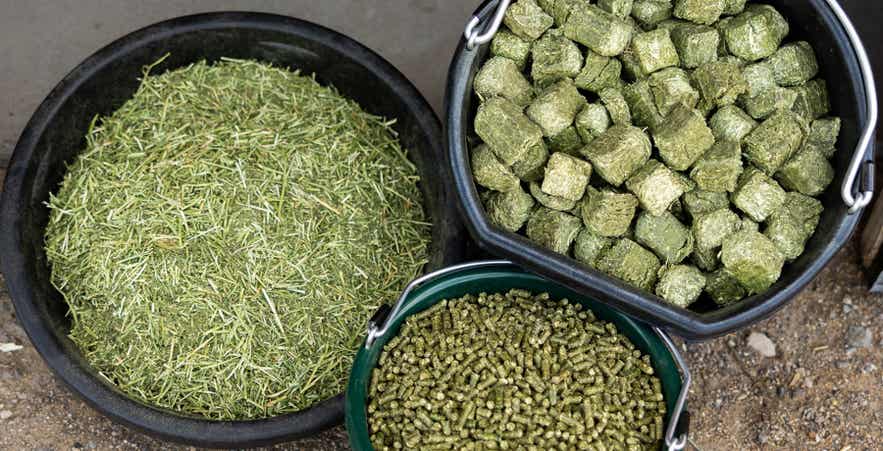
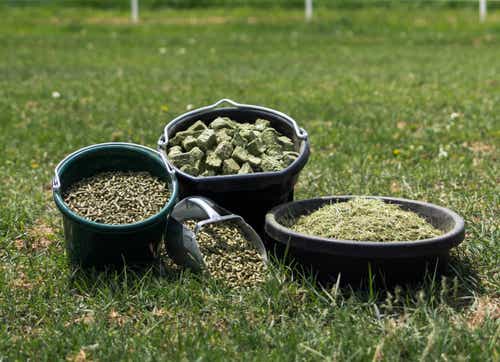
Modern forage feeding extends far beyond traditional baled hay. Today, horse owners can choose from pellets, cubes, chopped forage, compressed bales, pasture, and long-stem hay depending on their horse’s needs and their farm's management program.
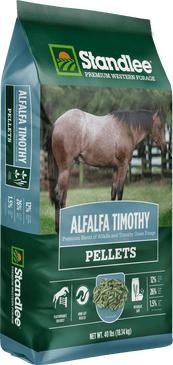
Forage pellets are one of the most consistent and convenient forage options available. Pellets can simplify feeding routines, reduce waste, and support portion control while still delivering high-quality fiber. They are especially beneficial for senior horses, horses with poor dentition, or situations where soaking forage is preferred.
Forage cubes provide similar nutritional consistency while maintaining a larger particle size that may slow intake slightly compared to pellets. Cubes can also be soaked to improve ease of chewing and provide more hydration.
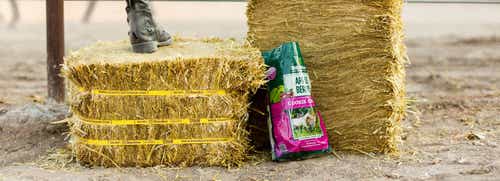
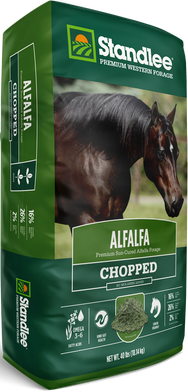
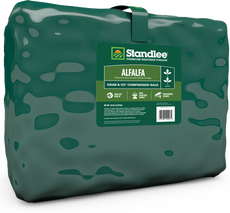
Chopped forage provides long-stem fiber in a softer, easier-to-handle format that still helps mimic natural forage intake. Compressed forage bales offer another practical solution by combining traditional forage with improved storage and handling convenience.
Many horse owners worry that pellets or cubes are unsafe or less digestible than traditional hay, but properly processed forage products maintain the nutritional integrity of the original forage and do not inherently reduce digestibility. Horses can safely consume many forage forms when they are introduced gradually and managed appropriately.
Forage form should be chosen based on the horse’s age, dental condition, feeding environment, storage needs, and overall feeding goals.
Pasture, Grazing, and Seasonal Forage Changes
Pasture grazing remains one of the most natural ways for horses to consume forage, but many horse owners today have limited access to pasture due to land availability, management practices, or concerns surrounding metabolic health.
As a result, many horses rely heavily on stored forage products such as hay, pellets, cubes, chopped forage, or compressed bales. These stored forage options help provide consistent nutrition while allowing horse owners greater control over intake.
Pasture management becomes especially important for horses sensitive to sugar and starch intake. During photosynthesis, grasses produce simple sugars that serve as immediate energy for the plant or are stored as starch and fructan -- together, these fractions make up non-structural carbohydrates (NSC). These carbohydrate levels fluctuate throughout the year and are heavily influenced by environmental conditions, sunlight exposure, plant maturity, and stress.
Spring pasture often contains elevated NSC levels due to periods of rapid growth. These increased sugar levels can be problematic for horses with insulin resistance, equine metabolic syndrome, or laminitis concerns.
Because of this, many horses require carefully managed pasture access during certain times of the year. This does not mean pasture itself is harmful, but rather that proper horse forage management requires understanding how pasture conditions impact NSC levels and adjusting feeding strategies and grazing access accordingly.
Laboratory forage analysis remains the most accurate way to evaluate sugar and starch content in forage.
Mimicking Natural Grazing Through Trickle Feeding
In a natural setting, horses graze for much of the day while moving continuously and consuming small amounts of forage over time. Modern feeding programs often look very different, particularly for horses housed in stalls or dry lots.
Because of this, slowing forage intake and mimicking natural grazing behavior has become an important part of equine management. This feeding style is often referred to as “trickle feeding,” where horses maintain more consistent access to forage throughout the day.
Research has shown that slow feeders, hay nets, and controlled feeding systems can significantly extend forage consumption time while supporting more natural eating behavior. Slower intake may also help reduce boredom, frustration, and stress-related behaviors while supporting digestive health.
For horses on calorie-controlled diets, slowing intake is especially important. Long periods without forage access may increase the risk of gastric ulcers and digestive upset. Maintaining steady forage intake helps support both physical and mental wellbeing.
The goal of effective horse forage management is not simply feeding enough forage — it is creating feeding programs that support how horses naturally consume fiber.
Building a Feeding Program on a Forage Foundation™
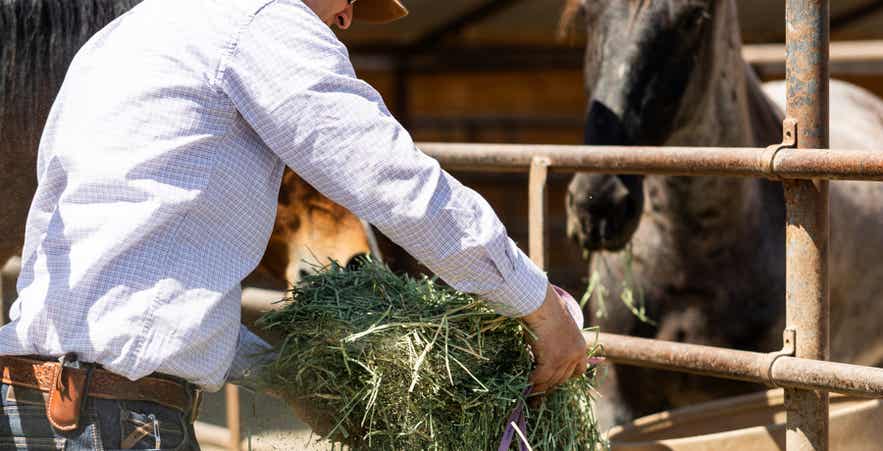
Learning how to feed a horse successfully does not require complicated feeding strategies or excessive supplementation. Instead, it begins with understanding forage and building feeding programs around consistency, quality, and the horse’s individual needs.
Forage Foundation™ focuses on maintaining reliable fiber intake, selecting appropriate forage forms and species, and managing feeding routines in ways that support digestive health and natural behavior. Once this foundation is in place, this makes selecting the remaining components of the diet to meet additional vitamin, mineral, and calorie needs much easier.
Every horse is different. Performance horses may require additional calories and protein, while easy keepers may need more controlled energy intake. All horses will need at least some supplemental minerals to fill in the nutritional gaps of forage, since most forages do not contain enough copper, zinc, and sodium to meet minimum daily requirements. Senior horses may benefit from forage forms that are easier to chew such as pellets or chopped forage, while horses with metabolic concerns may require carefully selected lower-NSC forage options.
Despite these differences, the underlying principle remains the same: forage should remain the nutritional foundation of the diet.
Final Takeaway: Horse Care Starts with Forage Management
Understanding how to feed a horse begins with understanding forage. From selecting forage species and evaluating forage quality to managing pasture access and choosing the right forage forms, every feeding decision influences the horse’s health and wellbeing.
At Standlee, we believe successful feeding programs are built on a Forage Foundation™ with a commitment to consistent, high-quality forage that supports horses through every life stage and management style.
Whether feeding traditional hay, pasture, pellets, cubes, chopped forage, or compressed bales, the goal remains the same: providing reliable fiber nutrition that supports healthier, happier horses for the long term.
Frequently Asked Questions
How much forage should a horse eat each day?
Most horses should consume approximately 1.5% to 2.5% of their body weight in forage daily. For a 1,000-pound horse, this typically equals 15 to 25 pounds of forage per day. The exact amount depends on factors such as age, workload, metabolism, body condition, and overall health goals. Maintaining consistent forage intake is an important part of the Forage Foundation™ and helps support digestive health and natural grazing behavior.
What is the best type of forage for horses?
There is no single “best” forage for every horse. Alfalfa, timothy, orchard grass, teff grass, bermudagrass, and mixed forages can all be appropriate depending on the horse’s nutritional needs and management goals. The most important factors are forage quality, consistency, digestibility, and suitability for the individual horse. Understanding forage species and nutrient content is a key part of proper horse forage management.
Can horses safely eat forage pellets and cubes?
Yes, horses can safely eat forage pellets and cubes when they are introduced gradually and fed appropriately. Properly processed forage products maintain the nutritional integrity of the original forage and do not inherently reduce digestibility. Pellets and cubes can be especially useful for senior horses and horses with poor dentition, or in feeding programs requiring greater consistency and portion control. Soaking pellets and cubes in water until properly softened before feeding increases hydration and is recommended for aggressive eaters, horses prone to choke, and horses with poor dentition.
Why is forage important for horses?
Forage is essential because the horse’s digestive system is designed to process fiber continuously throughout the day. Consistent forage intake supports microbial fermentation, digestive function, saliva production, and overall gut health. Consistent forage access also helps support natural grazing behavior and may reduce stress-related behaviors associated with long fasting periods.
What are non-structural carbohydrates (NSC) in forage?
Non-structural carbohydrates, often referred to as NSC, include sugars and starches found in forage plants. NSC levels can fluctuate depending on forage species, growing conditions, sunlight exposure, plant maturity, and seasonal changes. Horses with insulin resistance, equine metabolic syndrome, laminitis concerns, and other carbohydrate sensitivities may require carefully managed NSC intake as part of their feeding program.
What is trickle feeding for horses?
Trickle feeding refers to feeding practices that allow horses to consume forage slowly and consistently throughout the day, helping mimic natural grazing behavior. Slow feeders, hay nets, and controlled feeding systems can help extend forage consumption time, support digestive health, and reduce long periods without forage access.
Additional Learning Resources
From the Standlee Barn Bulletin Blog
- Forage Pellets for Horses: What They Are & How to Feed
- Essential Nutrition Guide – How to Feed a Lactating Broodmare
- Chopped Forage for Horses: Benefits, Uses, and How to Feed
- Feeding Senior Horses: Complete Guide to Senior Horse Nutrition
- Feeding Hay Pellets to Horses: A Complete Guide
- Feeding Tips and Guidelines for Pregnant Broodmares
- Essential Tips for Feeding Horses During the Winter
- What Type of Hay Should I Feed My Horse?
- Standlee Feed Options for Horses, Goats, Pigs, Cattle & Sheep
- Hay Cubes for Horses: Benefits, Nutrition, & Feeding Tips
- 5 Common Horse Feeding Mistakes
From the Standlee Beyond the Barn Podcast
- Ep. 105: 5 Nutrition Mistakes Horse Owners Make in Winter
- Ep. 106: 5 Ways Horse Owners Waste Money on Feeding
- Ep. 108: 4 Simple Ways to Stretch Your Hay Supply Without Sacrificing Nutrition
- Ep. 109: 4 Horse Feeding Mistakes That Increase Laminitis Risk
- Ep. 113: 3 Changes to Make When Transitioning Horses Back to Work
- Ep. 114: 5 Things Horse Owners Misunderstand About Feed Tags
- Ep. 090: Prevent Digestive Trouble – Why Consistency in Feeding Horses Matters
- Ep. 073: Navigating the Diet Struggle: Feeding Your Carb Sensitive Horse
- Ep. 063: What You Are Feeding Your Horse and Why it Matters
- Ep. 050: Top 10 Most Common Feeding Mistakes Horse Owners Make
- Ep. 023: Horse Feeding Myths – What’s Wrong and What’s Right?
- Ep. 016: Am I Feeding My Horse the Wrong Type of Hay?
From the Standlee Nutritional Papers
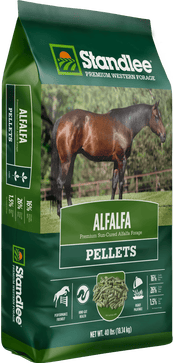
Products featured in this post
Enjoying the Standlee blog?
Subscribe to Standlee emails and get our newest content (and coupons, offers, and other great stuff) sent to your inbox!
Subscribe Now