Forage Forms Guide: Hay Pellets, Cubes, Chopped Forage & Compressed Bales
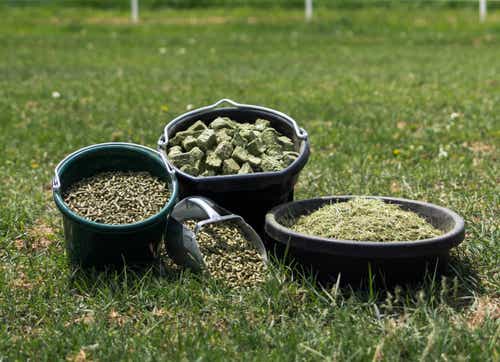
Forage forms, sometimes called forage alternatives, are the different physical formats used to feed forage to horses and livestock. Common forage forms include hay pellets, hay cubes, chopped forage, and compressed bales.
While all of these options can help meet daily forage requirements, each has unique benefits and limitations. Each product format is designed for different nutritional needs, feeding routines, and management styles.
Keep reading to learn more about each forage form, the key differences, and how to choose the right option for your animals.

Join Our Email List Today!
Be the first to get the latest news, promotions, updates and more from Standlee when you join our email list!
By signing up for email, you are agreeing to receive news, offers, and information from Standlee Premium Products, LLC®. You can also visit our Privacy Policy. Easy unsubscribe links are provided in every email.
Key Takeaways
- The best forage form for your animals depends on their individual needs and routine.
- Hay pellets are uniform, easy to measure, and easy to mix in a daily ration.
- Hay cubes have a larger particle size than pellets and are ideal for soaking.
- Chopped forage can bridge the gap between more processed forms and long-stem hay.
- Compressed bales preserve long-stem forage in a compact, portable package.
What Are Forage Forms?
Forage forms are different product formats of forage designed to improve convenience, provide consistent nutrition, and reduce waste. Also called forage alternatives, these products are used as substitutes for conventional hay bales in the diets of horses and livestock.
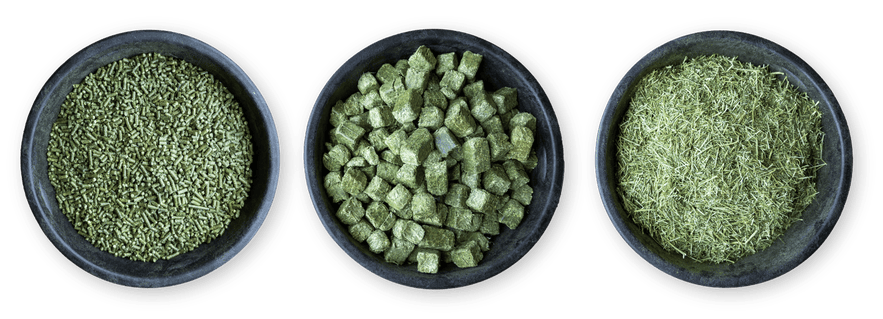
The four primary forage forms offered by Standlee and covered in this guide are:
- Hay pellets: ground forage compressed into small, uniform pellets
- Hay cubes: coarsely chopped forage compressed into larger pieces
- Chopped forage: forage cut into shorter lengths for easier handling and feeding
- Compressed bales: long-stem forage compressed for easier transport and storage
Why Forage Form Matters for Horses and Livestock
There's more to selecting the best forage product for your animals than choosing the right type of hay. Even if they provide the same nutrition, different physical formats of the same forage can vary in other factors that influence feeding behavior, digestive health, and management.
Chewing and Feeding Behavior
Horses and livestock evolved to graze on fibrous roughage continuously, so adequate forage is essential for maintaining digestive health and natural behavior.
Consistent forage intake helps maintain a protective fiber mat in the stomach, supports hindgut fermentation, and promotes gut motility in horses. Grazing and chewing stimulate saliva production, which helps buffer stomach acid. [1]
Research shows the physical format of forage can influence both chewing time and feeding behavior. In a 2023 study, horses fed hay cubes spent less time eating and chewing than horses fed long-stem hay, despite receiving the same amount of feed. [2]
These results suggest that while some forage forms can completely replace conventional hay when necessary, others are better suited as a supplement to long-stem forage.
Particle Size and Physically Effective Fiber
Differences in chewing time and feeding behavior depend on forage particle size, which varies across different forage forms.
While all forage forms can help meet daily fiber requirements, not all product formats provide the same level of physically effective fiber. This type of fiber has a particle size large enough to require extensive chewing, stimulate saliva production, and promote healthy rumination in livestock. [3]
Research in cattle, goats, and other ruminants continues to show that forage particle size and physically effective fiber can influence chewing, intake, fermentation patterns, and nutrient utilization. [4]
Forage formats with larger particle sizes can increase physically effective fiber in the diet, providing additional benefits for digestive function.
Convenience and Management
Forage form also matters from a management perspective. Most alternative forages are bagged, making them easier to stack, portion, and transport than conventional hay bales.
Hay pellets, cubes, and chopped hay are easier to top-dress or combine with other feed ingredients in the daily ration. Compressed bales can provide long-stem forage in a portable format that requires less storage space.
These practical differences often make alternative forage forms a more convenient solution for different feeding routines and management styles.
Hay Pellets vs. Hay Cubes vs. Chopped Forage vs. Compressed Bales
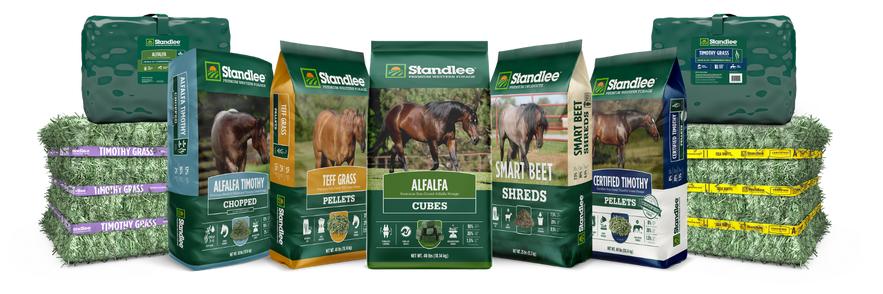
Here's an overview of the key differences between common forage forms.
Hay Pellets
- What it is: Ground forage compressed into small, bite-sized pieces
- Best for: Horses or livestock with dental issues, picky eaters, or supplement-mixing
- Main advantage: Most uniform and easy to portion, easier to chew, and less waste
- Main limitation: Smaller particle size than other forms
Hay Cubes
- What it is: Coarsely chopped forage compressed into larger pieces
- Best for: Horses needing longer chew time or controlled feeding and less waste
- Main advantage: Encourages chewing and is ideal for soaking to promote hydration
- Main limitation: Dry cubes may not be suitable for horses with a higher choke risk
Chopped Forage
- What it is: Forage chopped into small 2-4" pieces
- Best for: Senior horses, those with poor dentition.
- Main advantage: Maintains long fiber length to support digestive health
- Main limitation: More forage fines, typically minimized with a small amount of oil
Compressed Bales
- What it is: Long-stem forage compressed for easier transport and storage
- Best for: On-the-go feeding or limited storage space
- Main advantage: Preserves long-stem structure and physically effective fiber
- Main limitation: Less convenient to portion than pellets or cubes
Hay Pellets: Uses, Benefits, and Limitations
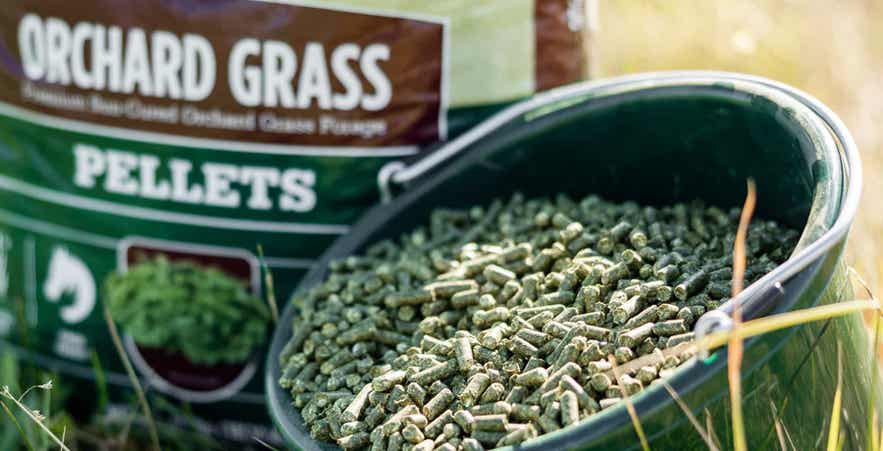
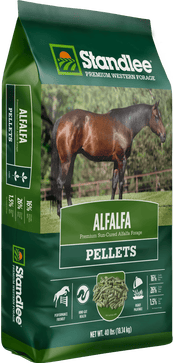
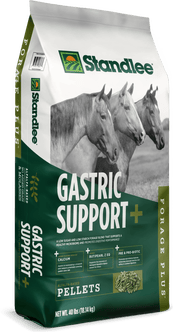
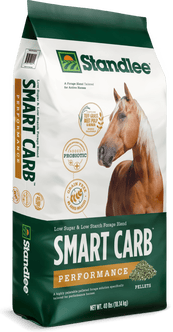
Hay pellets are made by grinding forage and compressing it into small, dense, uniform pellets. They are one of the easiest forage forms to handle, measure, store, and feed.
Why Owners Choose Hay Pellets
Because hay pellets are uniform, it is easier to measure intake by weight and reduce variability between feedings. They also fit well into programs where forage needs to be mixed with other ration components.
Many horse owners feeding a forage-based diet use hay pellets to replace commercial grain as a high fiber supplement carrier. For livestock owners, pellets can simplify portioning and storage while helping maintain a consistent forage source.
Hay pellets are also a popular choice for senior animals with dental issues who can't adequately chew other forage forms. [5]
Best Uses for Horses and Livestock
Hay pellets are often a good fit when:
- Forage must be fed precisely by weight
- Owners want a cleaner forage format with less waste
- Forage needs to be blended with other feeds
- Animals struggle with coarser forage due to age or dentition problems
Limitations of Hay Pellets
Because they are more processed, hay pellets have a smaller particle size and generally provide less physically effective fiber than long-stem hay.
For that reason, hay pellets are best viewed as a useful supplemental forage fed alongside long-stem hay, unless an animal can't eat coarser forages due to age or dentition issues.
Hay Cubes: Uses, Benefits, and Limitations
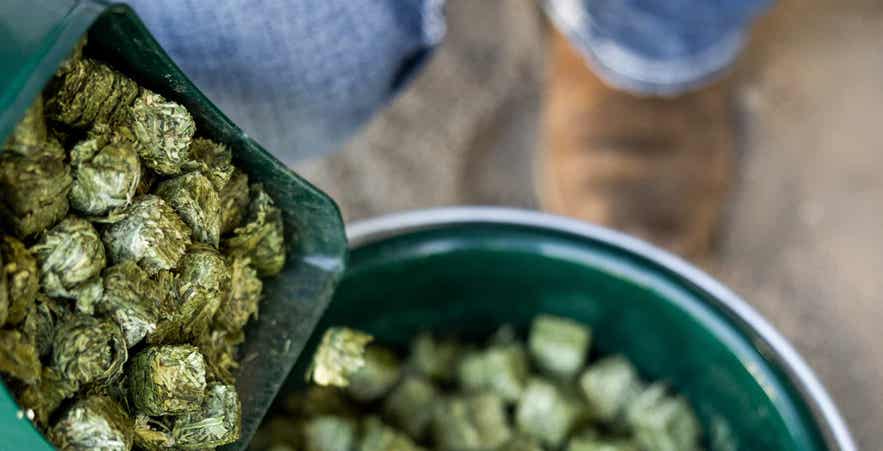
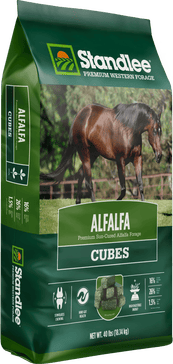
Hay cubes are made by compressing coarsely chopped forage into dense cubes. They are larger and retain more fiber length than pellets. These attributes make them appealing to owners who want a convenient, bagged forage product with a larger particle size.
Why Owners Choose Hay Cubes
Hay cubes offer a middle ground between pellets and loose hay. They are generally easier to handle and store than conventional bales while providing more physically effective fiber than pellets.
Hay cubes are another popular option for owners of senior animals or those with dentition problems. When soaked, forage cubes are soft and easy to chew. They are also useful for animals who need extra hydration.
Best Uses for Horses and Livestock
Hay cubes can be a good choice when:
- Owners want a larger particle size than pellets
- Barn space or transport limits make bagged forage more practical than loose hay
- Convenient portioning with less mess and waste is important
- Feeding animals that need soaked forage
Limitations of Hay Cubes
Some owners associate hay cubes with an increased risk of choke. In reality, choke is related to feeding behavior, not feed form. Risk increases when horses eat too fast. If your horse is prone to eating too fast, feeding at ground level and soaking hay cubes can help reduce the risk of choking. [6]
Chopped Forage: Uses, Benefits, and Limitations
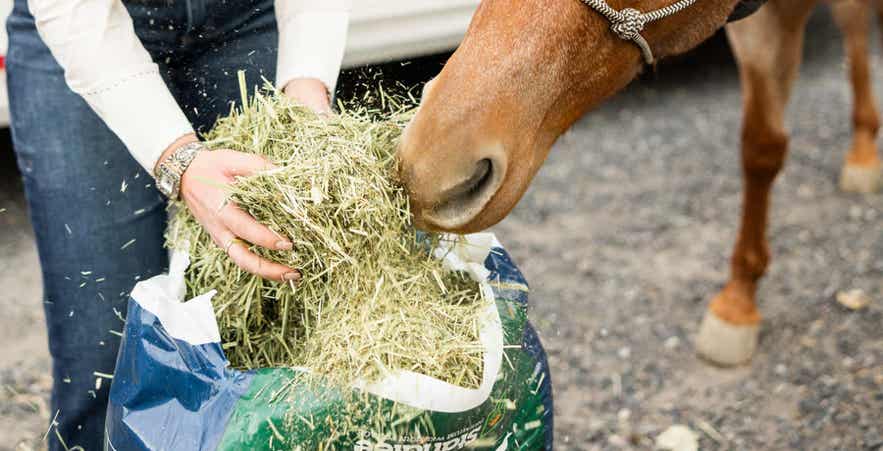
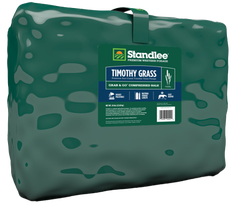
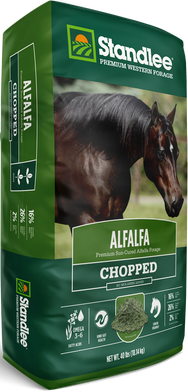
Chopped forage is hay cut into shorter, uniform lengths. It is less processed than pellets, easier to handle than many baled hay options, and often preferred when owners want more physically effective fiber in a format that is easy to measure and combine with other feeds.
Why Owners Choose Chopped Forage
Chopped forage occupies a middle ground between long-stem hay and more processed forage forms. It can be especially useful when owners want a supplemental forage that provides many of the same benefits of long-stem hay in a more convenient and consistent format.
Mixing chopped hay into the daily ration helps increase chewing and slow down feeding time. It is often softer and easier to chew than long-stem hay, making it a good option for seniors and owners concerned about choke risk but unable to soak pellets or cubes consistently. [5]
Since it's easier to portion than conventional bales, chopped hay also helps owners of horses with weight concerns to more accurately control and monitor intake.
Best Uses for Horses and Livestock
Chopped hay can be useful for:
- Easier portioning and mixing with other feeds
- Slowing down feeding time and promoting chewing behavior
- Older horses and livestock with dental limitations
- Supplementing and replacing conventional hay when quality is inconsistent
Limitations of Chopped Forage
Some owners are hesitant to use chopped hay due to dust concerns. However, what many mistake for dust is actually forage fines.
Forage fines are small pieces of broken forage often found in bagged forage products. These particles are simply smaller particles of the forage used to create that product that break off during processing and handling. They are a natural and valuable part of forage nutrition.
Chopped hay products are typically mixed with a small amount of oil to act as a binder and minimize these fines. If your animal has respiratory problems, consider wetting any forage you feed to reduce separation further.
Compressed Bales: Uses, Benefits, and Limitations
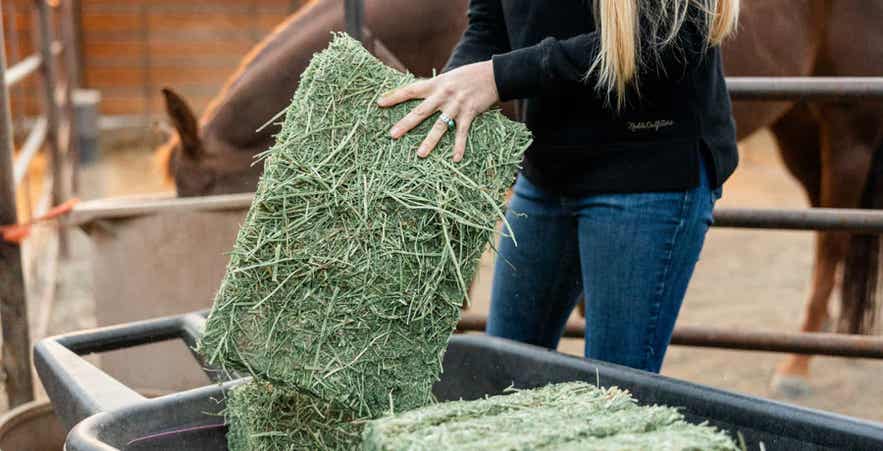
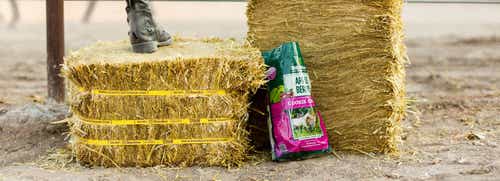
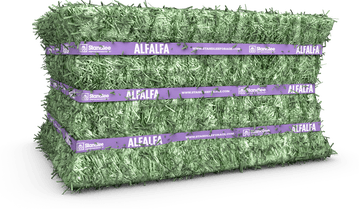
Compressed bales are full-sized bales of hay mechanically compressed into a more compact package. Their main advantage is that they preserve the nutritional and health benefits of long-stem hay while improving portability and storage efficiency.
Why Owners Choose Compressed Bales
Compressed bales are a good option for owners who want long-stem forage but need something easier to move, stack, travel with, or store in limited space.
For barns that struggle with inconsistent hay quality, compressed bales are a convenient solution to ensure every horse is getting quality nutrition from their forage. The compressing process doesn't change the nutrition of the hay, only the size of the bale.
Standlee's Grab & Go bales feature a protective UV wrap that helps preserve the hay, keeps the bale clean, and reduces mess when transporting or storing bales.
Best Uses for Horses and Livestock
Compressed bales are often a good fit when:
- Owners want long-stem forage in a compact format
- Horses are traveling or attending shows frequently
- Storage space for hay is limited
- Forage needs to be easy to transport in a clean, contained form
- Barns want hay that is more consistent in quality and nutrition
Limitations of Compressed Hay
While convenient to store and transport, compressed hay does not offer the same level of portion control as other forage forms. The hay bale separates into flakes that can vary in weight, just like a conventional bale.
Letting the compressed bale relax for a few hours after opening allows it to expand to its original texture. This decompression can also make it easier for owners to more accurately judge how much hay they're feeding their animals if they're not used to feeding compressed bales.
The Best Forage Form for Horses and Livestock
The best forage form for your animals depends on their individual health and nutrition needs. Hay pellets, hay cubes, chopped forage, and compressed bales each offer distinct advantages in physical form, convenience, feeding flexibility, and nutritional value.
Hay pellets are the most uniform and easiest to measure, while hay cubes provide a coarser form that is ideal for soaking. Chopped forage offers a useful bridge between long-stem hay and more processed formats. And compressed bales preserve long-stem forage in a more compact, convenient form.
Frequently Asked Questions
What is the difference between hay pellets, hay cubes, chopped forage, and compressed bales?
Hay pellets are the most processed and uniform, hay cubes provide coarser forage with less mess, chopped forage combines fiber length and convenience, and compressed bales preserve long-stem forage in a more compact format.
Are hay cubes better than hay pellets?
Both forage forms have unique advantages. Hay cubes provide a larger particle size than pellets, but pellets are often easier to portion and mix. The best option depends on the animal, their nutritional needs, and your feeding routine.
Can hay pellets replace hay?
Hay pellets can sometimes replace part or all of the forage in a ration for horses who can't eat coarser forages, but they are typically used as a supplemental forage fed alongside long-stem hay.
Are hay cubes a good hay alternative?
Hay cubes can be a useful hay alternative when owners need easier storage, less waste, and a forage format with a larger particle size than pellets. However, they are not identical to long-stem hay in their effects on feeding behavior and digestive health in horses.
Is chopped forage the same as long-stem hay?
Chopped forage usually provides more visible fiber length than other alternative forage forms, but it is still more processed and shorter than conventional long-stem hay.
Which forage form is best for senior horses?
Senior horses often do well with forage forms that are easier to chew and manage, such as soaked hay cubes or soft chopped forages, especially when dental function declines.
Which forage form is easiest to store and travel with?
Hay pellets and hay cubes are generally the easiest to store, but compressed bales are especially useful when owners want long-stem forage in a portable, compact format.
What forage form works best for mixed herds?
That depends on the species involved. Compressed bales, chopped forage, and hay pellets fit many mixed-barn feeding routines when paired with species-appropriate ration planning.
Should hay cubes or hay pellets be soaked before feeding?
While dry hay cubes and pellets are safe for many animals when fed properly, soaking can help make forages easier to chew and improve hydration, especially for animals with dental limitations or a higher risk of choking.
References
- Ermers C, et al. The Fibre Requirements of Horses and the Consequences and Causes of Failure to Meet Them. Animals (Basel). 2023.
- Petz V, et al. Changes in eating time, chewing activity and dust concentration in horses fed either alfalfa cubes or long-stem hay. Vet Med Sci. 2023.
- Grant RJ. Physical characterization of feeds and development of the physically effective fiber system. J Dairy Sci. 2023.
- Heering R, et al. Effect of physically effective fibre on chewing behaviour, ruminal fermentation, digesta passage and protein metabolism of dairy cows. J Agric Sci. 2023.
- Jarvis NG. Nutrition of the aged horse. Vet Clin North Am Equine Pract. 2009.
- Chiavaccini L & Hassle DM. Clinical Features and Prognostic Variables in 109 Horses with Esophageal Obstruction (1992–2009). J Vet Intern Med. 2010.
Additional Learning Resources
From the Standlee Barn Bulletin Blog
- Selecting the Proper Forage for Your Horse
- The Ultimate Guide to Feeding Forage Pellets to Horses
- How to Soak Hay Cubes and Pellets for Horses
From the Standlee Beyond the Barn Podcast
- Ep. 029: How to Feed a Senior Horse and When They Need to Be Fed Differently
- Ep. 075: Managing Hard Keepers – How to Feed Your Underweight Horse
- Ep. 026: What Format of Hay Should I Feed My Horse and Why Does It Matter?
From the Standlee Nutritional Papers
Products featured in this post
Enjoying the Standlee blog?
Subscribe to Standlee emails and get our newest content (and coupons, offers, and other great stuff) sent to your inbox!
Subscribe Now