How to Maintain a Consistent Forage Foundation for Your Horse
A consistent Forage Foundation starts with quality forage suited to your horse, portions measured by weight, and a feeding routine that can be followed every day. Understanding the forage you feed and introducing changes gradually help you maintain that foundation when hay supplies, schedules, or caregivers change.
During the holidays, a dependable routine also needs to be easy for someone else to follow. A written feeding plan, familiar forage, and clearly prepared portions give a caregiver the information needed to continue your horse’s normal care. The same habits are useful throughout the year, whether you are opening a new hay lot or planning a weekend away.
Key Takeaways
- A consistent Forage Foundation starts with knowing what you are feeding, how much your horse needs, and keeping daily feeding routines on track.
- Even hay from the same supplier can vary, so do not assume every bale has the exact same nutritional content.
- A guaranteed analysis works as a guide to nutrient ranges, rather than an exact nutritional match in every bale or bag.
- Weigh your horse’s forage, take time to evaluate new hay, make feed transitions gradually, and make feeding instructions clear for everyone caring for your horse.

Join Our Email List Today!
Be the first to get the latest news, promotions, updates and more from Standlee when you join our email list!
By signing up for email, you are agreeing to receive news, offers, and information from Standlee Premium Products, LLC®. You can also visit our Privacy Policy. Easy unsubscribe links are provided in every email.
What Makes a Horse’s Forage Program Consistent?
A consistent forage program provides an appropriate supply of forage through a routine that accounts for your horse’s nutritional needs. That includes the forage’s nutritional value, how much your horse consumes, and how it is offered. Consistent feeding times and a steady supply of the same amount and type of forage are important parts of a healthy feeding routine.
Horses rely on microorganisms in the cecum and large colon to ferment fiber and produce compounds they can use for energy. Diet influences this microbial community, which helps explain why forage selection and feeding management matter to digestive function. [1]
Standlee’s Forage Foundation™ approach begins with high quality forage as the base of the diet. In practice, that means evaluating the forage first, then determining what else the horse needs in order to fill in any nutritional gaps. A consistent program still allows planned adjustments as workload, pasture availability, or body condition changes. Those adjustments should reflect the individual horse and the complete ration.
Why Can Hay Vary Between Bales and Batches?
Hay varies because plant species, maturity at harvest, growing conditions, and handling affect its nutritional value. Hay from the same farm or labeled as the same forage type can differ between harvests. Variation can also occur within a lot, which is why taking a representative sample matters when evaluating a hay supply. [2][3]
Plant maturity is especially helpful to understand when it comes to variation in hay. As plants mature, fiber generally increases and digestibility declines. A first or second cutting label does not tell the whole story because the stage of growth at harvest matters more than the cutting number alone. [2]
Color, smell, leafiness, and texture provide clues about hay condition, but they cannot determine exact nutrient values. Pair visual inspection with appropriate analysis, and continue checking forage before feeding. A laboratory report helps describe the sample submitted; it does not make moldy or contaminated forage suitable to feed. [2]
How Does a Forage Analysis Support Consistency?
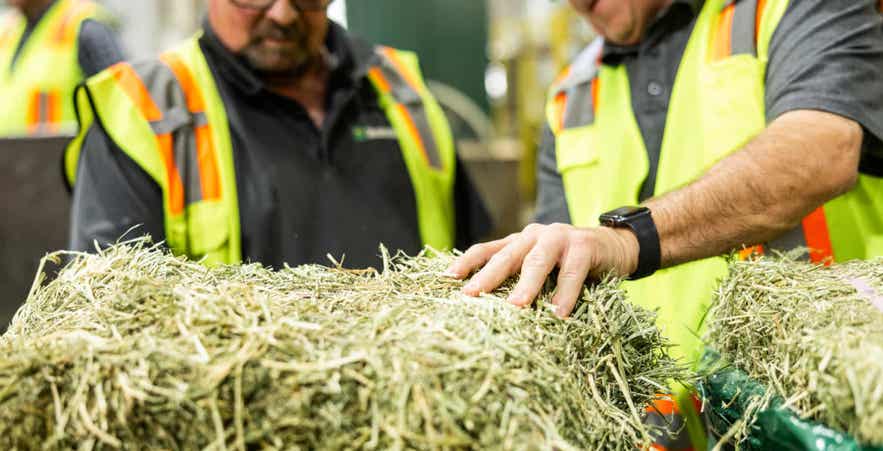
Quality controls and nutritional information help owners make more informed forage choices. Standlee performs frequent laboratory testing and provides a guaranteed analysis on its forage products. The Beyond the Barn podcast episode on forage quality also explains retained samples and product traceability. These practices provide information and accountability that support a solid feeding program.
A guaranteed analysis lists minimum or maximum values for specified nutrients. For example, a minimum crude protein value is a lower limit, rather than a statement that every sample contains exactly that percentage. Read a specific product’s label and distinguish guaranteed values from averages or typical analyses. Forage remains an agricultural product, so natural variation still needs to be considered.
For horses that need restricted sugar and starch intake, check the relevant carbohydrate results on the forage analysis. Ethanol-soluble carbohydrates (ESC) primarily measure simple sugars, while water-soluble carbohydrates (WSC) include those sugars and fructans. Nonstructural carbohydrates (NSC) are commonly estimated by adding WSC and starch. Your veterinarian or equine nutritionist can help interpret the results and select forage that meets your horse’s needs. [4]
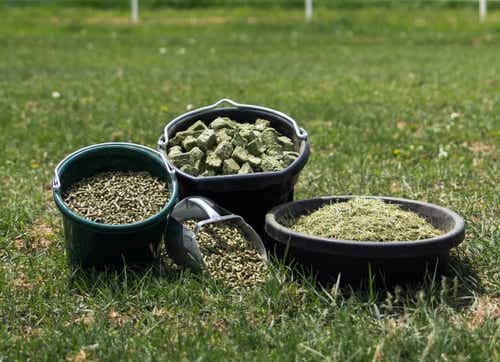
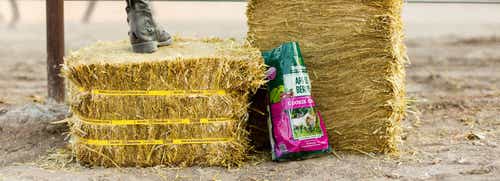
Choosing a forage format is another practical choice. Certified Timothy Grass Compressed Bales offer a compact option for handling and storage, while Certified Timothy Grass Pellets can be measured into portions. Choose a format that fits the horse and feeding routine, including any soaking or preparation requirements. A different format does not automatically make two products nutritionally interchangeable. Follow the product’s guidance for long-stem forage, and seek an individual feeding plan for a horse that has difficulty chewing.
How Do You Build Consistency Into Daily Feeding?
Build a repeatable routine by evaluating each hay supply, measuring what you feed, and planning changes before the current forage runs out. These habits apply whether you purchase conventional bales or packaged forage.
Evaluate Each New Hay Lot
Ask for an analysis that represents the hay lot you are buying, or arrange your own test. Follow the laboratory’s sampling instructions. The National Forage Testing Association recommends at least 20 cores for a representative sample, keeping different lots separate. A handful taken from one bale can miss important variation across the supply. [3]
Identify the lot in your records by supplier, forage type, and harvest information when available. A current report should describe the supply being fed, rather than a different cutting or last year’s hay. Keep the report with your feeding instructions so it is available when the ration is reviewed.
Choose a test panel that answers the questions relevant to your horse. Sugar and starch testing, for example, may need to be requested separately. Review the results with your veterinarian or equine nutritionist when managing a horse with particular dietary requirements. Standlee’s hay and forage testing guide explains where testing can be arranged. [4] For a discussion of sampling and interpreting the report, listen to Beyond the Barn, episode 045.
Weigh Forage and Record the Feeding Plan
Weigh forage because flakes and scoops can differ in weight. A familiar-looking portion may provide a different amount when a bale’s density or the product changes. Use a suitable scale and recheck portions when introducing a new supply. [5]
Record the forage name, the amount offered at each feeding, and any preparation instructions. Weigh the dry amount before adding water to products that require soaking, and follow the product directions. Written amounts make the routine easier to reproduce and give you a useful starting point if intake or body condition changes.
Introduce Forage Changes Gradually
Introduce new forage gradually, generally over 7 to 14 days, following Standlee’s feeding guidance, the specific product instructions, and advice for your horse. Increase the new forage while reducing the old. Keep enough of the current supply to complete the transition without an abrupt switch.
Research has associated hay and management changes with increased colic risk. A separate study found microbial changes when ponies switched abruptly between grass and hay, although those ponies did not develop clinical digestive upset. Microbial changes do not always indicate illness, and individual horses can respond differently to a forage change. [6][7]
How Can You Keep Feeding Your Horse Consistently During Vacations and Travel?
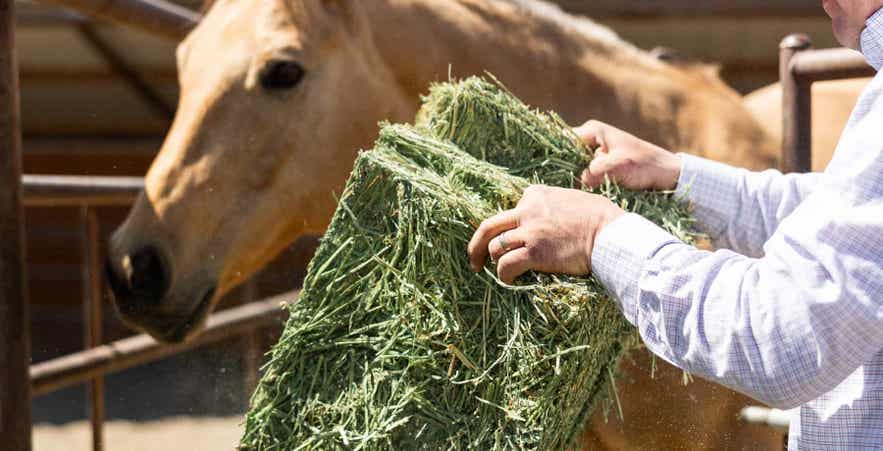
Keep vacation feeding consistent by making the normal routine clear, supplying enough familiar forage, and walking the caregiver through the plan before you leave. Avoid introducing an unnecessary forage change at the same time someone new takes over daily care.
Prepare written instructions for each horse that identify the exact forage type and other feeds, quantities by weight, feeding times, and any soaking or preparation steps. Label containers and feeding areas clearly. If practical, prepare dry portions in advance so the caregiver can match each portion to the correct horse and feeding. Show how to use the scale when portions need to be weighed.
Check your inventory early enough to cover the absence and a possible delay returning home. If supplies will run short, arrange the replacement while there is still time for a gradual transition. Show the caregiver where forage is stored, how to check its condition, and how to maintain the horse’s usual access to fresh water. Leave the current product packaging or label available for reference.
Include your contact information, the veterinarian’s number, and a backup contact. Explain what is normal for each horse and when to call for help. A simple record of feed offered, leftovers, and changes in behavior or manure gives you and the caregiver a shared account of daily care. Rehearsing one feeding together can reveal unclear instructions before they become a problem.
What Changes Should Prompt a Closer Look?
Changes in appetite, manure, or body condition should be recorded, but they do not identify forage variation as the cause. Record when a new hay lot or product is introduced, the amount offered, and other changes in management. Share that information with your veterinarian when concerns persist.
Contact your veterinarian promptly if your horse shows signs of colic. Do not wait for a feeding log to establish a pattern or assume the horse simply needs time to adjust. Colic has many possible causes, and mild signs can progress. [8]
A dependable forage program is easier to maintain when you understand the feed, measure it consistently, and make the routine clear to every caregiver. For help exploring forage options, use the Standlee Forage Finder as a starting point, then review the complete feeding plan with your veterinarian or equine nutritionist when individual needs require it.
Frequently Asked Questions
Can Hay From the Same Field Have Different Nutrient Values?
Yes. Nutrient values can vary within a field and between harvests. Plant maturity, species, and growing conditions all affect hay quality. Evaluate a representative sample from the current lot rather than assuming the same supplier or hay name means the same nutritional profile. [2][3]
How Often Should I Test My Hay?
Evaluate each new lot. Ask whether a representative analysis is available and arrange testing when you need information the supplier cannot provide. Keep different fields, cuttings, or hay types separate when sampling, and select a test panel appropriate for your horse’s needs. [3][4]
Does a Guaranteed Analysis Mean Identical Nutrients in Every Bag?
No. A guaranteed analysis specifies minimum or maximum values for listed nutrients. It does not mean each bag has exactly the same nutrient composition or that every nutrient is included. Use the current product label and seek additional information when your horse has specific dietary requirements.
How Should I Transition My Horse to a New Hay?
Make the change gradually, generally over 7 to 14 days, by increasing the new hay while reducing the old. Follow the product instructions and seek individual guidance for horses with digestive or other health concerns. Plan ahead so the old forage remains available throughout the transition.
Are Pellets and Cubes Automatically More Consistent Than Baled Hay?
Format alone does not establish nutritional consistency. Compare the forage ingredients, guaranteed analysis, available testing information, and quality practices. Pellets and cubes can fit a measured feeding routine, but their preparation and role in the ration still need to suit the individual horse.
What Instructions Should I Leave for Someone Feeding My Horse?
List each horse’s forage and other feeds, quantities by weight, feeding times, preparation steps, and water routine. Show where supplies are stored and provide owner, veterinarian, and backup contacts. Explain which changes should prompt a call, and walk through a feeding together before handing over care.
Additional Learning Resources
These Standlee resources provide more detail on forage selection, testing, quality, and daily feeding routines.
From the Standlee Barn Bulletin Blog
- How to Feed a Horse: The Complete Guide to Forage, Grazing, and Equine Nutrition Management. See how forage selection, grazing, and daily management fit into a complete feeding program.
- ADF & NDF Explained: What Do ADF and NDF Values Mean for Your Horse? Learn how fiber measurements help you interpret a forage analysis.
- What Is the Difference Between Hay, Straw and Premium Forage? Clarify common forage terms and the differences between hay and straw.
- Top 5 Places to Get Your Hay and Forage Tested. Find testing options and guidance on collecting samples and using the results.
- Forage Forms Guide: Hay Pellets, Cubes, Chopped Forage & Compressed Bales. Compare forage formats and their practical fit within your horse’s feeding routine.
From the Standlee Beyond the Barn Podcast
- Ep. 104: From Field to Shelf, The Hidden Work Behind Standlee’s Premium Quality Hay. Hear how Standlee manages forage quality through production, packaging, and traceability.
- Ep. 045: Why Skipping a Hay Analysis Could Cost More Money in the Long Run with Sarah Fessenden. Learn about representative sampling, analysis terminology, and using hay-test results.
- Ep. 090: Prevent Digestive Trouble — Why Consistency in Feeding Horses Matters. Learn about the importance of consistency when feeding horses and how inconsistent feeding can affect a horse’s gut health.
From the Standlee Nutritional Papers
- Guaranteed Analysis: Why Is It Important? Review the nutritional components listed in a guaranteed analysis and why they matter.
- Forage for Horses: The Key to Health. Read about the digestive system, forage types, and the role of forage in the diet.
Research References
- Wu Y, et al. From Diet to Disease: The Role of the Gut Microbiome and Microbial Metabolites in Horses. Veterinary Sciences. 2026;13(8):823. https://doi.org/10.3390/vetsci13080823
- Oregon State University Extension Service. Horse Owner’s Guide to Buying Hay. EC 1249.
- Putnam D, Orloff S. Recommended Principles for Proper Hay Sampling. National Forage Testing Association.
- University of Minnesota Extension. Understanding Your Hay Analysis.
- Griffin A. Feeding Horses by Weight, Not Volume. Extension Horses. 2020.
- Curtis L, et al. Risk Factors for Acute Abdominal Pain (Colic) in the Adult Horse: A Scoping Review of Risk Factors, and a Systematic Review of the Effect of Management-Related Changes. PLOS ONE. 2019;14(7):e0219307. https://doi.org/10.1371/journal.pone.0219307
- Garber A, et al. Abrupt Dietary Changes Between Grass and Hay Alter Faecal Microbiota of Ponies. PLOS ONE. 2020;15(8):e0237869. https://doi.org/10.1371/journal.pone.0237869
- DeNotta S, House A. Colic in Horses. University of Florida IFAS Extension.
Enjoying the Standlee blog?
Subscribe to Standlee emails and get our newest content (and coupons, offers, and other great stuff) sent to your inbox!
Subscribe Now