Why Forage Should Be the Foundation of Your Horse's Diet
Equine nutrition starts with forage. Horses never truly left their grazing roots behind, even after centuries of domestication. Their teeth, stomach, and entire digestive tract are built for processing a steady intake of fibrous plant material.
Feeding programs that treat forage as an afterthought work against that biology. Forage-based diets work with it, providing a strong foundation for nearly every aspect of equine health.
That’s the idea behind a Forage Foundation. Make every feeding decision around consistent, high-quality forage first. Add only what’s needed to balance the diet and provide every horse with the nutrition they need to thrive without compromising digestive function.
Keep reading to learn why the equine digestive system is so dependent on a forage foundation, what can go wrong when horses don’t eat enough hay, and how to choose and feed forage to support long-term health.

Join Our Email List Today!
Be the first to get the latest news, promotions, updates and more from Standlee when you join our email list!
By signing up for email, you are agreeing to receive news, offers, and information from Standlee Premium Products, LLC®. You can also visit our Privacy Policy. Easy unsubscribe links are provided in every email.
Key Takeaways
- Horses are trickle feeders built for near-constant forage intake, not large meals.
- Chewing forage triggers the saliva production that buffers stomach acid throughout the day.
- Fiber fermented in the hindgut supplies a major share of a horse’s daily energy.
- Inconsistent or inadequate forage intake is linked to gastric ulcers, hindgut disruption, and colic risk.
- Forage quality and consistency matter just as much as quantity.
- A Forage Foundation means starting every feeding program with forage, then filling in what’s still needed.
How the Equine Digestive System Is Built to Run on Forage
Understanding why forage matters starts with understanding what the horse’s body is built to do with it.
Continuous Grazing
A horse’s stomach holds only 2 to 4 gallons, which is small for an animal of its size. It also secretes acid around the clock, even when there’s nothing to digest.
This is why horses are built to eat in small, frequent amounts almost continuously, rather than in large, spaced-out meals that work well for a dog or a person. Their digestive tract isn’t designed to sit empty for long periods between meals.
Left to their own devices on pasture, horses spend most of the day grazing. A recent GPS-tracked study of continuously grazing horses confirmed what most horse owners already suspect. Horses forage almost constantly, moving steadily and taking in small amounts of plant material throughout the day, rather than eating in a handful of discrete meals. [1]
Hindgut Function
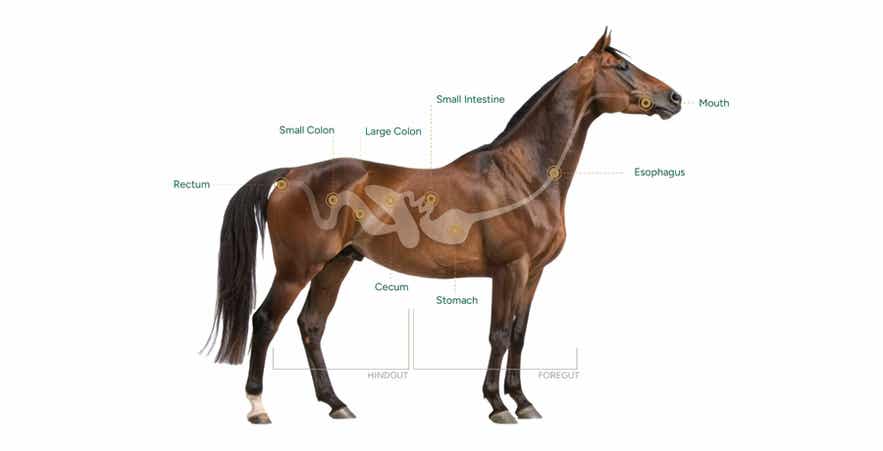
Horses are hindgut fermenters. Unlike cattle or sheep, horses can’t re-chew and re-digest fiber in a multi-chambered stomach. Fibrous material passes through the stomach and small intestine largely undigested. It then reaches the cecum and large colon, where a large population of bacteria ferments it into usable energy.
That back half of the digestive tract accounts for well over half of the horse’s total gut capacity. This design only makes sense if the diet flowing into it is forage-based and constant, rather than being concentrated into a couple of large grain meals a day.
The horse’s gastrointestinal tract is also remarkably long relative to its body size, stretching many dozens of feet from mouth to tail. Feed moves through the stomach and small intestine quickly, then slows considerably once it reaches the hindgut, where fermentation unfolds over many hours rather than minutes.
A feeding program centered on forage is the only approach that aligns with how the horse’s body works.
Chewing Time and the Natural Buffer Forage Provides
Before forage even reaches the stomach, chewing performs some of the horse’s most important digestive work.
Saliva Production
Hay and concentrate feed aren’t chewed the same way. A horse eating hay chews far more per pound and for much longer than the same horse eating an equal weight of grain. That extra chewing time isn’t just about breaking down roughage into smaller pieces. It’s also necessary to stimulate saliva production. [2]
Equine saliva works differently from human saliva. It contains almost no digestive enzymes but is rich in bicarbonate, which buffers the stomach’s continuous acid output. Horses don’t salivate in anticipation of a meal the way dogs do. They salivate mainly in response to the physical act of chewing.
Gastric Health
Less chewing means less saliva and less buffering, when the stomach needs them most. One frequently cited estimate puts saliva production at less than three liters per kilogram of concentrate consumed, compared to roughly five liters per kilogram of hay. [2]
This is part of why a diet heavy in concentrates and light in forage leaves the stomach more exposed to its own acid, increasing the risk of gastric ulcers.
Long-stem hay requires sustained, intensive chewing that pellets or grain don’t require to the same extent. Keeping some long-stem forage in the diet is a simple, low-cost way to support gastric health. It works even when pellets or cubes make up part of a horse’s ration.
Fiber, Hindgut Fermentation, and Energy
Once fiber reaches the hindgut, it becomes the horse’s primary fuel source.
The Equine Gut Microbiome
In the cecum and large colon of the equine hindgut, resident bacteria ferment structural fiber, including cellulose and hemicellulose in hay and pasture, into volatile fatty acids such as acetate, propionate, and butyrate.
The horse absorbs these compounds and uses them directly for energy. Fermentation also produces B-vitamins and other compounds the horse can use. For a horse on a forage-based diet, this process supplies a large share of daily energy needs, often more than concentrates do.
Fermentation depends on a stable microbial population, and diet is the single biggest factor shaping it. A comprehensive 2025 review of equine gut microbiome research found that diet composition is the top driver. It determines which bacterial populations thrive in the hindgut and how well they persist over time. [3]
Horses on consistent, forage-based diets tend to maintain more stable, more diverse hindgut microbial communities than horses on high-starch rations.
Maintaining Balance
The flip side is what happens when starch, rather than fiber, becomes the dominant hindgut input. When a horse consumes more starch than the small intestine can absorb, the excess spills into the hindgut. There, fiber-loving bacteria give way to starch-fermenting ones that produce lactic acid instead of the usual volatile fatty acids. [3]
That shift lowers hindgut pH, and a hindgut that’s too acidic, too often, becomes a much less hospitable environment for digestive health.
The microbial population of the hindgut shifts in response to meaningful dietary changes, sometimes within days. That’s why abrupt feed changes carry more risk than gradual ones.
A hindgut population that’s spent weeks adapting to one diet needs time to adjust to a different one. Rushing the transition is a preventable cause of digestive upset. Providing a consistent diet based on forage helps keep the hindgut’s microbial population balanced.
What Happens When Forage Falls Short
The physiological case for forage becomes even clearer when you look at what goes wrong without enough of it.
Health Risks of Inadequate Forage Intake
Researchers generally estimate the minimum forage requirement at about 1.5% of a horse’s body weight per day. Horses also need at least 8 hours of foraging opportunity throughout the day, with no single gap longer than four or five hours without access to fiber. [4]
Falling short of either threshold consistently tends to cause problems in multiple parts of the body.
In the stomach, reduced saliva production and increased acid exposure increase the risk of equine squamous gastric disease, one of the two recognized forms of equine gastric ulcer syndrome. [4]
A diet overly reliant on starch to compensate for insufficient forage can trigger the same acid shift and microbial disruption in the hindgut. This raises the risk of hindgut acidosis and, in turn, laminitis. Reduced chewing also lowers fluid intake and is linked to a higher risk of colic. [4]
Forage Access and Stress Levels
Long, unpredictable gaps without access to forage are also recognized as behavioral stressors. They’re linked to increased stereotypic behaviors, such as cribbing and weaving, as horses try to redirect an unmet foraging drive toward something else. [4]
This stress isn’t limited to horses on obviously restricted diets. A horse that technically gets enough forage over a full day can still show the same physiological and behavioral strain if it faces a single long, unpredictable gap in the middle of the day or at night.
In practice, forage gaps often stem from circumstances rather than neglect. Travel days, competition schedules, boarding situations with fixed feeding times, and periods of hay shortage can all create the kind of prolonged gap in forage access that research identifies as a risk factor.
A feeding program that reliably delivers enough forage throughout the day is essential for keeping horses healthy and happy.
Why Forage Quality Matters
Meeting the minimum forage requirement is only half the equation. The forage itself must be the right type, form, and quality for each horse.
Evaluating Hay Quality
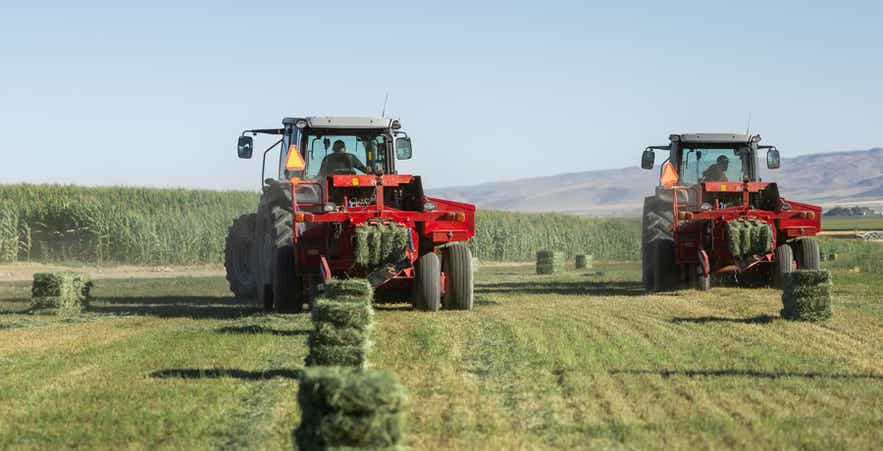
Forage quality comes down to a combination of factors. These include plant species, how mature the plant was at cutting, and how it was harvested and stored afterward.
Legume forages like alfalfa and grass forages like timothy or orchard grass each have unique nutritional profiles. Within either category, maturity at cutting can further influence nutrition. Once plants have gone to seed, forage is higher in indigestible fiber and lower in energy, protein, and digestibility.
Forage exposed to excess moisture during curing or storage is at risk of mold, which can cause anything from reduced palatability to serious digestive or respiratory illness.
Visual inspection can help assess quality by looking for a good leaf-to-stem ratio, a short seed head, good color, and no dust or mold. But it can’t tell you what’s in the forage nutritionally. A forage analysis gives a far more precise picture of protein, energy, and sugar and starch content.
Choosing the Right Forage
Understanding the nutritional profile of different forages is useful whether you’re troubleshooting a hard keeper, managing a horse with metabolic concerns, or simply confirming that what you’re feeding matches your horse’s needs.
Consistency matters as much as any single quality metric. A horse that does well on one cutting of hay can struggle when the next batch comes from a different field, cutting, or supplier.
That’s not necessarily because the new hay is worse. The change itself disrupts a hindgut microbial population that thrives on stability. Choosing the right type of hay for your horse from a source that can deliver consistent quality, batch after batch, is vital to building a solid forage foundation.
Building a Forage Foundation into Your Feeding Program
Feeding a forage-based diet doesn’t have to be complicated. A forage foundation just means putting forage first and building everything else around it.
Forage Format
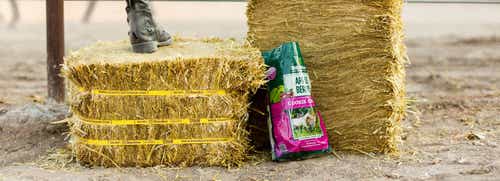
Most horses need between 1.5% and 2.5% of their body weight in forage daily. That’s roughly 15 to 25 pounds a day for an average 1,000-pound horse, adjusted for age, workload, and body condition.
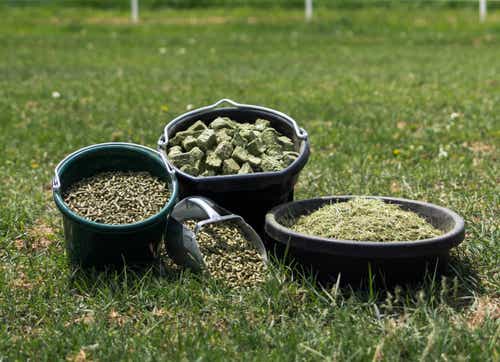
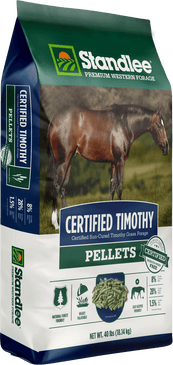
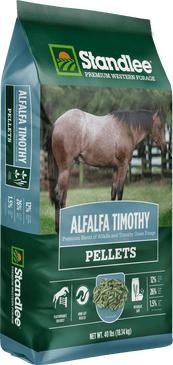
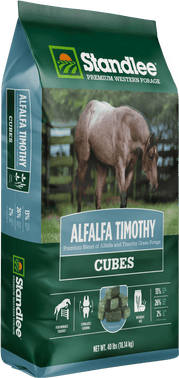
Long-stem hay isn’t the only way to meet that requirement. Forage pellets and cubes are a convenient way to add high-quality forage to your horse’s diet.
Processing forage into a different physical form doesn’t change its nutritional profile. A pound of pellets provides essentially the same nutrition as a pound of the hay it was made from.
However, forage formats can affect chewing time. In a controlled comparison, horses fed cubed forage spent notably less time eating and chewing than those fed the same weight of long-stem hay. [5]
That’s one reason many nutritionists recommend including at least some long-stem forage in the diet, even for horses on a largely pelleted or cubed ration. It helps maximize chewing time and saliva production, supporting gastrointestinal health.
Dental issues, limited storage, travel, or supply gaps can make it hard to provide enough long-stem hay. When that happens, pellets and cubes are legitimate ways to fill the gap without abandoning a forage-based diet.
Introduce any change in forage, form, or source gradually, over 7 to 10 days, so the hindgut microbial population has time to adjust instead of facing an abrupt shift. Soaking pellets or cubes for 20 to 30 minutes can also help horses with dental limitations or a tendency to eat too quickly get the same forage benefit more safely.
Free-Choice Forage
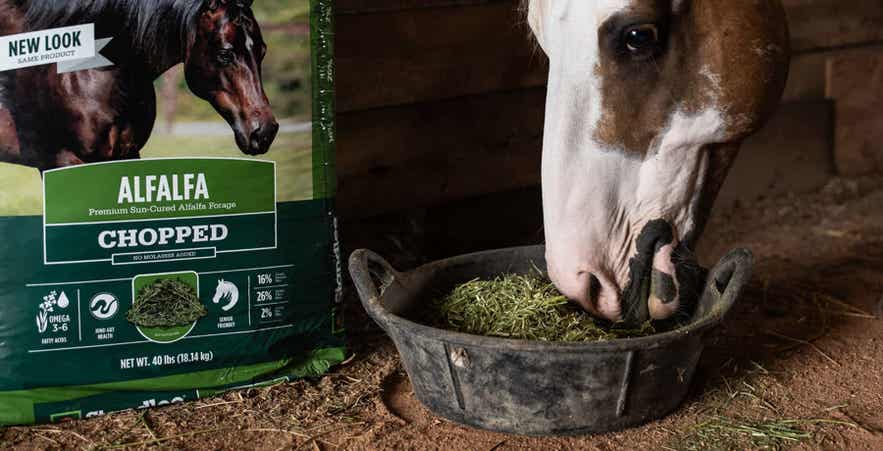
Free-choice access or a slow feeder should be built into the plan wherever possible. Horses are trickle feeders by design, so spreading forage throughout the day works better than delivering it in one or two large portions.
Providing constant access to forage supports natural chewing, saliva production, and hindgut stability more than simply meeting a daily intake requirement. If horses consume too much forage too quickly, using a slow feeder can help reduce total intake while maintaining access.
Every Feeding Decision Starts with Forage
Every horse’s health starts with forage. The horse’s stomach, its hindgut, and centuries of grazing instinct all point to the same conclusion. A forage-based diet isn’t just one option among many feeding strategies. It’s the foundation on which everything else is built.
That’s the science behind a Forage Foundation. Consistent, high-quality forage comes first. Grain, supplements, and everything else in the diet are there to fill in what forage alone can’t provide.
Not sure how much forage your horse needs or how to choose the best forage? The Standlee Forage Finder can help match the right forage type, form, and amount to your horse.
Frequently Asked Questions
Why is forage considered the foundation of a horse’s diet?
The horse’s entire digestive system evolved for near-constant forage intake. Grain and concentrates can supplement a diet, but they can’t replace the physiological role that fiber-rich forage plays in digestion, gut health, and behavior.
How much forage should a horse eat each day?
Most horses need roughly 1.5% to 2.5% of their body weight in forage daily. For an average 1,000-pound horse, that works out to about 15 to 25 pounds a day, adjusted for age, workload, and body condition.
What happens if a horse doesn’t get enough forage?
Inconsistent or inadequate forage intake is linked to a higher risk of gastric ulcers, hindgut acidosis, colic, and stereotypic behaviors such as cribbing and weaving. Even horses that get enough forage across a full day can be affected by a single long gap without access to fiber.
Can hay pellets, cubes, or chopped forage replace hay?
Yes. Pellets, cubes, and chopped forage made from the same hay provide essentially the same nutrition and digestibility, pound for pound. Many horse owners use them to supplement or replace long-stem hay, especially for senior horses or those with dental limitations. However, keeping some long-stem forage in the diet helps maximize chewing time.
How does chewing forage support gastric health?
Chewing forage stimulates saliva production, and equine saliva is rich in bicarbonate, which buffers the stomach’s continuous acid output. Forage requires far more chewing per pound than concentrate feed, so it produces more of the natural acid buffer the stomach relies on.
What is hindgut fermentation, and why does it matter?
Hindgut fermentation is the process by which bacteria in the cecum and large colon break down fiber into volatile fatty acids that the horse uses for energy. It’s the horse’s primary way of extracting energy from forage, and it depends on a stable, diet-driven microbial population.
How do I know if my horse’s forage is high quality?
As a first check, look for a good leaf-to-stem ratio, a short seed head, good color, and no dust or mold. For a precise picture of protein, energy, sugar, and starch content, a laboratory forage analysis is the most reliable option.
Should performance horses eat less forage to make room for grain?
No. Performance horses still need forage as the foundation of the diet, often more, not less, given the additional demands of training and travel. Concentrate should be added to meet extra calorie or nutrient needs on top of an adequate forage base, not used to replace it.
References
- Bachmann M, et al. Feed intake, digestibility and passage kinetics in grazing horses. Sci Rep. 2026.
- Witherow B. The significance of chewing in horses. UK-Vet Equine. 2025.
- Li F, et al. Gut microbiome regulation in equine animals: current understanding and future perspectives. Front Microbiol. 2025.
- Ermers C, et al. The fibre requirements of horses and the consequences and causes of failure to meet them. Animals (Basel). 2023.
- Petz V, et al. Changes in eating time, chewing activity and dust concentration in horses fed either alfalfa cubes or long-stem hay. Vet Med Sci. 2023.
Additional Learning Resources
From the Standlee Barn Bulletin Blog
- The Scoop on Forage Pellets for Horses
- How to Feed a Horse: The Complete Guide to Forage, Grazing, and Equine Nutrition Management
- What Type of Hay Should I Feed My Horse?
From the Standlee Beyond the Barn Podcast
From the Standlee Nutritional Papers
Products featured in this post
Enjoying the Standlee blog?
Subscribe to Standlee emails and get our newest content (and coupons, offers, and other great stuff) sent to your inbox!
Subscribe Now