Equine Gastric Health Guide: How to Manage Stomach Ulcers in Horses
The prevalence of gastric (stomach) ulcers in modern horses reflects a gap between how horses evolved to eat and how most horses are actually fed today. Modern management rarely delivers the near-continuous intake of fibrous forage needed to maintain optimal digestive function.
The best-supported strategy for preventing and managing EGUS is to build the horse’s diet on a solid foundation of forage. By providing adequate forage, owners can naturally support their horse’s gastric health and significantly lower ulcer risk.
Keep reading to learn exactly what EGUS is, why horses are vulnerable to it, how to recognize the signs, what diagnosis involves, and how the right forage-based nutritional approach can make a real difference for your horse’s gastric health.
Key Takeaways
- EGUS covers two distinct gastric conditions, Equine Squamous Gastric Disease (ESGD) and Equine Glandular Gastric Disease (EGGD). These diseases affect different regions of the stomach.
- Horses secrete gastric acid continuously, whether eating or not. Any gap in forage access is a direct physiological risk for ulcer development.
- Chewing forage stimulates saliva production. Saliva is the only endogenous buffer that protects the squamous region of the stomach, the area most prone to ulceration.
- Alfalfa buffers gastric acid more effectively than grass hay due to higher calcium content. Horses fed alfalfa consistently show fewer and less severe squamous mucosal lesions in controlled studies.
- Providing 1.5 to 2% of body weight in forage daily, with no gap between feedings exceeding 4 to 6 hours, is among the most evidence-based, practical strategies for reducing the risk of EGUS.
- Gastroscopy is the only way to confirm EGUS. Clinical signs and feeding history can raise suspicion, but are not sufficient for diagnosis.

Join Our Email List Today!
Be the first to get the latest news, promotions, updates and more from Standlee when you join our email list!
By signing up for email, you are agreeing to receive news, offers, and information from Standlee Premium Products, LLC®. You can also visit our Privacy Policy. Easy unsubscribe links are provided in every email.
What Is Equine Gastric Ulcer Syndrome?
Equine Gastric Ulcer Syndrome (EGUS) is an umbrella term for ulceration and erosion of the stomach lining in horses. The term has been broadly used by scientists and veterinarians since 1999 to describe gastric mucosal diseases in the species. [1]
Research over the following two decades established that gastric disease in horses can present as two distinct conditions. Each affects a different region of the stomach, with unique drivers, prevalence rates, and management requirements.
Equine Squamous Gastric Disease (ESGD)
ESGD affects the upper, squamous portion of the stomach. This region has no mucous protective layer and cannot secrete bicarbonate onto its surface. Its only defense against gastric acid is what saliva and ingested forage provide.
When forage is absent, and acid accumulates unchecked, this is the region that suffers first.
ESGD is the more prevalent form of EGUS. Research estimates this condition affects 80 to 100% of Thoroughbred racehorses, around 63% of sport horses, and 17 to 58% of leisure horses. [1]
Equine Glandular Gastric Disease (EGGD)
EGGD affects the lower, glandular region of the stomach. Under normal conditions, this area is protected by a mucous layer. In EGGD, that defense breaks down. However, the mechanisms of the disease are not completely understood.
Stress, high-starch diets, and intense exercise appear to be contributing factors, though risk factors for EGGD are less clearly defined than for ESGD. Prevalence in sport and racing populations has been reported to be up to 65%. [1]
ESGD and EGGD respond differently to both pharmacological treatment and dietary management, so an accurate diagnosis by a veterinarian is essential.
Why Horses Develop Gastric Ulcers
Horses evolved as trickle-grazers, spending up to 18 hours per day consuming small amounts of fibrous forage. Chewing drives constant saliva flow, and the stomach rarely sits empty. Gastric acid is produced and buffered by saliva in an ongoing cycle that keeps the lining protected.
Modern management disrupts that cycle. Horses are stabled, fed large meals, and may go for many hours without access to forage. Unlike in humans, gastric acid secretion in horses continues regardless of whether food is present. The equine stomach, never designed to be empty, stays exposed to acid without the natural buffering that comes with steady forage intake.
Research using continuous intragastric pH monitoring found that horses given only intermittent forage access showed significantly lower squamous mucosal pH during fasting periods than horses with uninterrupted hay access. [2]
Sustained low pH is a direct driver of squamous ulceration. Saliva is the squamous mucosa’s only endogenous buffer, and horses produce saliva only while chewing.
Long-stem forage demands substantially more chewing per mouthful than grain-based concentrates do, which means a diet with high volumes of concentrates and low volumes of forage reduces chewing time, decreases saliva output, and leaves the lining exposed for longer.
Risk Factors for ESGD
ESGD risk rises with any management factor that restricts forage access, increases acid production, or reduces buffering capacity.
High-starch concentrate diets are among the most consistently documented contributors. Dietary starch stimulates the release of gastrin, a hormone that directly drives gastric acid output.
During exercise, intra-abdominal pressure forces acidic gastric contents upward into the squamous region. Researchers describe this as acid splash. A stomach with forage content has a fibrous mat that limits acid splash, but an empty stomach does not.
Stall confinement, limited turnout, competition stress, and frequent transport all further compound risk by restricting foraging behavior and activating physiological stress responses.
Risk Factors for EGGD
Risk factors for EGGD are less well characterized. Stress and exercising more than 5 days per week appear to play a role. EGGD can develop in horses with adequate access to forage, which is part of why its pathophysiology remains an active area of study. [1]
EGUS Signs and Symptoms
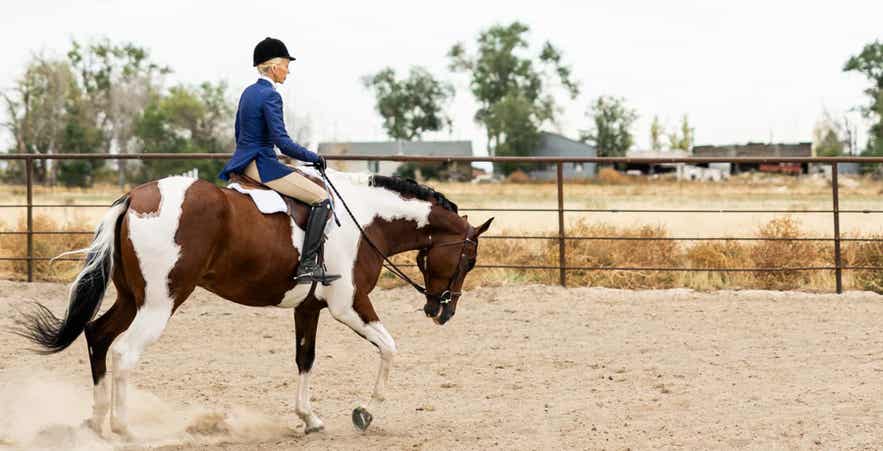
Many horses with EGUS show few obvious signs, particularly in early stages. By the time symptoms become hard to miss, the disease may already be advanced.
Research on Standardbred racehorses found that EGUS negatively affected measurable fitness parameters, even in horses without dramatic clinical signs. [3]
Signs typically cluster across three areas.
Performance is often where riders first notice a change. A horse with EGUS may resist moving forward, show increased discomfort in collected or lateral work, become sensitive around the girth, or show a general change in willingness that has no clear musculoskeletal explanation.
Behavior changes can be easy to miss. Altered temperament at feeding time, stereotypic behaviors, and increased irritability during grooming or tacking up all warrant attention.
Digestive signs include recurrent low-grade colic (particularly after meals), inconsistent appetite, variable manure quality, poor body condition despite adequate calories, and a dull coat.
Diagnosing EGUS
Confirming a diagnosis of EGUS requires a gastroscopy. A flexible endoscope is passed through the nostril and esophagus into the stomach, allowing direct visualization of both the squamous and glandular mucosa.
Horses are fasted for 12 to 18 hours before the procedure to allow clear visualization of the stomach lining.
Ulcers are graded on a scale of 0 to 4. Grade 0 is a normal, healthy mucosa. Grade 4 describes extensive, deep ulceration. [1]
Clinical signs, feeding history, and response to omeprazole can all support a clinical suspicion of EGUS. None of them confirms it. Because ESGD and EGGD require different management approaches, a confirmed diagnosis guides better decisions for successful outcomes.
Researchers are investigating non-invasive diagnostic options, including salivary biomarkers such as calprotectin and aldolase, which have shown early promise for identifying affected horses. However, these tests have not yet replaced gastroscopy in clinical practice. [4]
Dietary Management and Prevention Strategies
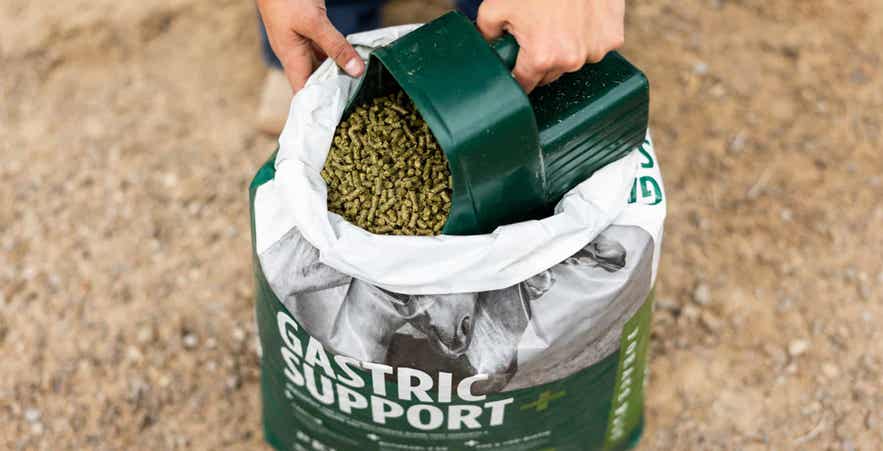
Dietary management is the most accessible and impactful tool horse owners have for reducing EGUS risk, supporting recovery, and prevention.
Forage does more than fill the stomach. It provides both chemical buffering and physical protection. Pharmaceutical treatment is often necessary when active disease is confirmed, but a forage-based feeding approach addresses the root drivers rather than the symptoms alone. [5]
How Forage Buffers the Stomach
Chewing forage triggers saliva production. Equine saliva is bicarbonate-rich and provides direct acid-neutralizing capacity to the stomach. For the squamous mucosa, it is the only endogenous buffer available.
Continuous pH monitoring studies have confirmed that horses with uninterrupted access to hay maintain significantly higher intragastric pH than those with intermittent access, and that fasting periods consistently drive pH into the range associated with squamous mucosal damage. [2]
Long-stem hay also creates a fibrous mat in the stomach that physically limits acid splash during exercise. [1]
Feeding guidance recommends a minimum of 1.5% of body weight in forage daily, distributed to avoid gaps longer than 4 to 6 hours. [5]
For a 1,000-pound horse, that is at least 15 pounds of dry forage per day. Horses with active EGUS or elevated risk often benefit from free-choice forage. For practical guidance on daily forage rates, see our feeding guide for horses managing gastric ulcers.
Alfalfa for Gastric Health
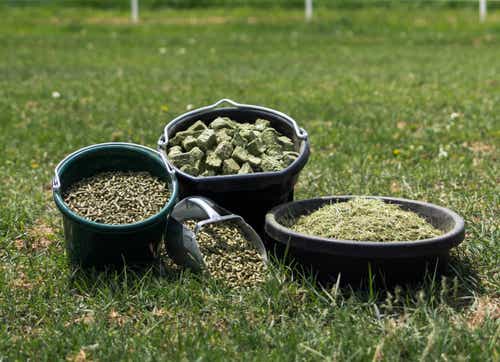
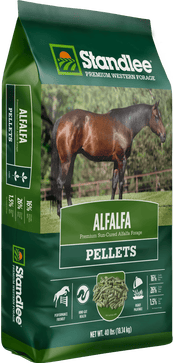
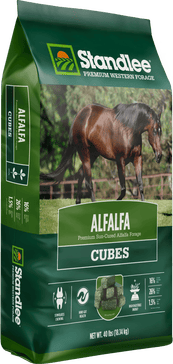
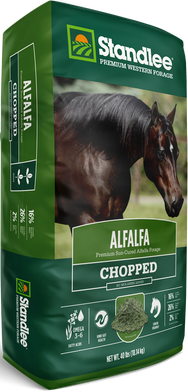
Not all forages buffer acid equally. Alfalfa has drawn the most research attention for its specific gastric benefits. This legume hay contains substantially more calcium and magnesium than grass hays, which contributes to direct acid buffering.
A controlled crossover study compared horses fed alfalfa against horses fed bromegrass hay. The alfalfa group maintained significantly higher gastric pH for up to five hours after feeding and showed lower numbers and reduced severity of nonglandular squamous lesions throughout the observation period. [6]
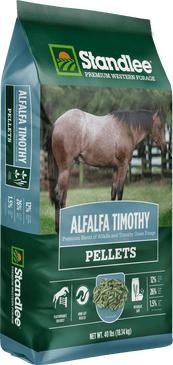
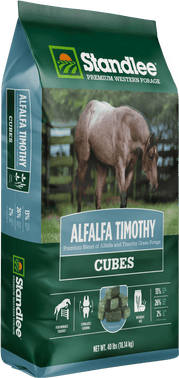
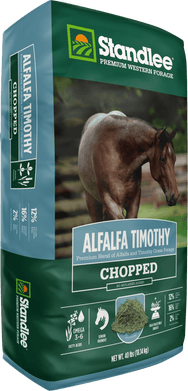
Alfalfa Timothy blends offer the gastric benefits of alfalfa alongside the more moderate protein and energy levels of timothy grass, making them a practical fit for a wide range of horses.
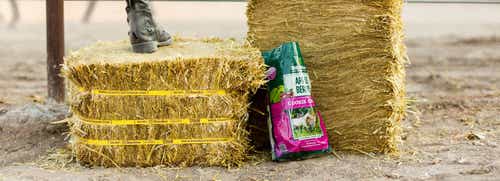
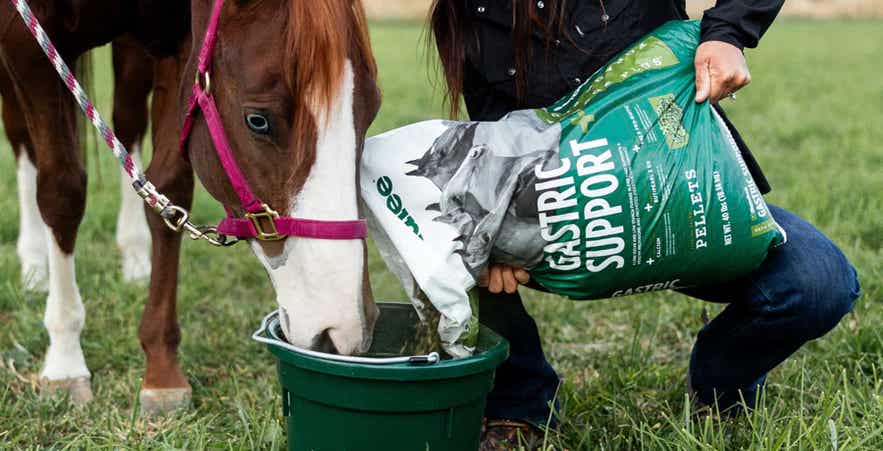
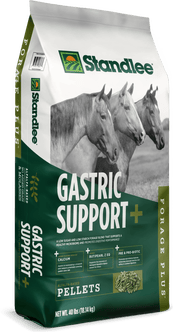
For horses that need more targeted support, Forage Plus® Gastric Support is a grain-free, alfalfa-based forage pellet formulated specifically for digestive health. It features marine-derived calcium to help maintain balanced gastric pH, ButiPearl Z EQ to nourish the gut lining, and a pre- and probiotic blend for microbiome balance.
Including alfalfa at roughly 25–30% of total daily forage intake is a practical starting point for horses at elevated risk of ulcers. Blending with high-quality grass hay helps keep the overall diet balanced without oversupplying calories for horses with moderate energy demands. Horses with higher energy demands may be able to tolerate a higher percentage of alfalfa as part of their daily forage intake.
Reducing High-Starch Concentrates
Feeding a forage-based diet means taking a closer look at the role of concentrates in the horse’s diet.
A 2026 review of non-pharmacological EGUS management found that replacing starch-heavy diets with high-fiber alternatives reduced EGUS risk and improved gastric pH, body condition, behavior, and performance parameters. [5]
For horses that need concentrates to meet energy demands, consider feeding hay before grain rather than after, dividing concentrate portions across more daily feedings, and choosing lower-starch, higher-fiber alternatives when possible.
Inadequate forage and excess concentrates can also contribute to behavioral problems. For horses showing behavioral signs associated with forage deprivation or gastric discomfort, this overview of forage and equine behavior covers the connection in more depth.
Feeding Forage for Gastric Health
EGUS is a management disease. The horse’s stomach did not evolve for large meals, extended fasting, or grain-heavy diets. When management aligns with equine physiology, ulcer risk drops substantially.
Building your feeding program around a solid foundation of forage is the first step in effective ulcer management and prevention. That means providing consistent access to hay throughout the day, feeding a daily forage target of 1.5–2% of body weight, and supplementing with alfalfa to support buffering capacity.
Standlee’s forage products support each part of that strategy from high-quality grass forages to premium alfalfa products and Forage Plus® Gastric Support for horses with active digestive sensitivities or elevated stress.
Use Standlee’s Forage Finder and the Feed Calculator to build a forage foundation that fits your horse.
Frequently Asked Questions
What is equine gastric ulcer syndrome (EGUS)?
Equine Gastric Ulcer Syndrome is an umbrella term for ulceration and erosion of the stomach lining in horses. It covers Equine Squamous Gastric Disease (ESGD), which affects the upper squamous region, and Equine Glandular Gastric Disease (EGGD), which affects the lower glandular region.
How do I know if my horse has gastric ulcers?
Common signs include unexplained performance decline, girthiness, resistance to work, altered behavior around feeding time, recurring low-grade colic, poor body condition, and a dull coat. The only way to confirm a diagnosis is a gastroscopy performed by a veterinarian.
What is the best forage for horses with gastric ulcers?
Alfalfa-based forage has the most research support for gastric health. Its higher calcium content provides stronger buffering capacity than grass hays, and controlled studies show fewer and less severe squamous lesions in horses fed alfalfa.
How much hay should a horse with gastric ulcers eat per day?
Horses with EGUS or elevated ulcer risk should receive between 1.5 and 2% of their body weight in forage daily. For a 1,000-pound horse, that is 15 to 20 pounds of dry forage. Eliminating gaps in access longer than 4 to 6 hours matters as much as total daily quantity.
Can diet changes alone treat stomach ulcers in horses?
Not for horses with active disease. Dietary management supports healing and reduces the risk of recurrence, but it does not replace veterinary assessment or pharmaceutical treatment. A forage-based approach works alongside medical care, not instead of it.
Does forage particle size matter for ulcer prevention?
Yes, particularly for preventing squamous ulceration. Long-stem hay forms a fibrous mat in the stomach that physically buffers acid and limits splash during exercise. Forage pellets provide chemical buffering but pass through the stomach more quickly and do not form the same physical mat.
What role does stress play in equine gastric ulcers?
Stress is a documented contributing factor for both ESGD and EGGD. Stall confinement, transport, competition, social isolation, and abrupt changes in routine all increase risk. Consistent forage access, regular turnout, and a predictable daily schedule reduce the physiological stress load on the gastrointestinal system.
Is EGUS more common in performance horses?
Yes, significantly. Prevalence reaches 80 to 100% in Thoroughbred racehorses versus 17 to 58% in leisure horses. The elevated risk in performance horses reflects higher-starch diets, pre-training fasting, intense exercise, frequent transport, and more restricted access to forage.
References
- Vokes J, et al. Equine Gastric Ulcer Syndrome: An Update on Current Knowledge. Animals. 2023.
- Husted L, et al. Effect of a feed/fast protocol on pH in the proximal equine stomach. Equine Vet J. 2009.
- Lo Feudo CM, et al. Equine Gastric Ulcer Syndrome affects fitness parameters in poorly performing Standardbred racehorses. Front Vet Sci. 2022.
- Muñoz-Prieto A, et al. Changes in Calprotectin (S100A8-A9) and Aldolase in the Saliva of Horses with Equine Gastric Ulcer Syndrome. Animals. 2023.
- Lensing R, Barton AK. Update on diagnosis, nonpharmacological treatment and prevention of Equine Gastric Ulcer Syndrome (EGUS). Equine Vet Educ. 2026.
- Nadeau JA, et al. Evaluation of diet as a cause of gastric ulcers in horses. Am J Vet Res. 2000.
Additional Learning Resources
From the Standlee Barn Bulletin Blog
- What Are Gastric Ulcers and What Can I Feed My Horse to Help Manage Them?
- Therapeutic Forage – Horse Health Through Diet
- Changing Equine Behavior with Forage
- Consistent Nutrition and Forage Quality Defends Horses from Digestive Issues
From the Standlee Beyond the Barn Podcast
From the Standlee Nutritional Papers
Products featured in this post
Enjoying the Standlee blog?
Subscribe to Standlee emails and get our newest content (and coupons, offers, and other great stuff) sent to your inbox!
Subscribe Now