Teff Hay for Horses: Benefits, Nutrition and Feeding Guide
You may be considering Teff because your horse maintains weight a little too easily, or because you are looking more closely at sugar and starch in the feeding program. Before making a change, there are a few useful questions to answer. What does Teff provide? How does it compare with the hay you already feed? And what should you check before choosing it for your horse?
A strong Forage Foundation™ begins with understanding the forage and building the rest of the diet around it. With Teff, that means considering its nutritional value alongside your horse’s body condition, workload and daily intake. The goal is not simply to choose a different grass. It is to understand whether that grass helps meet your horse’s needs.
Key Takeaways
- Teff can fit feeding programs for horses with lower calorie needs, but harvest maturity and actual intake influence the nutrition the horse receives. [1], [4]
- Teff is not automatically low in sugar or free from excess nitrates. Evaluate a representative analysis for the hay being fed. [2], [3]
- Feed by weight and consider the entire feeding program. Hay, pasture and supplemental forage contribute to daily intake. Forage may meet calorie needs while leaving other nutritional requirements to be addressed.

Join Our Email List Today!
Be the first to get the latest news, promotions, updates and more from Standlee when you join our email list!
By signing up for email, you are agreeing to receive news, offers, and information from Standlee Premium Products, LLC®. You can also visit our Privacy Policy. Easy unsubscribe links are provided in every email.
What Is Teff Hay?
Teff is a warm-season annual grass grown for forage and grain. When harvested for hay under suitable conditions, it is typically fine-stemmed and leafy. Its growing requirements differ from those of cool-season grasses such as Timothy. [1]
Teff Hay Nutrition: Protein, Fiber and Calories
Teff supplies fiber that the horse uses through fermentation in the hindgut. Microorganisms break down usable plant fiber into compounds the horse can absorb for energy. This is a benefit of appropriate forage feeding generally, not something unique to Teff, and it helps explain why forage should come before decisions about what else belongs in the feed bucket.
Harvest maturity influences how much nutrition that forage provides. In a study published in the Journal of Animal Science, horses consumed less later-maturity Teff hay, and digestibility declined as the forage matured. Protein concentrations also decreased. Having hay in the feeder is only part of the picture. Your horse also needs to consume enough of it and receive the nutrients required from the overall diet. [4]
A forage analysis helps connect those questions. Protein, fiber, estimated energy, minerals and moisture provide a more useful picture than appearance alone. Those results can help you determine whether the hay fits your horse’s feeding plan and what the rest of the diet may need to provide.
Is Teff Hay Good for Horses?
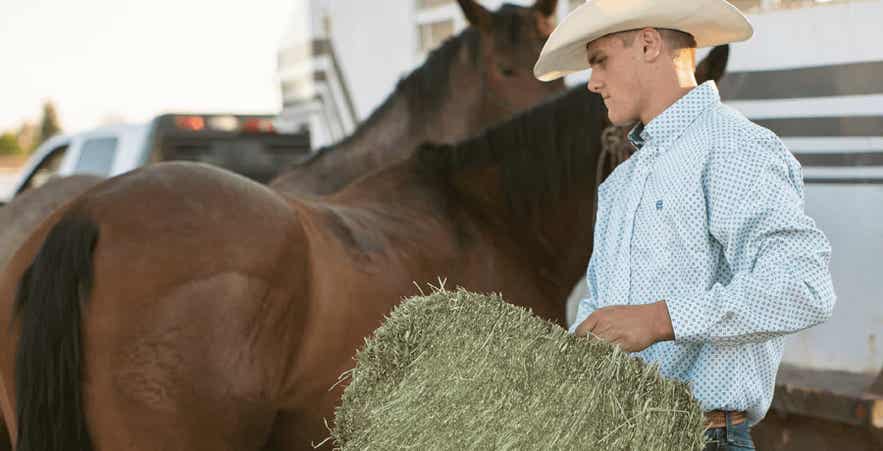
Teff can be useful for mature horses at maintenance or in light work, particularly easy keepers that would benefit from a lower-energy forage. It tends to contain more fiber and less digestible energy than many cool-season forages, helping explain its role in diets for horses with lower calorie needs. [1]
Horses with greater nutritional demands need a different evaluation. A growing horse, lactating mare or horse in demanding work may require more energy, protein or other nutrients than the selected forage provides. A hay that helps manage your horse’s weight may still leave other nutritional needs to be met. Use the forage analysis to determine what the rest of the diet should provide. A forage-based diet is not necessarily a forage-only diet.
Is Teff Hay Low in Sugar and Starch?
Teff is not automatically low in sugar or starch. Warm-season grasses generally contain less nonstructural carbohydrate than cool-season grasses, but growing conditions and harvest management can change the result. Some warm-season forage can still exceed the concentrations appropriate for horses requiring carbohydrate restriction. [2]
On a forage analysis, water-soluble carbohydrates, or WSC, include sugars and fructans. Ethanol-soluble carbohydrates, or ESC, primarily represent simpler sugars, while starch is measured separately. Nonstructural carbohydrates, commonly abbreviated NSC, are often calculated as WSC plus starch. These measurements describe different carbohydrate fractions, so an ESC value should not be treated as an NSC value. [2], [5]
Is Teff Hay Suitable for Horses With Insulin Resistance?
It may be, depending on the actual forage and the horse’s dietary needs. For a horse with insulin dysregulation or a history of laminitis, ask your veterinarian or equine nutritionist which carbohydrate measurements and limits should guide selection. Use those targets to evaluate the hay rather than relying on the forage name. [2]
Can Teff Hay Be High in Nitrates?
Yes. High nitrate concentrations have been documented in Teff hay, including forage examined in research published in the Journal of Equine Veterinary Science. That does not mean all Teff hay is high in nitrates, but it does mean nitrate levels are something worth understanding when selecting a forage source. [3]
Nitrates can accumulate when growing conditions interfere with normal plant development. High nitrogen availability, drought, reduced sunlight and other environmental stresses can contribute to elevated concentrations. Excessive nitrate intake can interfere with the blood’s ability to carry oxygen, which is why testing becomes important when the nitrate status of a forage is unknown. [3], [6]
When you purchase Standlee Teff Grass forage, that testing is already part of the quality control process. Standlee routinely tests its forage throughout production and will not process or sell Teff that does not meet our quality standards, including forage with unacceptable nitrate levels. That means you can feed Standlee Teff with confidence rather than having to arrange nitrate testing yourself.
If you purchase Teff hay from a local grower or another source where a current analysis is not available, ask for an analysis or get one yourself before feeding. Make sure that the testing includes the appropriate sugar and starch measurements and specifically request nitrate testing, since nitrate analysis may not always be included in a standard forage panel. [2], [3], [6]
Knowing the source of your forage matters. Teff can be a useful part of a feeding program, but the forage name alone cannot tell you what is in the bale. Choosing a supplier that tests its forage helps remove some of that uncertainty and gives you more confidence in what you are feeding.
How to Test Teff Hay for Sugar, Starch and Nitrates
Begin by asking the supplier for an analysis that represents the specific hay lot you are purchasing. A report from another cutting or an earlier harvest does not describe the current hay. When a suitable report is unavailable, arrange testing using a hay probe and samples collected from multiple bales within the same lot. Follow the laboratory’s sampling instructions rather than submitting a handful pulled from one bale. [7]
Confirm what the testing package includes. Sugar and starch measurements should be identified by name, and nitrate testing should be requested rather than assumed to be part of a standard nutrient panel. Protein, fiber, energy and minerals remain important because the purpose is to understand the whole forage, not just obtain one acceptable number. [8]
At Standlee, quality oversight begins in the field and continues through processing. Our forage products also include a guaranteed analysis supported by frequent laboratory testing, giving you useful information about what they contribute to the feeding program. The minimums and maximums describe product guarantees, not exact amounts in every serving. Read them alongside the ingredient list and feeding directions, and contact Standlee with questions about additional measurements needed for your horse.
Teff Hay vs. Timothy Hay: What Is the Difference?
Teff is a warm-season annual grass, while Timothy is a cool-season grass. Teff often has a higher-fiber, lower-energy profile than cool-season forages, making it worth considering for an easy keeper. Differences between individual hay lots still matter. [1], [2]
The useful comparison is between the forages available to you, not just their names. Compare the analyses, consider how readily your horse consumes each hay, and identify what the rest of the diet would need to contribute. Our Timothy hay guide offers a closer look at that forage and its role in a feeding program.
For a closer look at available formats, explore Standlee’s Timothy Grass Compressed Bale and Certified Timothy Grass Pellets, and review each product’s nutritional information and feeding directions.
Teff Grass Pellets: How Do They Compare With Hay?
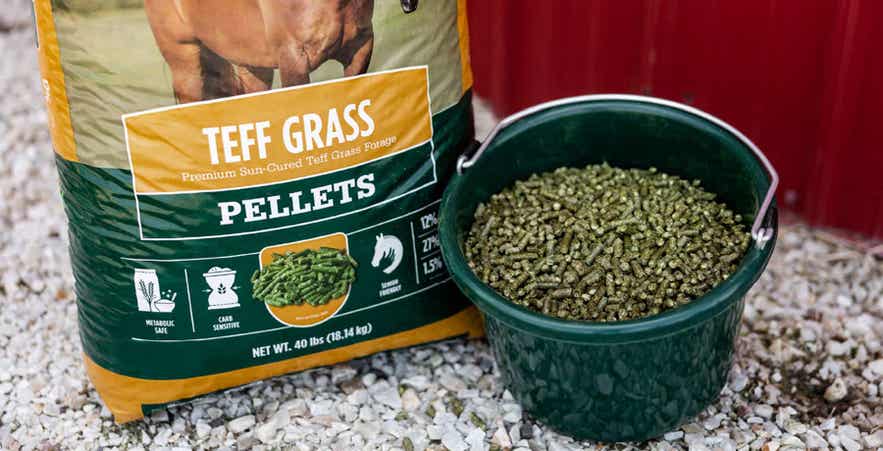
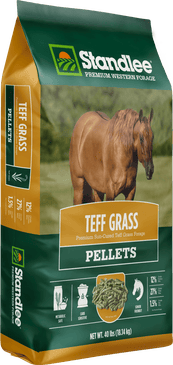
Choosing between Teff hay and pellets involves more than storage or convenience. Standlee Teff Grass Pellets are made from ground, sun-cured forage and are easy to weigh into meals. For horses with dental limitations or aggressive eating behavior, the product directions recommend soaking until properly softened. Consider how comfortably your horse can consume the forage and what preparation each meal requires.
The product’s published nutritional information applies to that product, not to every bale of Teff hay. When comparing a product label with a hay report, make sure the values are expressed on the same basis. Moisture affects the numbers, so as-fed and dry-matter values should not be compared directly. [9]
How Much Teff Hay Should a Horse Eat?
Start with the total forage requirement rather than a separate allowance for Teff. Hay, pasture and forage pellets all contribute to that daily total. The appropriate amount depends on body condition, workload, health and the nutritional value of the forage.
For illustration, a 1,000-pound horse whose plan calls for 2% of body weight as forage dry matter would need 20 pounds of forage with the water excluded. That is approximately 22 pounds of hay containing 90% dry matter. This is a feeding example, not a prescription for every horse. [9] Weigh hay rather than counting flakes, and weigh pellets before adding water so the amount offered matches the feeding plan.
Introducing and Preparing Teff
Introduce a new forage gradually and monitor appetite and intake. When feeding pellets, follow the Teff Grass Pellets feeding directions and check that soaked pellets have softened properly before feeding. Store forage protected from weather, and do not feed moldy or insect-infested material.
Continue watching the horse as well as the feed. A decline in intake or body condition deserves attention, particularly when changing to a forage that may supply less usable energy. Adjustments should respond to what the horse is actually consuming and receiving from the diet. [4]
Building a Strong Forage Foundation With Teff
Choosing Teff becomes more straightforward when you can connect the forage analysis with your horse’s needs. Consider what it supplies, how much your horse will eat, and what the rest of the feeding program must contribute. That is the purpose of a Forage Foundation approach: begin with the forage and use that understanding to guide the whole diet.
Before choosing your next hay lot, make the analysis part of the conversation. Standlee’s hay and forage testing guide explains how to get started and how the results can support more informed feeding decisions.
Frequently Asked Questions About Teff Hay
Can Teff Pellets Replace All of My Horse’s Hay?
Standlee recommends that pelleted forage not be the sole forage source. A horse that cannot effectively chew hay needs an individualized replacement plan developed with a veterinarian or equine nutritionist, rather than continued reliance on hay the horse cannot consume.
Do I Need to Test Every Bale of Teff Hay?
Routine testing uses a representative sample from multiple bales within one defined lot, rather than testing every bale separately. Follow the laboratory’s sampling instructions and obtain an analysis representing the new hay when the lot changes. [7]
Will Soaking Make High-Nitrate Teff Hay Safe?
Do not assume that it will. Research has demonstrated nitrate reductions under specific soaking conditions, but those results do not guarantee that every hay lot or soaking method will produce suitable forage. Soaking also removed some nutrients in the study. Have suspect hay and any proposed feeding plan evaluated before use. [3]
Research References
- Martinson, K. University of Minnesota Extension. Fitting teff into the horse diet. Reviewed 2021.
- Oregon State University Extension. Understanding Sugar and Nonstructural Carbohydrates in Equine Pasture and Hay. EM 9415.
- Hansen, T. L., Fowler, A. L., Strasinger, L. A., Harlow, B. E., Hayes, S. H., and Lawrence, L. M. (2016). Effect of Soaking on Nitrate Concentrations in Teff Hay. Journal of Equine Veterinary Science, 45, 53–57. doi:10.1016/j.jevs.2016.06.071.
- Staniar, W. B., Bussard, J. R., Repard, N. M., Hall, M. H., and Burk, A. O. (2010). Voluntary intake and digestibility of teff hay fed to horses. Journal of Animal Science, 88(10), 3296–3303. doi:10.2527/jas.2009-2668.
- Equi-Analytical. Glossary of Nutrient Terms.
- Thompson, L. J. Merck Veterinary Manual. Nitrate and Nitrite Poisoning in Animals. Reviewed April 2026; updated August 2026.
- Equi-Analytical. Taking a Sample.
- Equi-Analytical. Analytical Service Packages.
- Equi-Analytical. As Sampled Vs. Dry Matter Results.
Additional Learning Resources
Products featured in this post
Enjoying the Standlee blog?
Subscribe to Standlee emails and get our newest content (and coupons, offers, and other great stuff) sent to your inbox!
Subscribe Now