Timothy Hay for Horses: Benefits, Nutrition and Feeding Guide
Choosing hay comes with plenty of questions. Is Timothy a good fit for your horse? Would pellets or cubes make feeding easier? And what does the information on the bag actually tell you? You do not need to become a nutrition expert to make an informed choice, but understanding a few key details can make those decisions more straightforward.
Timothy hay can be part of many feeding programs, but the name of the forage is only the beginning. Understanding what your forage provides, including fiber, energy, protein and carbohydrate levels, helps you build the rest of the diet on a stronger nutritional foundation. The amount your horse eats, how comfortably they can chew it, and how Timothy fits with the rest of the diet all matter. In this guide, we will walk through the benefits of Timothy, compare available forage formats and explain what to consider when building a feeding plan around your horse.
Key Takeaways
- Timothy provides valuable fiber, but its nutrient content varies with growing conditions and maturity at harvest. [1]
- Timothy is not automatically low in sugar. Use nutritional information, not the forage name alone, when managing carbohydrate intake.
- Choose the format for your horse. Consider chewing ability, daily intake, and the preparation each product requires.
- Feed by weight and consider the whole diet. Hay, pasture, and supplemental forage all contribute to the daily allowance.

Join Our Email List Today!
Be the first to get the latest news, promotions, updates and more from Standlee when you join our email list!
By signing up for email, you are agreeing to receive news, offers, and information from Standlee Premium Products, LLC®. You can also visit our Privacy Policy. Easy unsubscribe links are provided in every email.
What Is Timothy Hay?
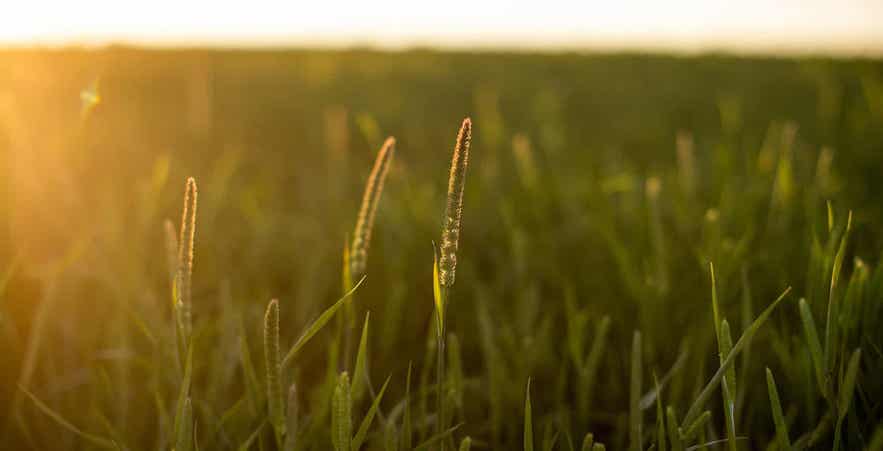
Timothy is a cool-season grass commonly harvested as hay and used in chopped forage, pellets and cubes. It supplies fiber along with varying amounts of protein, minerals, and energy. Compared with alfalfa, a legume, grass hays generally contain less protein and calcium. Those differences are useful to understand, but they do not replace evaluating the actual forage you are feeding. [1]
A forage-based diet is not necessarily a forage-only diet. Timothy may provide enough calories while leaving gaps in other nutrients, depending on the horse and the rest of the diet. Understanding what the forage provides helps identify those gaps and determine whether additional feed or supplementation is needed to meet your horse’s nutritional needs.
Timothy Hay Nutrition: Protein, Fiber, Sugar, and Energy
Two lots of Timothy can share a name without sharing the same nutritional value. As forage plants mature, fiber generally increases and digestibility can decline. That means the grass species or cutting number alone cannot tell you everything you need to know about what is in the bale. [1]
A forage analysis gives you a closer look at protein, fiber, minerals, moisture, and estimated energy. Appropriate testing can also provide sugar and starch information. This is particularly helpful when you are buying a new hay lot or working through a specific feeding concern.
When you turn over a bag to read the guaranteed analysis, it helps to know what those numbers mean. Minimums and maximums describe product guarantees, not exact amounts in every serving. Read them alongside the ingredient list and feeding directions to understand both what the product contains and how it is intended to fit in the overall diet. [2]
What Shapes Forage Quality?
Forage quality starts in the field. Growing conditions, field management, plant maturity and harvest timing can all influence the nutritional characteristics of the finished forage.
Because Standlee oversees the forage production process from the field through processing and packaging, quality can be considered at each stage rather than only after the forage is harvested. Each finished forage product also includes a guaranteed analysis, giving horse owners a clearer starting point for understanding what they are feeding and comparing forage options.
Together, field management and nutritional information help make forage decisions more informed and less reliant on appearance or forage type alone.
What Are the Benefits of Timothy Hay for Horses?

Fiber That Supports Digestion and Daily Energy
When your horse eats Timothy, the fiber does more than keep them occupied between meals. Microorganisms in the cecum and large colon ferment plant fiber into compounds called volatile fatty acids (VFAs), which the horse uses for energy. This is one reason forage serves as the nutritional foundation of the feeding program and should be considered before deciding what else belongs in the feed bucket. [3]
Chewing and Foraging Opportunities
For horses that can chew it effectively, long-stem hay provides time spent eating and stimulates saliva production. Saliva helps buffer stomach contents, so how your horse eats matters alongside what the forage supplies. These are benefits of appropriate forage feeding generally, not something unique to Timothy. [3]
Processing can change that feeding experience. A study comparing long-stem hay with alfalfa-and-grass cubes found differences in eating time and chewing activity. Providing fiber and providing chewing opportunities are related goals, but not every forage format delivers them in the same way. [4]
Flexibility Across Feeding Formats
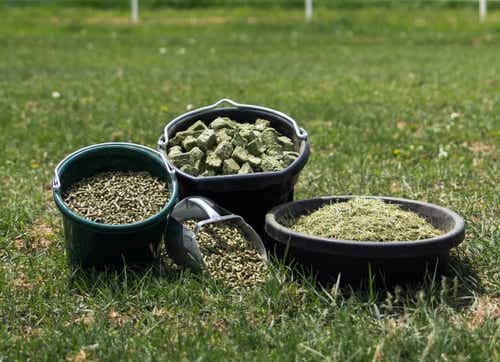
A horse that eats long-stem hay comfortably may need a different option from one that struggles to chew. Timothy is available in several forage formats, including hay, chopped forage, pellets and cubes, allowing the form to be matched to the horse’s chewing ability, feeding needs and daily routine. The goal is to choose a format the horse can consume effectively and prepare it according to feeding directions.
Is Timothy Hay Low in Sugar?
Not automatically, and this is an important distinction. The name “Timothy” alone does not tell you whether a forage is appropriate for a carbohydrate-restricted diet.
For a horse with insulin dysregulation, a history of laminitis, or another condition requiring dietary management, use the actual nutritional information to make that decision.
On a forage analysis, you will see several carbohydrate terms. Water-soluble carbohydrates, or WSC, include sugars and fructans. Ethanol-soluble carbohydrates, or ESC, primarily represent simpler sugars, while starch is measured separately. Because these values describe different carbohydrate fractions, they are not interchangeable. [5]
You do not have to interpret those numbers on your own. Ask your veterinarian or equine nutritionist which measurements and limits are appropriate to your horse.
What Horses Do Well on Timothy Hay?
Timothy hay can fit feeding programs for many mature horses, including those at maintenance or in light work. For easy keepers, the goal is to provide enough forage while maintaining an energy intake that supports a healthy body condition. A lower protein number alone does not tell you whether the diet provides the right amount of energy. [1]
Growing horses, breeding animals, and horses in heavier work may need more calories, protein, or other nutrients. Timothy can still contribute to those diets, but its role should match the horse’s demands. Start with what the forage supplies, then consider what may need to be added to support the rest of the diet.
For senior horses, chewing ability and body condition matter more than age alone. Some senior horses continue to manage long-stem hay comfortably, while others may benefit from chopped or softened forage. Dropping partially chewed hay, struggling to eat, or losing weight despite available feed may indicate an underlying dental or health problem. Changing forage does not replace addressing the underlying issue.
Why Timothy Fits into a Forage Foundation
Timothy can play an important role in a horse’s Forage Foundation by providing consistent fiber and flexibility across multiple feeding formats. The right choice depends on the horse, the forage analysis, and the rest of the feeding program, not simply the forage name.
Choosing Between Timothy Hay, Pellets, Chopped Forage and Cubes
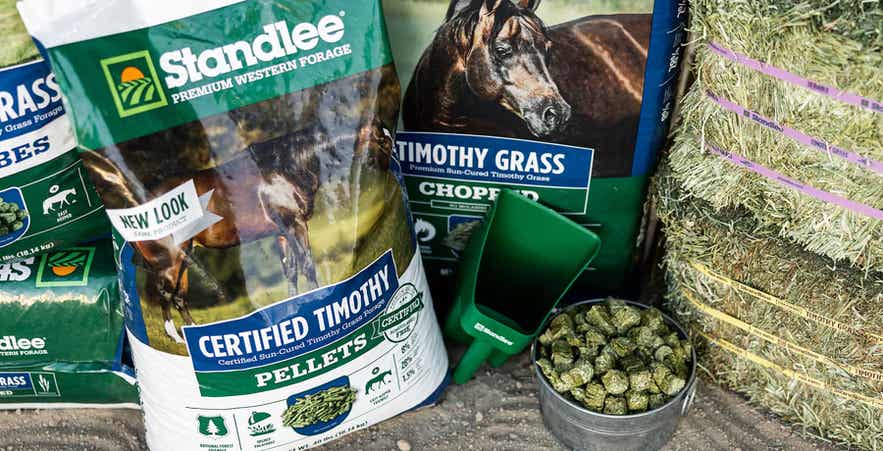
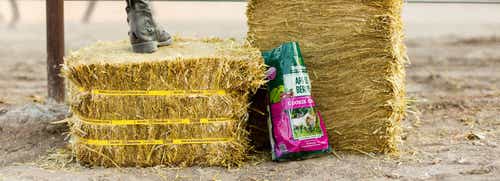
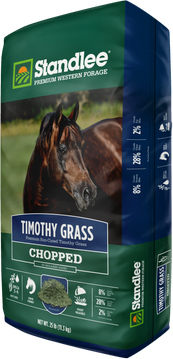
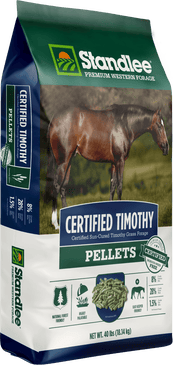
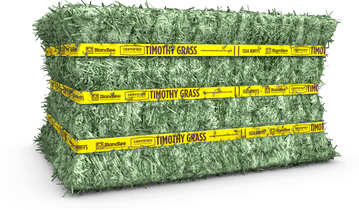
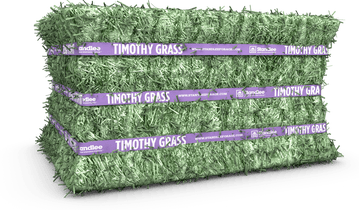
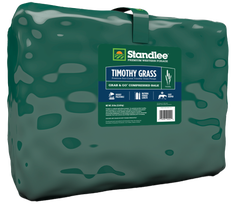
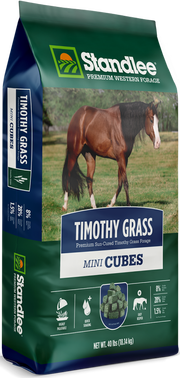
Timothy is available in several forage formats, and the best choice depends on your horse’s chewing ability, feeding needs and daily routine. Long-stem Timothy Grass Compressed Bales provide baled forage in a compact form, while Certified Timothy Grass Pellets and Timothy Grass Mini Cubes offer measured formats that can be soaked when appropriate. Timothy Grass Chopped provides a shorter forage option, while Alfalfa Timothy Cubes combine two forage types with a different nutritional profile.
How Much Timothy Hay Should a Horse Eat?
Start with total daily forage intake, including hay, pasture, and supplemental forage products. For many adult horses, the recommended intake falls between 1.5% and 2.5% of body weight daily, with some consuming more. The appropriate amount depends on body condition, workload, health, and the rest of the diet.
For a 1,000-pound horse, that may mean roughly 15 to 20 pounds of forage per day as a general starting point. Pasture and other forage products contribute to that same daily total, so they should be considered alongside hay rather than added on top of it.
A scale helps make those recommendations more practical. Weigh hay rather than relying on the number of flakes. Measure pellets or cubes before soaking so you know how much forage you are actually feeding.
Feeding Preparation Tips
Introduce Changes Gradually
Give your horse time to adjust when introducing a new forage. Follow the specific product instructions and monitor appetite and intake as you make the change.
Soak When Appropriate
Soaking can soften pellets and cubes while increasing hydration, making it useful for horses with dental limitations, aggressive eating behavior, or a feeding plan that calls for softened forage. The goal is to prepare a texture your horse can comfortably consume.
Our guide to soaking hay cubes and pellets recommends using two parts water to one part forage by volume, generally for at least thirty minutes. Allow longer when needed, especially in cold conditions, and stir to check that the product breaks apart into a soft consistency. Feed soaked forage fresh and discard leftovers before they spoil.
Protect Quality and Monitor Intake
Keep forage in a covered, cool, and well-ventilated area protected from weather. Before feeding, inspect it for foreign material or signs of spoilage, and never feed moldy or insect-infested forage.
Continue to monitor the horse as closely as the forage. Changes in appetite, chewing, or body condition can point to a feeding issue or a health concern that needs veterinary assessment.
Building a Strong Forage Foundation
Choosing Timothy becomes more straightforward when you understand what the forage provides and how it fits into the rest of the diet. Nutrition, feeding format, daily intake and your horse’s individual needs all play a role in building a strong feeding program.
That is the idea behind Forage Foundation: start with the forage, understand what you are feeding and build from there.
Explore the Standlee Forage Finder to compare forage options for your horse.
Frequently Asked Questions
Is Timothy hay better than alfalfa for horses?
Neither is better for every horse. Timothy generally contains less protein and calcium than alfalfa, but the right choice depends on the actual forage and your horse’s needs. Some feeding programs use both, with the amounts chosen to complement the rest of the diet. [1]
Is Timothy hay suitable for horses with metabolic conditions?
It may be, but do not use the grass species alone to make that decision. Review the actual forage analysis or product information with your veterinarian or equine nutritionist, particularly when managing insulin dysregulation or laminitis risk.
Can Timothy pellets or cubes completely replace hay?
Our Timothy pellet and mini cube directions recommend retaining some long-stem forage. A horse that cannot chew hay effectively needs a different, individualized plan. Work with your veterinarian or equine nutritionist to select suitable replacement feeds rather than relying on hay your horse cannot consume.
Are Timothy pellets a complete feed?
No. Straight Timothy pellets supply forage, not a complete, fortified ration. They should not be expected to meet every vitamin, mineral, and other nutrient requirement on their own. Consider what they provide alongside everything else your horse eats. [2]
Do Timothy pellets and cubes need to be soaked?
Follow the product directions and your horse’s feeding plan. Soaking is particularly useful for horses with dental limitations or aggressive eating behavior. Before feeding, check that the forage is properly softened; temperature and other conditions can affect how long that takes.
Can senior horses still eat Timothy hay?
Yes, as long as they can chew and consume it effectively. Some senior horses need a softened alternative, while others continue to manage long-stem hay comfortably. Let chewing ability, body condition, and health guide the decision rather than age alone.
Research References
- University of Minnesota Extension. Selecting and storing hay.
- Equi-Analytical. Reading a Manufactured Feed Label.
- Ermers C, et al. The Fibre Requirements of Horses and the Consequences and Causes of Failure to Meet Them.
- Petz V, et al. Changes in eating time, chewing activity and dust concentration in horses fed either alfalfa cubes or long-stem hay.
- Equi-Analytical. Glossary of Nutrient Terms.
Additional Learning Resources
Products featured in this post
Enjoying the Standlee blog?
Subscribe to Standlee emails and get our newest content (and coupons, offers, and other great stuff) sent to your inbox!
Subscribe Now