Feeding Forage Pellets to Horses: The Complete Guide
Hay pellets, also called forage pellets when made from hay, provide fiber and nutrients in a compact form that is easy to weigh, store, and feed. They can supplement baled hay or help meet forage needs when chewing long-stem hay becomes difficult. The right choice starts with the forage inside the pellet and how it fits the rest of your horse’s diet. [1]
At Standlee, that understanding begins with hands-on forage management, from the field through processing and quality testing. Our Forage Foundation™ approach connects that knowledge to your feeding program: understand what the forage supplies, choose a form your horse can manage, and balance the nutrients the diet still needs. Whether you are comparing Timothy and Alfalfa pellets or deciding how much to feed, the goal is a feeding program built around your horse.
Key Takeaways
- Hay-based forage pellets provide nutritional fiber, but not the same physical structure or chewing time as long-stem hay.
- Feeding amounts depend on the horse’s total forage intake. Weigh pellets before adding soaking water.
- Choose Alfalfa, Timothy, or another forage based on the whole diet, not pellet shape alone.
- Follow product-specific soaking directions, especially for horses with dental problems, rapid eating habits, or a history of choke.
- Plain forage pellets supply forage nutrients, but they are not a complete, vitamin- and mineral-balanced feed. [1][2]

Join Our Email List Today!
Be the first to get the latest news, promotions, updates and more from Standlee when you join our email list!
By signing up for email, you are agreeing to receive news, offers, and information from Standlee Premium Products, LLC®. You can also visit our Privacy Policy. Easy unsubscribe links are provided in every email.
What are Hay Pellets and Forage Pellets?
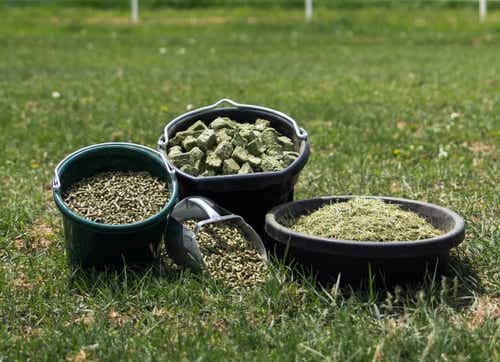
Hay pellets are dried hay that has been ground and compressed into small cylinders. When made from hay, “hay pellets” and “forage pellets” commonly describe the same type of product. Alfalfa, Timothy, Orchard Grass, Teff, and blends provide different forage options within that format.
Check the ingredient list, guaranteed analysis, and feeding directions to understand what the product supplies. Some pellets contain forage alone, while others include additional ingredients or vitamin and mineral fortification. A complete feed serves a different role than plain hay pellets, even when the products look similar. [1]
Forage supplies fiber that microbes in the horse’s hindgut ferment, along with varying amounts of energy, protein, and minerals. Processing changes its physical form, but the forage still needs to be matched to the horse’s nutritional requirements. [6]
What are the Benefits of Feeding Forage Pellets?
Forage pellets make it easier to measure and manage forage intake. Bagged products are convenient to store and transport, and soaking creates a softer forage option for horses that struggle to chew hay. Those practical benefits help owners match the feeding routine to the horse. [7]
For a barn feeding several horses, weighing pellets makes each horse’s ration easier to document and adjust. For an owner traveling to shows, bagged forage can help maintain a familiar feeding routine. Pellets can also reduce handling mess compared with loose hay, although the feeder and the horse’s eating habits still influence waste.
For horses with worn or missing teeth, a properly prepared forage mash can help maintain fiber intake. Choose the format around the horse’s dental condition, body condition, and ability to consume enough forage, rather than age alone. [7]
How Many Pounds of Hay Pellets Should You Feed a Horse?
Count hay pellets within your horse’s total daily forage allowance, alongside hay, pasture, and other forage products. Determine how much forage the horse needs, account for what it already eats, and use pellets to supply the planned portion rather than automatically adding them to a full hay ration.
Standlee’s feeding instructions use 2% of body weight per day as a general forage target. Individual pellet directions provide a broader range of 1.5% to 2.5%, with the appropriate amount depending on body condition, workload, forage quality, and health.
For a 1,000-pound horse, a 2% target equals 20 pounds of total forage daily. In an illustrative feeding plan that replaces 5 pounds of hay with nutritionally appropriate pellets, that becomes 15 pounds of hay plus 5 pounds of pellets, not 20 pounds of hay with another 5 pounds of pellets added.
These are feed weights before soaking and assume similar moisture content and an appropriate nutritional match. Added soaking water does not count toward forage intake. When feeds differ in moisture, a nutritionist can compare them on a dry-matter basis, which excludes the water naturally present in the feed. [3]
How Many Pounds of Alfalfa Pellets Should You Feed Per Day?
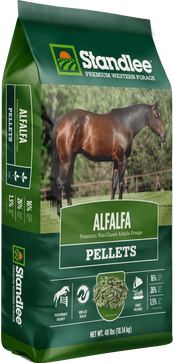
Set the Alfalfa pellet amount according to the protein, calories, and other nutrients the horse needs alongside its existing hay or pasture. A measured portion can complement grass hay when the diet needs additional nutrients. Count that portion toward total forage intake, and use the forage analysis and your horse’s body condition to guide adjustments. [4]
How Much Should You Feed When Using Timothy Pellets?
Use Timothy pellets to supply the planned grass-forage portion of the daily ration. Weigh that portion before soaking instead of relying on a fixed number of scoops, because different feeds can weigh different amounts in the same scoop. Reassess intake and body condition when hay, pasture access, or workload changes.
Timothy vs. Alfalfa Pellets: Which is Better for Horses?
Alfalfa Pellets generally provide more protein and calcium than Timothy pellets, while Timothy offers a grass-based option for horses whose diets do not need as much of those nutrients. Choose by comparing the product analyses and the rest of the feeding program, not by assuming one forage is better for every horse. [4]
Alfalfa Pellets can contribute protein and calories alongside grass hay. Alfalfa is a legume forage that often supplies more energy than grasses, making it useful when additional calories are needed. For a horse already carrying excess weight, that extra energy may not fit the feeding goal. [4]
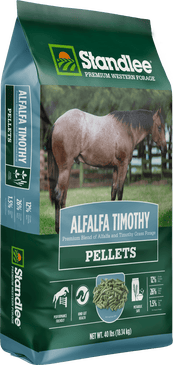
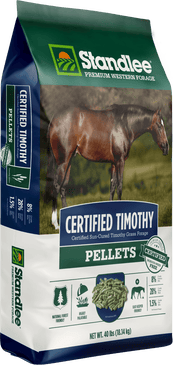
Certified Timothy Grass Pellets provide fiber from grass forage in the same convenient pelleted form. They can fit a program that needs grass-based forage without the same protein and calcium contribution as Alfalfa. The product’s nutritional analysis helps determine how it fits alongside the hay, pasture, and other feeds your horse receives. [4]
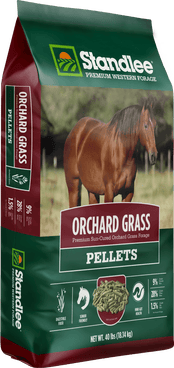
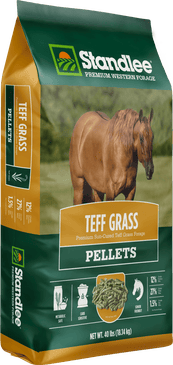
Alfalfa-Timothy blends offer another way to combine forage types. Orchard Grass and Teff pellets provide additional choices within Standlee’s pellet lineup. Choose the forage first, then the form that works for the horse and your routine.
For horses needing controlled sugar and starch intake, use the relevant nutritional analysis to assess suitability with your veterinarian or equine nutritionist. A grass name or “no added grain” description does not establish the forage’s sugar and starch content. [3]
Can Hay Pellets Replace Long Stem Hay?
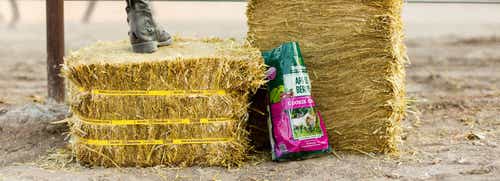
Hay pellets can replace part of a horse’s hay allowance, but matching forage weight does not recreate the chewing experience of long-stem hay. For horses that chew hay comfortably, Standlee’s pellet feeding recommendations favor keeping long-stem forage in the program rather than relying on pellets alone.
Grinding reduces forage particle size, and horses generally eat pellets more quickly than long-stem hay. The feeding plan therefore needs to account for both nutrient intake and time spent eating. Retain suitable hay or pasture access where possible, and consider how the feeding schedule supports natural foraging behavior. [5][7]
For a horse that cannot chew hay effectively, a carefully planned forage-replacement diet may be necessary. University extension guidance recognizes hay pellets and other alternatives as potential hay replacements. Work with an equine nutritionist and veterinarian to address nutritional balance, preparation, meal frequency, and the horse’s condition when developing a hay-free plan. [5]
Compare what the horse actually consumes, not just what you put in the feeder. Hay trampled into bedding does not contribute to nutrition. Likewise, replacing a lower-energy grass hay with Alfalfa pellets can change nutrient intake even when the weights match. [4][5]
Should Hay Pellets Be Soaked Before Feeding?
Soaking turns hay pellets into a softer mash and is especially helpful for horses with dental problems or difficulty chewing. It also deserves particular attention for rapid eaters and horses with a history of choking. Some horses can eat dry pellets, but follow the product’s directions and the horse’s individual feeding plan.
Standlee’s soaking guide recommends weighing the forage before adding water, then starting with two parts water to one part forage by volume. Allow at least 30 minutes, stir, and check that the pellets have softened throughout. Cold water may require more time, while warm water can speed preparation.
Use the finished texture, not the clock alone, to judge readiness. The pellets should break apart into a soft mash without hard centers. Add water or allow more time as needed, and follow any different preparation directions on the specific product.
Prepare soaked forage in a clean container, feed it fresh, and discard uneaten material before it spoils. Soaking adds water to the meal, but horses still need access to clean drinking water. [1][2]
How Do You Introduce Forage Pellets Into a Horse’s Diet?
Introduce forage pellets gradually, following the directions for the product you choose. When pellets replace hay, increase the pellet portion in measured steps while reducing the corresponding hay portion. Adjust the two together to maintain the intended total forage allowance.
Divide substantial pellet portions among smaller meals and monitor appetite, manure, eating behavior, and body condition as the horse adapts. Changes in chewing or intake can point to a preparation, dental, or feeding issue that needs attention rather than a reason to simply increase the serving. [2]
Why Does the Forage Behind the Pellet Matter?
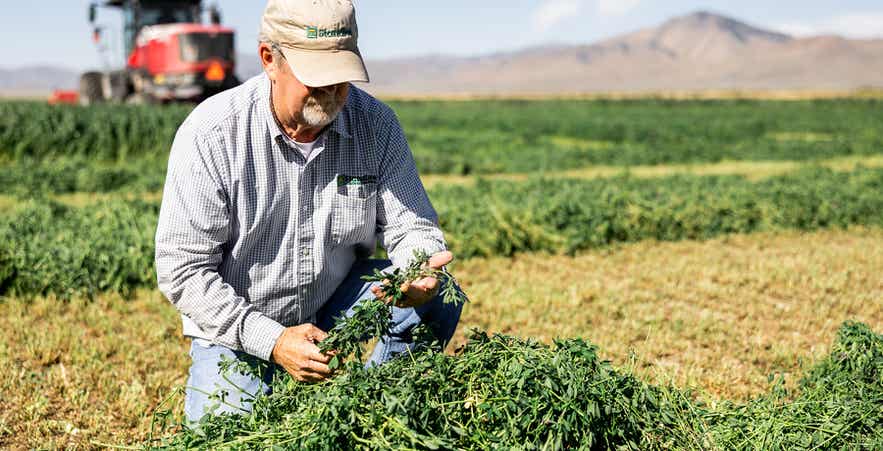
The forage type, maturity at harvest, handling, and nutritional composition shape what a hay pellet contributes. Grinding and pressing change the format, but they do not remove the need to evaluate the forage itself. [3]
At Standlee, our quality approach connects hands-on farm management, protected forage storage, and testing throughout processing. That involvement supports our quality standards before the finished pellet reaches your feed room. It is why our approach to pellets starts with understanding forage, not simply producing a particular shape.
Put that understanding to work when comparing products. The ingredient list identifies the forage and other ingredients, while the guaranteed analysis provides stated nutrient minimums or maximums. Standlee’s forage testing guide explains how nutritional analysis helps show what forage contributes and what the rest of the diet may need to supply.
Knowing what the forage provides makes the next decision clearer: choose the product and amount that support the whole feeding program, rather than judging the pellet by its appearance alone.
Frequently Asked Questions
Are Alfalfa Pellets a Complete Feed?
Plain Alfalfa pellets are forage, not a complete feed. They contribute nutrients, but the whole diet still needs the right balance of energy, protein, vitamins, and minerals. A ration balancer, fortified feed, or targeted supplement may be appropriate depending on what the full ration supplies. [2][6]
Are Forage Pellets the Same as Grain Pellets?
No. “Pellet” describes a physical form, not an ingredient list. Hay pellets are made from forage, while grain-based or formulated pellets can contain different ingredients and nutrient concentrations. Read the label to understand the product’s role before substituting one for another. [6]
What is the Difference Between Forage Pellets and Hay Cubes?
Pellets are made from more finely ground forage; cubes contain larger chopped pieces. Both can supply forage nutrients, but their physical structure and preparation needs differ. Compare formats in Standlee’s hay cubes guide and follow the directions for the product you choose. [7]
Will Alfalfa Pellets Help a Horse Gain Weight?
Alfalfa pellets can support weight gain when they add needed calories to an appropriate feeding program. The amount consumed, the rest of the ration, and the cause of low body condition determine whether they are the right choice. Persistent or unexplained weight loss warrants veterinary assessment. [2]
How Do Pellets Fit Your Horse’s Forage Foundation?
Forage pellets give you more flexibility in meeting your horse’s needs. Maybe you are pairing Alfalfa pellets with grass hay, looking for an easier way to measure forage, or preparing a softer meal for a horse that struggles to chew. Pellets can help you make those adjustments while keeping forage at the heart of your feeding program. The key is choosing them for what your horse needs, not simply adding another scoop to the bucket.
That is what building a Forage Foundation™ is all about: understanding what your forage provides and building the rest of the diet around it. You do not have to figure that out alone. Explore Standlee’s Forage Finder to learn about your options, and work with your veterinarian or equine nutritionist to bring the feeding plan together. Whether you feed from a bale, a bag, or both, the goal is the same: quality forage that fits your horse, and confidence in knowing why you feed it.
Research References
- University of Georgia Equine Program. Forage Alternatives for Horses. January 6, 2026.
- University of Minnesota Extension. Ten things you should know about feeding the mature horse.
- University of Minnesota Extension. Understanding your hay analysis.
- University of Minnesota Extension. Selecting and storing hay.
- University of Minnesota Extension. Ten ways to stretch your horse’s hay supply. Reviewed 2024.
- USDA Natural Resources Conservation Service. Feed and Animal Management for Horses. Technical Note No. 190-NM-10, March 2021.
- Rutgers Equine Science Center. Do You Know Your Forage Alternatives? August 31, 2016.
Additional Learning Resources
Products featured in this post
Enjoying the Standlee blog?
Subscribe to Standlee emails and get our newest content (and coupons, offers, and other great stuff) sent to your inbox!
Subscribe Now