Forage Fines Explained: What's Really at the Bottom of Your Hay Bag?
If you've ever reached the bottom of a bag of forage and found what looks like dust, you're not alone. It's one of the most common questions among animal owners across all species, from small animal owners to horse and livestock caretakers.
At first glance, it can be easy to assume that these small particles are dirt, debris, or a sign of poor-quality forage. In reality, what you are seeing is something entirely different.
Those fine particles are known as forage fines - and they are a natural and expected part of forage products.
Understanding what forage fines are, why they occur, and how they contribute to your animal's nutrition can help shift the perspective from concern to confidence.
What Are Forage Fines?
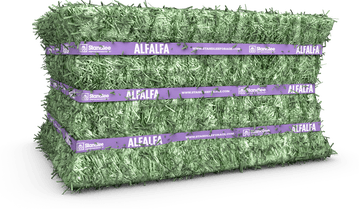
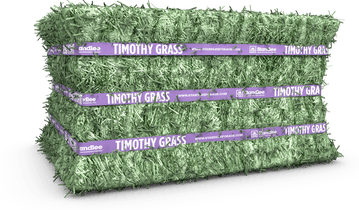
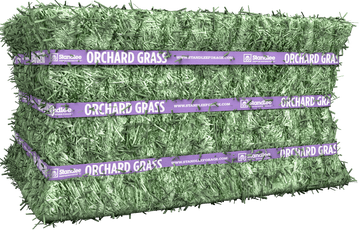
Forage fines are small pieces of broken forage that accumulate during handling, processing, and transportation. These particles originate from the same high-quality forage as the rest of the product, whether that is alfalfa, timothy grass, orchard grass, or blended forage sources.
When looking at forage fines, it is important to recognize that they are not a separate ingredient. They are simply smaller fragments of the same forage material found throughout the bag or bale.
In many ways, forage fines can be compared to the small pieces at the bottom of a bag of chips. The product itself has not changed - only the size and shape of the pieces.
Because forage is a natural plant material, some level of breakage is unavoidable. As forage is harvested, processed, packaged, and transported, friction between pieces causes some material to fragment.
These fragments settle at the bottom over time, creating what is commonly referred to as "dust," even though it is actually usable forage.
Why Do Forage Fines Occur?
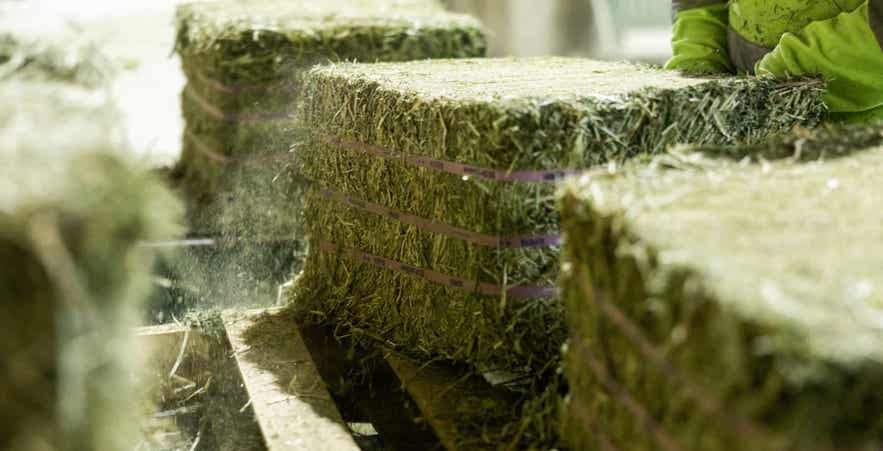
To understand forage fines, it helps to consider the full lifecycle of forage products. From the field to the final package, forage goes through multiple stages that naturally create small particle breakdown.
After harvest, forage is dried, processed, and packaged. During this process, mechanical handling and movement can cause stems and leaves to break into smaller pieces. Once packaged, additional movement during shipping and storage contributes to further settling.
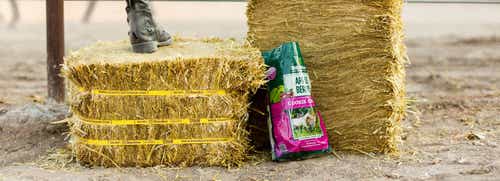
Even in baled hay, similar fragmentation occurs. The small leaf material that collects at the bottom of a bale or flakes apart during feeding is also considered forage fines.
Importantly, forage fines are not unique to one product type. They occur across multiple forage forms:
- Bagged forage products
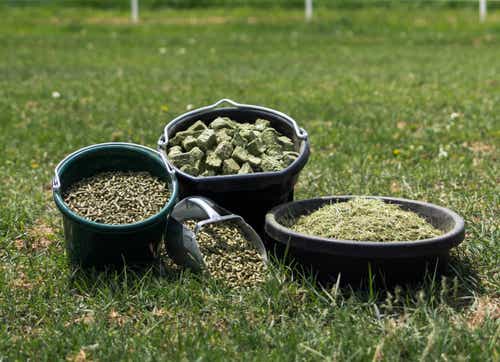
- Pellets and cubes
- Chopped forage
- Compressed bales
- Traditional baled hay
This means that regardless of how forage is delivered, some degree of fines is a natural outcome of handling a dried plant product.
Forage Fines Across Different Product Types
Forage fines appear differently depending on the type of product being fed. Understanding these differences can help set realistic expectations and improve feeding management.
In bagged forage and small animal products, forage fines tend to settle at the bottom of the bag. These particles may appear finer due to the smaller cut size of the forage.
In pellets, forage fines may appear as a light powder or broken pellet material. This is simply compressed forage that has fragmented slightly during handling. Because pellets are made from ground forage, these fines remain nutritionally consistent with the pellet itself.
In cubes, small fragments can break away from the edges or corners. These pieces are still part of the same compressed forage structure and can be fed just like the intact cubes.
In baled hay, forage fines are often visible as leaf shatter or loose material that collects during flaking or feeding. This is especially common in drier conditions where leaves become more brittle.
Across all formats, the presence of forage fines reflects the physical nature of forage - not a decline in quality.
Do Forage Fines Have Nutritional Value?
A key question many animal owners ask is whether forage fines still provide nutritional value. The answer is yes.
Because forage fines originate from the same plant material, they retain the same core nutritional profile as the rest of the product. In many cases, fines contain a higher percentage of leaf material, which can be more digestible and nutrient-dense.
This makes forage fines a valuable component of the overall feeding program rather than something to discard.
For small animals such as rabbits, guinea pigs, and chinchillas, forage fines can support natural foraging behavior and provide additional fiber intake. For larger animals, fines can be incorporated into feed or soaked when appropriate to reduce sorting and improve consumption.
Managing Forage Fines During Feeding
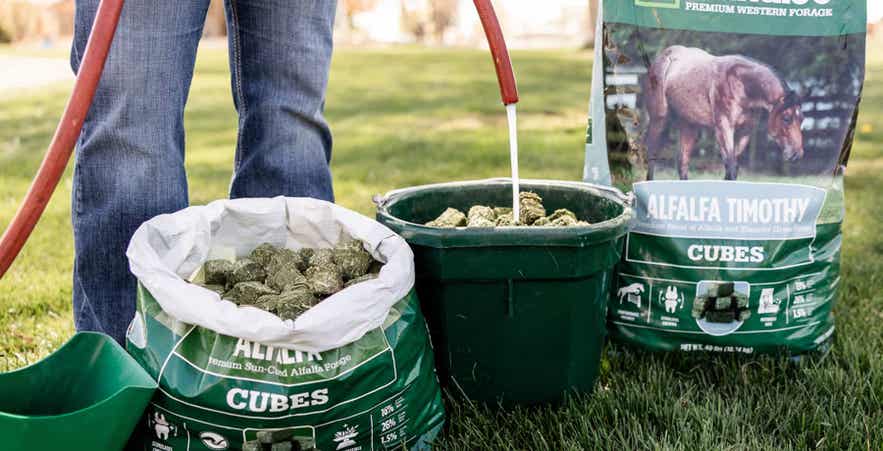
While forage fines are beneficial, how they are fed can impact both intake and efficiency. Some animals may sort through feed and leave behind smaller particles, while others consume fines readily.
Mixing forage fines back into the product before feeding helps ensure a more balanced intake. For pellet or cube products, lightly moistening the feed can help reduce separation and improve palatability.
For animals with respiratory sensitivities, managing feeding environments to reduce airborne particles can also be beneficial. This may include feeding in well-ventilated areas or incorporating moisture when appropriate.
Understanding how your animals interact with forage fines allows you to adjust feeding practices for optimal results.
Standlee Forage and Product Consistency
At Standlee, forage quality begins in the field and continues through harvesting, processing, and packaging. Every step is designed to maintain consistency while delivering high-quality forage across a range of product forms.
Because forage is a natural product, some level of fines will always be present. However, Standlee focuses on controlled processing methods and packaging integrity to help minimize excessive breakdown while preserving the natural characteristics of the forage.
Whether feeding bagged forage, pellets, cubes, chopped forage, or compressed bales, the goal remains the same: to provide consistent, dependable nutrition in a form that fits your feeding program.
Understanding forage fines as part of that system helps reinforce the reliability of forage-based feeding.
Final Takeaway: Rethinking What's at the Bottom of the Bag
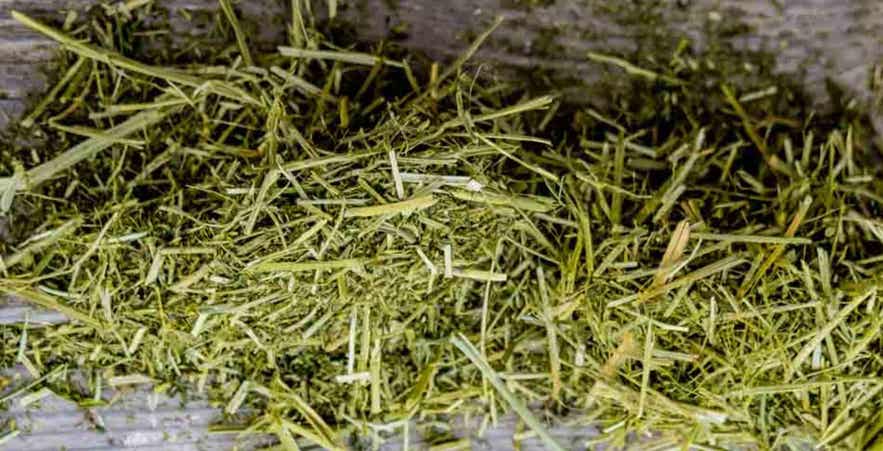
Forage fines are a natural result of handling, processing, and feeding forage products. While they may look different from larger pieces of hay, they are not waste, filler, or contamination.
They are simply smaller pieces of the same forage - and in many cases, some of the most nutrient-dense parts of the plant.
By understanding what forage fines are and how they function within a feeding program, animal owners can feel more confident in the quality and consistency of their forage.
The next time you reach the bottom of a bag or notice fine particles in your feed, it's worth taking a second look. What may appear as "dust" is actually a natural and valuable part of forage nutrition.
Frequently Asked Questions
What are forage fines?
Forage fines are small pieces of broken forage that naturally occur during processing, handling, and transportation.
Are forage fines safe to feed?
Yes, forage fines are safe and come from the same forage material as the rest of the product.
Is hay dust the same as forage fines?
No, forage fines are small forage particles, while true dust may include contaminants like soil or mold.
Do forage fines have nutritional value?
Yes, they often contain leaf material, which can be highly digestible and nutrient rich.
Why is there more at the bottom of the bag?
Forage fines settle over time due to movement and gravity during shipping and storage.
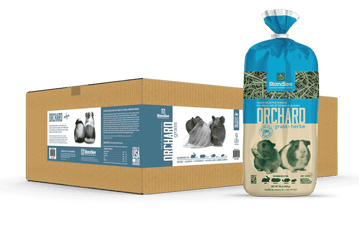
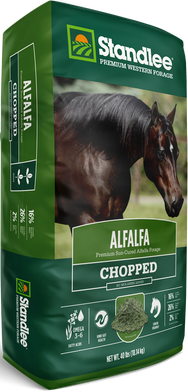
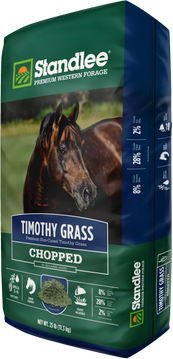
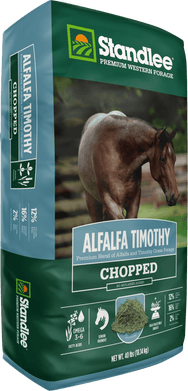
Products featured in this post
Enjoying the Standlee blog?
Subscribe to Standlee emails and get our newest content (and coupons, offers, and other great stuff) sent to your inbox!
Subscribe Now