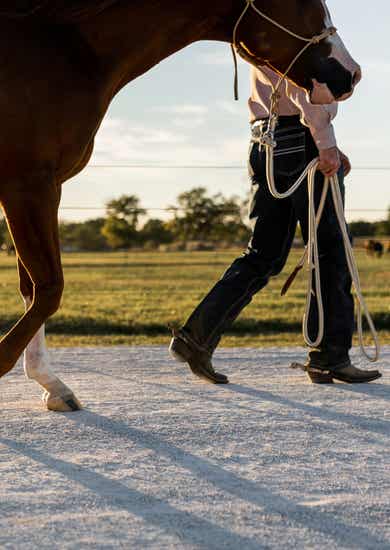
Episode Notes
Learn more behind the meaning of the Grab & Go® to Give campaign and the incredible nonprofits we’re partnering with to show support for those impacted by breast cancer - https://www.standleeforage.com/promotions/grab-go-give/
On this episode of the Beyond the Barn podcast, host Katy Starr chats with Lavonna “Shorty” Koger, legendary cowgirl, rodeo competitor, master hatter, businesswoman, National Cowgirl Hall of Fame recipient, and co-founder of Rein in Cancer. From learning to ride bareback as a young girl, riding bulls and running barrels, to eventually building Shorty’s Caboy Hattery into an iconic name in the western industry, Shorty shares some of the most pivotal moments that shaped her life, including:
- What being around horse people for decades has taught her about the community she calls family
- The personal loss that inspired Rein in Cancer and how the horse industry has helped it grow
- What she wishes more people understood about the financial realities of a cancer diagnosis
Shorty opens up about the people, horses, and experiences that have shaped her, the unexpected beginning of her hat-making career, her own journey with breast cancer, and the incredible way the horse industry has rallied together to help those battling cancer.
She is an iconic role model in the western industry and a true example of grit and determination. This is a conversation about horses, rodeo, resilience, community, and the legacy we leave behind, and one you won’t want to miss!
🎧 Listen now on the Beyond the Barn podcast
Have a topic idea or feedback to share? We want to connect with you! Email podcast@standlee.com
______________________________
This year, there are even more ways to show your support with limited-edition Grab & Go to Give apparel and merchandise available throughout October, with all net proceeds donated to our incredible nonprofit organizations.
Wear your support - https://www.standleeforage.com/promotions/grab-go-give/
Connect with Rein In Cancer –
- Website - http://www.reinincancer.com/
- Facebook - @reinincancer
Donate to Rein In Cancer
Connect with Shorty’s Caboy Hattery –
- Website - https://shortyshattery.com/
- Facebook - @ShortysCaboyHattery
- Instagram - @shortyscaboyhattery
- TikTok - @shortyshattery
______________________________
*Views and opinions expressed by guests are their own and do not necessarily reflect the view of Standlee Premium Products, LLC.* _______________________________
Katy Starr (00:01):
Hi, I'm Katy Starr, and you're listening to Beyond the Barn. Join me on this journey as we bust equine and livestock nutrition myths, and sit down with some of the most intriguing experts from across the country. We'll also take you behind the scenes of how premium western quality forage is grown and brought to your favorite farm and ranch retail store. I'm so glad you're here.
Katy Starr (00:29):
Did you know breastcancer.org shares that one in eight women in the US will face invasive breast cancer in her lifetime? Though less common, about one in 755 men can also develop breast cancer. Think about your sister, your aunt, or your mother who has battled breast cancer, or maybe even yourself. Maybe you've been the one on the other side of receiving a breast cancer diagnosis. October is Breast Cancer Awareness Month, and for the second year, Standlee is turning some of our iconic green Grab & Go® bales pink to support those battling breast cancer. You can find these in farm and ranch retail stores nationwide that carry Standlee Grab & Go® Bales. A portion of the proceeds from our pink bales will be donated to five impactful nonprofit organizations that we've had the honor of working with. Living Beyond Breast Cancer, Rural Gone Urban Foundation Love Bombs Program, the Breast Cancer Research Foundation, Horses and Hope, and a new partner we're honored to highlight on today's episode, Rein In Cancer.
Katy Starr (01:30):
We'll include more details about the Pink Bales and these incredible nonprofits in our show notes. Spot a Pink Bale? Share the news with your family, friends, and barn community, post about it on your social media, tell your riding friends, and help us make a difference for anyone who might face this life-changing diagnosis in the future. And new this year, we're offering supportive Grab & Go® to give items. By purchasing any of these pieces, you're helping support a truly meaningful cause. All net proceeds from these sales will be donated to our incredible nonprofits dedicated to the fight against breast cancer. Today, we're talking with a very special guest, a Cowgirl Hall of Fame recipient, master hatter, businesswoman, and so much more, Shorty Koger. This is such a great conversation with a true icon in the Western industry, and I'm so honored to share this with you. Welcome back to another episode of Beyond the Barn.
Katy Starr (02:26):
Today, I'm so excited to have a very special guest joining me, Shorty Koger. Shorty has truly made her mark on the Western horse industry as a cowgirl, rodeo competitor, businesswoman, master hatter, and member of the National Cowgirl Hall of Fame. But her story goes far beyond those accomplishments. She started small, taught herself through trial and error, and built Shorty's Caboy Hattery into an iconic name in the Western industry. Along the way, she also found a way to give back to the community she loves through Rein In Cancer, a cause that's very close to her heart. Today, we're going to talk to her about her journey with horses and rodeo, building her business, her experience with breast cancer, and how Rein In and Cancer came to be, and how that has inspired her to help so many others in the performance horse community. So, Shorty, thank you so much for joining us on the Beyond the Barn podcast today.
Shorty Koger (03:19):
Yes, ma'am. I'm honored to be here. Thank you.
Katy Starr (03:22):
So, when I read, doing my research and checking into your background and story and everything, I read that when you were about five years old, you saw a few cowboy actors outside a movie theater in Fairfax and thought, "Man, I'd love to be a cowboy." What was it about those cowboys that grabbed your attention at such a young age?
Shorty Koger (03:43):
Well, it was mainly how they were dressed. They had actually bright colored clothes on, they had their pants tucked down, their boots, and they had a big old hat on, and they had a wild rag around their neck, and they were eye-catching, and I couldn't take my eyes off of them. And of course, I didn't know at the time they were going to be movie stars, but at any rate, that's how this all began back then. I think I was about five or six years old.
Katy Starr (04:11):
That is so amazing.
Shorty Koger (04:13):
Yeah. Well, it really is because I had no idea of what was going to happen in the future, but yeah, it was, it was amazing and my mom and dad, they would go in on Saturdays so they could do their grocery shopping. So, then I could, you know, just do whatever I wanted to do at that. And, so yeah, that's how this began many, many years ago and how grateful I am where I'm at today.
Katy Starr (04:37):
I love that. And so when you told your mom that you wanted to be a cowboy, she told you girls didn't get to be cowboys and you basically said, "Well, I'm still going to be a cowboy." So, where did that mindset come from? Where do you think that grit and determination actually came from?
Shorty Koger (04:56):
Well, it had to come from my mother and father. They was such an influence on me, but what's funny is, you know, we had to ride a bus to school. This is what I would do and I'd get off the bus. I'd see boys pull their shirt off, t-shirt off, you know, because it was hot, and just walk home without their t-shirt on. And then I started, I thought, oh, I can do that. So, I did it. My mother says, "What in the world are you doing? I see, I see guys doing it, why can't I?" And she said, "No, you're not a guy, you're a girl." And not that I ever wanted to change, but I'm just saying that I had such a love for back then. And, you know, back then the 50s, it was way different than it is now.
Shorty Koger (05:38):
So, I went, where I went to grade school, it was, first grade through the eighth grade, and I hated school, hated it. So, mother had a challenge with me for sure. I had two sisters that went to the school where I was, so they, they tried to get me corraled and I'd take off and go to the bathroom, wouldn't come back. And yeah, I was kind of a mess growing up.
Katy Starr (06:02):
Oh, that's so funny. But the other thing that's really interesting, Shorty, is you weren't even born into a rodeo family. So, how did horses and rodeo actually become such a big part of your life growing up?
Shorty Koger (06:14):
Well, I grew up way in the country. The town was 15 miles either way. And we always lived way out in the country somewhere and, you know, where there was cattle and horses and everything. And, and my sisters in high school, they dated two cowboys. And both of those guys were ropers. And I guess that's kind of how I got interested in it, you know, just, but I was just curious about a lot of things. And, and that was one of rodeoing, but my, no, my family never, we didn't even own a horse until I came along. We had few cattle and chickens, but that was about it. And hogs, of course.
Katy Starr (06:56):
That's awesome. So, then, of course, since you didn't really grow up in it, you taught yourself how to ride bareback and then eventually got into barrel racing and bull riding, which is crazy. So, looking back, where did you even get the confidence to figure those things out as you went?
Shorty Koger (07:17):
Okay. Well, we had one neighbor that lived across the road from where we lived, and they had a paint horse. His name was Tony. And they would. Now, you know, I couldn't ride without somebody being there and, but that's how I learned how to ride was back when I was five and six years old, bareback on this horse. And the funny thing is, is when he passed away, they buried him down on the pasture behind the house for me, and I rode him all the way down to the grave, pulled him with a tractor or something, and I sit on. Yeah, that's how crazy I am. So, I had to ride the horse to the grave and it just broke my heart when he died. But that's kind of how I got in. And then my sisters married the calf ropers, and I would go to their house in the summertime and get to ride horses, go help gather cattle, and, you know, and I just loved every minute of it.
Shorty Koger (08:11):
So, that's when I decided, okay, I think I might want to try to run barrels someday. And that's how all that came about.
Katy Starr (08:18):
So, what's the story about the bull riding?
Shorty Koger (08:21):
Well, that was kind of stupid on my part, but some of us girls went to this rodeo, which was, you know, men-women rodeo. The women run barrels and the men rode rough stock. And the girls said to me, "Shorty." No, they didn't say that. They said, "Hey, let's see if we could exhibition a bull, and see if they'll let us do it at this rodeo." And I said, "Who's going to ride it?" And they said, "Well, you are." And I said, "Oh, I don't think so." And they said, "Oh yeah, you could. We want to see if you can ride it. You always like to do adventurous things." I said, "Okay, well, we'll see." And they put me on that thing, and, at that time, I didn't have enough sense to be nervous. I mean, I was a little bit, but -
Katy Starr (09:06):
Not as much as you should've been?
Shorty Koger (09:08):
No, not as much as I should've been. But at any rate, I didn't last probably two seconds or three, and then I though, hmm, that was pretty exciting. So, I did try it for a few times, but I didn't stick with it. I had a bad accident. I was helping a girl build a horse arena to run for us to work our barrel horses, and I got my arm caught in a post hole digger, and it almost killed me. So, and I'm left-handed and it was my left arm, so that was pretty much the end of anything that was rough stock, because it took me, like, two years to get, get over all that. It was horrible.
Katy Starr (09:45):
About how old were you when you were riding bulls then?
Shorty Koger (09:48):
I'm going to say 19, 20, I think. 18, 19, something like that, yeah. Young, you know, young, and think you know everything, and you don't have a clue, really. Yeah, I was just adventurous. I mean, and of course, my daddy worked in the oil fields for Continental Oil Company. He was a gauger. And, my mother was a stay home mama, so I had a wonderful upbringing. And then when I had to move, my daddy got transferred to Moore, Oklahoma, early, late '50s, early '60s. And it was like I moved to New York City because I'm at this little school and yeah, you wore jeans and T-shirt and tennis shoes. When I went to Moore, oh, that was a whole different ballgame. The lady finally, teacher finally sent a note over to my mom, wanted to know if I had owned a dress.
Shorty Koger (10:45):
And mama says, "I think you better wear a dress to school." And I said, "I, no, I'm not. I don't want to, mama." She said, "Well, the teachers are not liking the way you're dressed." And I said, "Well." So, she made me. I had to wear a dress at school one day, but she didn't know that I snuck my jeans out. And as soon as I. As soon as I got where I could, I switched over to my jeans.
Katy Starr (11:10):
She should have known better with you, Shorty.
Shorty Koger (11:13):
But my teacher got to see me in the dress anyway. So, she just had to look at me however, I was kind of, that wasn't very nice of me, I guess.
Katy Starr (11:23):
Oh, well, when you're not used to wearing. You want to be comfortable in your clothes, you know, and, but you also grew up in a different time, so.
Shorty Koger (11:32):
Oh, yeah. And even we go to church, I could wear my jeans and tennis shoes, so I didn't see anything wrong with going to school in them, you know?
Katy Starr (11:41):
But you could wear it to church, yeah, for sure.
Shorty Koger (11:44):
Absolutely.
Katy Starr (11:45):
So, Shorty, what would you say is probably the most important thing that horses have taught you in your life so far?
Shorty Koger (11:53):
Lots of patience. Lots of patience. And actually, they're most a lot of horses are smarter than the people that owns them, because the horses are very, very smart, and it taught me patience and perseverance and same thing that going through when I made my hats and everything, you know? I just took one day at a time. I didn't think about the future of where I was going to be, how good I was going to be. I was just determined to be the best that I could in that market. And that came from my daddy, you know? He said, "You know, if you're going to start something, don't stop. You have to finish it all the way through and do, you know, just be strong and keep your head up and have lots of patience." And that's how I've gotten through life, that and the good Lord. You know, there was a period in my life, when I lost my daddy that I kind of went down a black hole for a while and took me probably six, eight months to finally get my head on right.
Shorty Koger (12:52):
But yeah, I was. It was not a good deal for me. And, and I think that's when the Lord said, "Shorty, you better get your stuff together. You're not going to amount anything." And plus, my family was always there for me and so supportive and I was so close to them. And so then I felt very ashamed of what I'd been doing way too much drinking and whatnot. So, I had to stop all that. I had lots of support.
Katy Starr (13:18):
That's so good. So, I think this actually kind of leads into your Shorty's Hattery story a little bit, talking about your dad. So, talk to us a little bit about Shorty's Hattery and what kind of influenced that career change for you at that point in your life.
Shorty Koger (13:35):
I rodeoed, and when I did, I would help shave hats on a tea kettle or whatever on the stove and did all that for all my friends and contestants. And, so went with my friend. She said, "Come go with me. I'm going to go pick up my hat. I'm having a hat made." And I said, "Really?" But what turned this on though, first of all, was when our father died, my brother sent two of his hats down to Houston to have them cleaned, renovated. And when they, we got them back, they had ruined them because they had put so much stiffener on them and they were just like concrete. And my brother made the comment, "You know, as much as you love hats, you ought to get in the hat cleaning business." And so a light went off in my head and I said, "Wow, that'd be right up my alley." So, anyway, this friend come along when we go with her to pick up her hat, and I had no clue there was even a custom.
Shorty Koger (14:29):
He really wasn't a custom hatter. He mainly renovated hats, but he made one or two hats or three for friends is all. His name was Shorty. So, I went out there with her and looked around and he had it in this little barn outside his folks' house. It's probably square footage of maybe 6 or 800 square feet, little. I looked around, watched what he was doing, and that kind of asked a few questions, and then I went. I though, "Well, I'm going to go back out there without her and go by myself and see if he might be able to help me get in the business." Well, lo and behold, he had it up for sale, but he already had a buyer. And I though, "Oh, man." because I'd called around everywhere. There was probably, at that time, I'll say 11 to 13 maybe custom hatters in the United States.
Shorty Koger (15:17):
When I went back to talk to him, I said, "Well..." He said, "Well, they're coming Monday and writing me the check." He said, "I'm so sorry. I can't help you out." And then I said, "Well, what if I show up and they don't show up? Could I buy it from you then?" He said, "Well, yeah, sure." because he was wanting to get into politics. I was there at 9:30 and they were supposed to be there at 10:00 and I paced and paced and drove myself and him crazy. But about two or three minutes after 10:00, I looked down the road to see if anybody was driving up, and I said, "Okay." I said, "It's after 10:00. Will you accept my check?" And he said, "I sure will." And so that's when it began, 1990. And he was so busy and wanting to do politics so bad, he didn't have time to teach me much.
Shorty Koger (16:06):
And his mother and daddy. Now, his mother taught me more than he did because I'm left-handed, she was left-handed, and he couldn't teach me how to tie a bow around a hat because it would be backwards to him. So, his mom taught me kind of how to do that. And of course, I flunked home ec in school, so I wasn't a good sewer. You know, I could cook, but I couldn't sew.
Katy Starr (16:30):
Yeah, I get that.
Shorty Koger (16:32):
So, there was a lot involved when I first opened this thing. I mean, I was. And I got a building down there close to where his shop was, so I could at least get the, keep the renovating business coming to me. And I need to learn a lot more about it before I moved to the stockyards where all the cowboys was, where they are down here now.
Katy Starr (16:51):
Got real serious.
Shorty Koger (16:53):
Yeah. Yeah. So, I stayed up there about a year. And then I found this place that opened up down here. , It was like 1900 square feet. So, I rented that and put in a couple of people. One guy made boots and another girl made old Western clothes. So, there was three of us sharing that space because I couldn't afford to rent. So, well, anyway, as it grew, then the girl that did the clothing, she quit. And then finally, I outgrew it where the boot man had to go. So, I was there 20 years, I guess. And then I moved into this building I'm at right now, which is 5,000 square foot. And I've got a nice big showroom, about 2,500 square feet, and I've got my own office finally after 20 some years. So, it's just all been amazing how it's all worked out.
Shorty Koger (17:44):
But like I said, I couldn't do it without the Lord because you believe in him and the things he can do for you, you just need to give him a chance, because it's amazing how I've gotten where I am. And I know it's because of him. And my mom and daddy raising me. Yeah, my mom and daddy raised me. And I had a wonderful brother and two sisters, so I couldn't have had a better life, asked for a better life than I had.
Katy Starr (18:10):
That has been so incredible to see what you've grown from where you started. I love your story.
Shorty Koger (18:16):
I had no idea. I had a friend that if I'd get kind of in a bind or needed to talk to someone, I'd go talk to her. And she said, "You know, Shorty?" She said, "I'm going to tell you that one of these days, you're going to be shipping hats all over the world." And I said, "Oh, now I've probably only been in business five or six years." And I said. Oh, her name was Daitha, a dear friend of mine. I said, "Datha, I can't even think that far in advance. I only take one day at a time. You can't go past that because you may not even be here."
Katy Starr (18:47):
Yeah. You never know. Yep.
Shorty Koger (18:49):
That's right. She died before she got to see this, what's happened. Yeah. She passed away with cancer. I think about a lot better when she'd tell me, "Get my head out of my and do it right." So, there are good advice out there if you can find the right person.
Katy Starr (19:07):
Yeah, that's true. That is so true. They really keep you, you know, focused and paying attention.
Shorty Koger (19:13):
Absolutely. Yes. I also couldn't be where I'm at today if it wasn't for my wonderful staff that works for me here. I've got about 12 people, 13, and, one of my dear friends, or she is now, that works for me now, she's been with me 20-some years, 24 or five years. I think the Lord put her with me because when I had my cancer situation with my sister, she happened to come along right when all that happened. And somehow or another, it just all went together and it all worked out perfectly. And I've gone through a few staff people. I mean, I've had a few people that's left me, but I've got nice, wonderful Mexican ladies and I love them. They love me. And I've got one Mexican lady that's been with me almost 28 years. And she couldn't even speak English when she came.
Shorty Koger (20:03):
I'd have to write notes out and she'd take it home to her husband and he'd tell her what, what I needed done, or he'd come up to my shop and show her. And, finally, I asked her if she'd be interested in learning some English so her and I could communicate. And she went to school and learned English and she's still with me to this day. And I've got another that's been with me about 18 or 19 years. So, I've got a good group here that works very hard for me. I'm very grateful.
Katy Starr (20:31):
That's a huge testament to you, Shorty, I think, being able to keep people as committed as that to the business. That really shows a lot about your character, I think, as a leader too. So, that's really incredible.
Shorty Koger (20:45):
Well, you know, I built this, my business on customer service, because in my opinion, there's not customer service anymore these days. And so that's what I have. Anybody that comes here and works for me, they know that customers come first and how to treat them, how to respect them, and how to teach them about the hats and not just go out there and sell them a hat and put the money in the register. That's not what it's about to me. It's about building relationships with each individual, and that's what I do. Even today, I have a table in my booth, and I have chairs all around it, and I sit there and I can't tell you how much that that has brought to me, visiting with people individually and learning their life and their life history and, you know, things they've gone through.
Shorty Koger (21:36):
And that's important to me. The money will come if you take care of your business and take care of the people you're dealing with.
Katy Starr (21:44):
Absolutely. Yeah, that is so good. So, you've spent decades around the Western horse industry, and obviously you've worked with people across so many different disciplines. What is it about horse people that has kept you so connected to this industry all of these years?
Shorty Koger (22:04):
You know, I think horse people are, to me, they're more, they're more friendly, they're more outgoing, and they've all struggled at one time or another in their lives, and it makes them a better person. And for an example, I do the Little Britches Rodeo here in town. It's like you'll, there'll be anywhere from four to 5,000 kids that are, and every one of them. Hardly do you run across one that will not be very mannerly, say, "Yes, ma'am. No, ma'am." They're all that way. So, they've been raised correctly, and it's all in how you were raised, but I just think horse people, they have a different attitude toward life. You know, they've all struggled, which makes them a better person, and they're just more my type people, you know? I'm just. I mean, I'm really just a good old country girl, that's all.
Shorty Koger (23:00):
Just made my way and had good, lots of support.
Katy Starr (23:04):
Yeah. That's, that's awesome. And so you've obviously, you've built a business that has become such a recognizable part of the Western industry, but when you look at the people you've met and the relationships that you've built along the way, what have those people taught you?
Shorty Koger (23:21):
Well, I've actually learned a whole lot. They've taught me. Well, first of all, I'm not a big mingler with people. I mean, everybody thinks I am, but I grew up pretty inhibited because I just entertained myself and lived so far out in the country. One day I'd go out and play cowboys, the next day I'd go out and be an Indian. You know, I just did all kinds of stuff like that. So, the people that I have met, I have a good friend, very dear friend that taught me a whole lot about being more of a lady and being. Watching my mouth and getting my language cleaned up. She's helped me in that area. And then I have another friend that would help me with. I don't like gossip. I don't believe in gossiping. And I tried to help her with that gossiping because if somebody's gossiping, I just walk away.
Shorty Koger (24:13):
I'm not going to listen to it because it's not, I don't want it to be a part of my life. You know, you never know how something like that's going to affect you. So, I've had lots of good lessons in my life, yes. Lots of good people, because if they're not good, I try to stay away.
Katy Starr (24:29):
That's a good way to go about life, I tell you.
Shorty Koger (24:34):
Yeah, it is.
Katy Starr (24:35):
And so you have partnered with Art of the Cowgirl before as one of their master hatters. So, what does that experience mean to you?
Shorty Koger (24:48):
Well, I love that show. I get to see all these artists, and we all share our thoughts and how we got where we did and all that. And, so I take on an apprentice every other year. What they do is they fill out an application and tell all about themselves, and they'll send it in. And the ladies that, where they send it to, they'll call through some of them and send me maybe the top 10 or 15 to read through. And, it's so interesting. They say, you know, if. I don't know how I've done this, but I've had two of the best apprentices ever. And this last one I had, I got this past year, she's from Scotland, and I didn't even know if they'd bring her over from Scotland, but I loved her, her dedication and everything to the horse life, and she was just amazing.
Shorty Koger (25:40):
So, I said, "Well, is there any way I could get that girl?" And they said, "Oh yeah, we'll fly her over." And so now we have built amazing relationship in the last year. Amazing. And she is going the whole nine yards. She's going to build hats in Scotland. She's getting all her equipment together, and she comes back over here periodically and spends. She just came here. She's just spent three weeks with me. And I have another girl from Australia that's been with me 10 years, and she comes over every year and helps us. It's so rewarding, and it's rewarding to me to see that it's just the little things that makes a difference, and to see how appreciative they are and how grateful they are, it's just, it's a wonderful feeling. So, and I've, I've just met lots of great ladies at the Art of the Cowgirl.
Shorty Koger (26:31):
There's other people that do their. They do apprentice with, might be a chap maker or spur maker or whatever. Yeah. And I don't. It's just like. Everywhere I go, it's like a reunion. Made so many friends. So, every show I go to, they say, "Oh, how can you do 30 days?" I said, "It's easy. I get to see all my family. Everywhere I go, I got family."
Katy Starr (26:55):
Catch up
Shorty Koger (26:56):
That's it. Yeah.
Katy Starr (26:58):
I love that. That's so great. And so, Shorty, you've talked about horses and rodeo, your business, and obviously this incredible community that you've built around you. But there is another part of your story that I think is incredibly important to share. And if you're comfortable talking about it, I'd love to hear about your sister, Shirley, and what happened during that time in your life.
Shorty Koger (27:27):
Okay. Well, Shirley and I were more alike than my brother and my other sister, because Shirley was into business. She got into. Well, when her husband died, she took over a meat packing plant up in Fairfax where I was raised, up in Osage. And so she was kind of a entrepreneur herself. And she went to work for me. I can't remember what year it was, but at any rate, it was around 2000, year 2000, I think. Anyway, so I was doing shows. She was at my shop sanding hats for me because we do a lot of stuff here by hand. I don't do machines. I get a better hat without machines. So, anyway, so I had come in from a show at Congress and she said, "Shorty, I need to talk to you outside." And I thought, "What in the world?" I said, "Okay, what's wrong?" And she says, "I think I may have something wrong with my breast." And I said, "Tell me about it." And she said, "Well, it's been secreting something out of, out of my nipple, and I'm not sure I need to go have it checked." So, I immediately got on the phone and called my gynecologist and got her in to see a doctor. And of course, the news wasn't good, but. So, she definitely had breast cancer. And the reason that she didn't go, she waited till she turned 65, because she didn't have insurance. I could not believe it. She did not have insurance. And she was afraid she'd lose, she had 350 acres and place up in Osage, and she was afraid that if she went and got diagnosed, it'd take all her money and they'd take her land and everything, so she wouldn't go see a doctor till I got home. Well, so anyway, we went through several little tests there and I took her every time and they said, "Well, she had stage four breast cancer." Well, at that time, I didn't even know what that meant.
Shorty Koger (29:34):
Stage four statement, I didn't have a clue. But as I went on this journey with her, and she was one tough cookie, when she had cancer, she did chemo. She came to work every morning at 5:00 AM. She worked till 5:30 in the evening, four days a week, and then she'd go home for the weekends. And so when people come up and say they don't feel good, they got a headache, I don't even want to listen because I watched my sister work her butt off, just stand to the. I mean, she just was amazing. And then she had to have radiation because it wasn't, you know, things just wasn't working right. I took her to get her cataracts removed because she wasn't seeing good. And doctors, the eye doctor said, well, she needs cataract anyway. So, while she was in there getting tested for cataracts, the cancer doctor called me and said, "Shorty, just tell her not to schedule that surgery, you need to come see me tomorrow." And I said, "Well, what's going on?" She said, "Well, it spread to her brain." So, oh my gosh, it was horrible. So, anyway, I took her to the doctor. I think one of her daughters might have went with me, but at any rate, and they, they said, "Well, we need to bring the family in." So, she said they, she's got three to six months, and that's about it. So, here's what my sister said. She said, "Well, what we going to do? Let's do something these next three to six months. I'm not ready to go yet." And so, we said, "Well, what would you like to do?" Well, she, she chose three things. One was take a train ride to Fort Worth. The other was float the Illinois River. And the other was, I don't remember what the other was.
Shorty Koger (31:28):
I just know those two was most important. So, I got us all plane tickets. There's 13 of us family members that went. And I had a couple of ladies that had a ranch, cattle ranch down there. And they let us stay at their home, for three days. And, then we rode the train back and she loved every minute of it. And we float the Illinois River. By then, she couldn't hardly walk. You know, her son managed to get her in the raft and all that stuff. And, and we had a big time for three or four days there. And then she got paralyzed, so she had to be. We got her a hospital bed. She stayed at home and we, they had a lift that would lift her up out of there and sit her down in her wheelchair. And I stayed with her like a month at a time helping her.
Shorty Koger (32:18):
Then I went to have my mammogram, not, didn't have any clue. I was just going my monthly or yearly mammogram. And so when I got home, this was in September, they said, this is what the cancer doctor said to me, or the guy that read the report. He said, "Well, I have good news and bad news. Which would you like first?" And I said, "Well," I said, "The good news." And he said, "Well, the good news is we've caught it in time. The bad news is, it's cancer. We're pretty sure we're going to have to do a biopsy." So, I didn't tell my sister anything about this because I didn't want her to know she had enough to deal with. So, anyway, make a long story short, she passed away in November, the fourth, and I had a double mastectomy the sixth, and it was, it was a very rough time.
Shorty Koger (33:14):
I stayed home about two weeks and then I couldn't stay there no more. I said, "I gotta, I gotta go to work." So, there was a show going on in Fort Worth, and I've made them take me down there to do the show because I, you know, I just couldn't think. I lost my sister and I didn't know what kind of mess I was in. And I didn't even think about myself really. It was all about her, so. But I got to it. And anyway, I decided when this happened that I was going to try to help cancer people that didn't have insurance. So, I thought, well, I could make a pink hat and put, somehow put a cancer ribbon on it and sell it and put that money into savings or something and help, help with this. So, anyway, I ended up between that and a little bitty pen that, it's a little cancer pen that's a cowgirl.
Shorty Koger (34:10):
Between those two things, I raised $13,000 in about a year. And so when she died, I only got $5 a piece of them, but I sold thousands of them. And I sold quite a few pink hats for you know, people that, had cancer or somebody, one of their family members did. Well, anyway, so one of these ladies walked in my store, and I had her hat there and her cancer wild rag there and picture of her in this one little area." And she said, "Well, what is this?" And I said, "Well, I just lost my sister and I've started trying to raise money to, help somehow cancer patients." And I said, "I, I tried to get AQHA to help me and they couldn't." And I thoughtt, "Well, okay." So, she's, and this girl happened to say, "Well, I might be able to help you with this." And I said, "Really?" Well, at that time she worked for a cancer hospital or did something in the way of cancer, but I think it was with children at that time.
Shorty Koger (35:16):
But anyway, I said, "Really?" She said, "Yeah, let me do some checking and I'll get back with you." And, so she did. And that's how we began forming Rein In Cancer. It was in 2007. Now she died in 2004. 2000, three years later, I joined with this Tracy Anderson was her name. Great, great lady. And another lady that's aa bbarrerrel racer that her sister's had cancer and she lives in Byers, Oklahoma. And, so that's, we us three got together and started scheming and planning and, finally had a place to go with 501C. Rein and cancer is a 501C. And so we have built, in honor of my sister, and it's in her name, at the OU Cancer Center over here. It's Shirley Koger's Nutritional Clinic. And it is free service to all the patients that come there. They teach them how to eat and how to nutrition themselves so they can keep being strong for all their treatments and everything.
Shorty Koger (36:26):
It doesn't cost patients anything because we supply enough money that, and they're volunteers that, that do all this. And it's just amazing. But yeah, it's Shirley Bowman or Koger, that was her married name, Bowman. But on, on this deal, I want it to be Koger because that was her last name. And anyway, so it's pretty cool to go over there and see her name and, and, the people there that work, do the nutritional parts, just amazing people. We've raised way, way over a million dollars, probably close to two million. But it's all from the horse people. It's all from the horse people. We have done fundraisers at, AQA American Quarter Horse Association. We've done fundraisers at Congress, the Quarter Horse Association, Ohio. We've done fundraisers at the NRHA, which is Reining Derby, Reining Association. And all these horse people are what's made all this happen.
Shorty Koger (37:27):
And that's exactly another reason why I love horse people, because they got a big heart and, they want to help. And something else that we do is if you go to, reinincancer.com, you can fill out a form. If you, if you're a horse person, you can fill out a form, if you've got cancer, you can mail that in to us and we'll mail back to you, no questions asked, $1,000 just to help with some kind of cost you might need, be needing money for. And, you know, sometimes if we can put more, we will do that too. But the horse industry is what's made Rein In Cancer. It's not really me, it's the horse people that has supported the cause. It's just been amazing. Amazing.
Katy Starr (38:12):
That is so incredible, the community that you've really built with that. And I will say the horse community and I'd even say as far as like the agriculture industry in general too, there's just, it, people become family within these industries. And I think that's what I love so much about it. They really come together when it, when it matters a lot. And it's just so great to see.
Shorty Koger (38:39):
You hardly find a family that's not been, has not gone through some, some type of cancer with someone or family. So, but yeah, you, but anybody that, that hears the podcast that's horse person and you need help, just go to www.Reinincancer and, we'll do what we can to help you. And plus, you go to the OU Cancer. It used to be called Charles and Stevenson OU Cancer, but I, I think it's just OU Cancer now. But at any rate, it was built in 2000. I can't remember when it was built. Probably 2010, nine or 10. Anyway, it's a very nice place too. And they take very good care of their patients. So, of course, my sister was gone before all this transpired or maybe I could've, we could've done, you know, helped her a lot too. So, but anyway, it's the way life is.
Katy Starr (39:37):
Well, and one thing that I was curious about is, you know, you guys have helped so many people being able to raise $2 million, for people facing cancer. But do you ever get to hear, you know, of some of the events that you go to, the people that you've, you know, communicated with, do you ever get to hear about what has happened with some of the folks that you have helped after they've received some of that financial assistance from Rein in Cancer? Are there any stories from those experiences that have really kind of stayed with you?
Shorty Koger (40:11):
Yes, ma'am. But mainly what they, we've had letters sent in, but it always goes to Cheryl Magoteaux because that's where our main office is. She's read some of them to me, but I don't have a copy of anything that I could put on my hands on right now. But oh yeah, we get lots of people. And I get phone calls that says how much it's helped them and, and, you know, I have even picked today, I have friends that might have cancer if something comes up with cancer and they need my help to, and I'll get them set up and I'll send them through OU Cancer Center. I've done that for several of my friends. It's amazing what we can do. If you just got a big old heart, it does wonders for everyone around you.
Katy Starr (40:54):
Hmm. That is so incredible. And Shorty, you've been called a lot of things over the years, cowgirl, rodeo competitor, businesswoman, master hatter, philanthropist, hall of famer. But when you look back at your own life, what are you most proud of?
Shorty Koger (41:13):
Actually, probably how it turned out after all my years that, you know, I think the kind of person that I've ended up being because of my environment and the people I involve myself with. And it's made me a better person. And of course, as I say, the Lord's had a lot to do with that, but also the people you associate with is important to you too, because they can either build you up or tear you down. And, I choose not to be around negative people. I will not, you know, I don't, I'm not a complainer. I'm not a negative person. And my brother and mine's motto is life is good and God is good and it doesn't get any better than that.
Katy Starr (42:00):
Mm. That's so good. We think about where you came from, right? This, little girl that really wasn't tamed and just kind of - . You know, ran free, ran wild. But if you could, you know, you've, you've had so many years that you've gone through with experience, life experience now. So, if you could go back and talk to your younger self, what would you tell her?
Shorty Koger (42:24):
Well, I certainly would not have made some of the mistakes that I've made over the years. You know, it's not that I was a bad person or anything, but there's times when I wasn't as respectful as I should have been and all kinds of little things like that, that I, or things I wished I'd have did more for my mama and, but, you know, like I say, when my father died, I just kind of was lost cannon, to be honest with you. And of course, all I have is mama, but I was, I really, back then, you know, I wasn't smart enough and I blamed God for taking him away from me, which was the stupidest thing I could have ever done. I've done lots of apologizing for that. But, you know, I just didn't know. I was 19, 20 years old and he was like 50 something, but he's so young, you know?
Shorty Koger (43:14):
But, you know, my mother was wonderful and we grew way closer together, which, and she, you know, I never did play favorites between mom and daddy, but I hung around my daddy more than I did my mama till after he passed and then I took good care of her too. So, hopefully that's helped you some. I don't know.
Katy Starr (43:39):
No, that's so good. Yeah. What would you say is probably the best piece of advice that you've ever received and who gave it to you?
Shorty Koger (43:50):
Well, probably my father. He said, they call me Lavonna. All the rest of my siblings, aunts and those all call me Shorty, but he said, "You know, there's two things that is not, that is not ladylike and you need to remember these two things." And I said, "Yes, sir." And he said, "Number one, don't cuss. It's very disturbing to me to hear a woman cuss. And number two, don't get drunk and don't drink and get so drunk that you can't function." And he said, "I'd rather you just didn't drink at all, but I know that's not going to happen. So, just at least those two things you need to make sure that you, live a good life and, and be a lady at all times." I said, "Well, can I be a cowgirl?" He said, "Yeah, you can be a cowgirl."
Katy Starr (44:44):
Well, you're like, "Good."
Shorty Koger (44:47):
Yeah, because I'm going to be anyway. I've had a wonderful life, I can tell you, Katy.
Katy Starr (44:54):
Just being able to hear about your story and your journey and the things that you've gone through, where you started, where you are now, and just how highly regarded you are in the industry, the way people speak about you. Like, you have really touched a lot of people in such a positive way and just, you know, some of the things that you were talking about, how you surround yourself with positive people, you don't like negativity or gossiping. Like, I truly think that that, that authenticity is there and it shows. And you have just done such amazing things with your life and how you've supported others through that as well. It's been so great to see what you've built in the community that you've surrounded yourself with and just what you've built with Rein in Cancer and how you support those that are battling cancer and the families.
Katy Starr (45:49):
And it's really incredible, Shorty. And I'm so grateful that you've been willing to come on here and share that story with us.
Shorty Koger (45:57):
I appreciate being able to do that. And, you know, I was just sitting here thinking, of course I turned. I'm 81 now. I still try to keep exercising and keeping everything functioning, and I'm not going to retire, so people need to quit asking me that. But I never, I was thinking about my mother. I never, in all my 80, she died in 99, but all my years, I never heard her say an unkind word about anybody. That was the way she was. She never. She found the good in everybody, and I do too. I can find good in any, in everybody. You just look hard enough and, you know, and have enough love in your heart, really. I remember, yeah. And if I'd say something, she'd say, "No, Lavonna, that's not nice to think like that."
Katy Starr (46:49):
Your mother sounds like an amazing woman. I love that.
Shorty Koger (46:52):
Oh, she was. Yeah. She was. So, I'm very grateful. And I appreciate you having me on your podcast.
Katy Starr (47:02):
Yes. How can our listeners stay in touch with you or Rein in Cancer and support or donate to you all if they'd like to?
Shorty Koger (47:11):
Well, you can either go to www.Reinincancer.com or my email here is shorty@shortyshattery.com. And then, you know, after I get to know you, I'll give you my cell number and we can talk anytime. It's just how it rolls.
Katy Starr (47:30):
Oh, that's awesome. And I will be sure to put your website and email in our show notes so it's easy for everybody to find you and to find if, obviously, here at Standlee we have a lot of things going on for the month of October that we're so excited to be able to support Rein in Cancer and a lot of other great nonprofits. But if any of our listeners would like to donate directly to Rein in Cancer, we'll make sure that we link that in our show notes so it's easy to find. And Shorty, I can't thank you enough for being on today. It's been, honestly, it's been really incredible getting to hear you speak so highly of your mom and your dad and your sister, Shirley, and just getting to hear some incredible stories of who they were and what they meant to you.
Katy Starr (48:15):
Thank you for sharing a piece of that with us today. I really appreciate it.
Shorty Koger (48:21):
You're very welcome. And I appreciate you. Thank you so much.
Katy Starr (48:25):
Awesome. Well, thank you, Shorty, and we will talk to you later.
Shorty Koger (48:30):
Okay. All right. Bye-Bye.
Katy Starr (48:33):
We may not be able to take away the uncertainty, fear, or challenges that come with a breast cancer diagnosis, but we can stand beside those in our life who are facing it. We can offer support, share hope, and help create meaningful moments along the way. Our goal is to help individuals and their families find strength, make lasting memories, and remember that even in the hardest seasons, they don't have to walk alone. And please don't put off taking care of yourself. Schedule your annual mammogram and encourage those you love to do the same. Download this episode on Apple or Spotify and share, and go find some pink bales and Grab & Go® to Give items. We'll link this information in our show notes. Help us make a difference.
WRITE A REVIEW
If you enjoy the Beyond the Barn Podcast, please consider taking a minute to rate and review the podcast on these popular platforms.


SUBSCRIBE & NEVER MISS AN EPISODE



CONNECT WITH US
We LOVE hearing from our listeners and Standlee family. Drop us a line! Do you have an interesting topic or question you’ve been dying to get the answer to? Send it our way.
Send SuggestionsNOMINATE A GUEST TO BE ON OUR PODCAST
Has a friend or mentor’s story changed your perspective? We want our listeners to be inspired to live vicariously through our guests' life experiences. Reach out to us at podcast@standlee.com