Spring Pasture and Grazing Tips for Horse Owners
Lush spring pastures have hidden risks for horses predisposed to insulin dysregulation and laminitis.
The same lush growth that signals a healthy pasture is closely linked to elevated concentrations of nonstructural carbohydrates that can have a significant impact on your horse's health.
Sugars accumulate in spring grass in response to sunlight, overnight temperatures, and plant stress. They peak at times that do not always align with standard turnout schedules, making careful management essential during a season when both horses and their owners are eager to spend more time outside.
When intake is high, the elevated NSC content of spring grass increases the risk of pasture-associated laminitis in susceptible horses. The good news is that those risks are well understood and entirely manageable.
Keep reading to learn about NSC levels in spring grass, which horses are most vulnerable to pasture-associated laminitis, how to structure a gradual transition that protects both gut and metabolic health, and how building your feeding plan around a strong Forage Foundation™ sets your horses up for a healthy spring season.

Join Our Email List Today!
Be the first to get the latest news, promotions, updates and more from Standlee when you join our email list!
By signing up for email, you are agreeing to receive news, offers, and information from Standlee Premium Products, LLC®. You can also visit our Privacy Policy. Easy unsubscribe links are provided in every email.
Key Takeaways
- Spring grass contains higher levels of nonstructural carbohydrates (NSC) than most other forages, with NSC levels shifting significantly with weather, time of day, and plant stress.
- Horses with insulin dysregulation, equine metabolic syndrome, PPID, or elevated body condition scores face the highest risk of pasture-associated laminitis during spring turnout.
- A gradual transition starting at 15 to 30 minutes of grazing per day and building slowly over three to four weeks protects both gut health and metabolic stability.
- Feeding quality hay before turnout reduces grazing intensity and provides digestive stability throughout the transition period.
- Pasture management strategies, including rotational grazing and maintaining appropriate grass height, help control NSC exposure across the whole herd throughout the season.
- Build your spring grazing plan around each animal's individual health status, body condition score, and metabolic history.
Why Spring Pasture Is Different From Other Forages
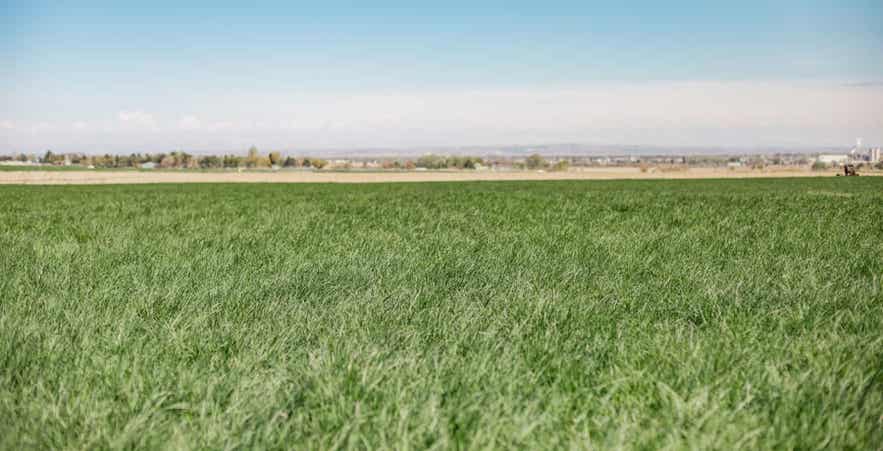
The nutritional content of spring pasture varies significantly from that of grass during other times of the year. Understanding what drives those differences is the foundation of safe spring grazing management.
Rapid Growth and Photosynthesis
Cool-season grasses, the most common pasture type across much of the United States and Canada, enter a period of aggressive vegetative growth in spring.
As temperatures rise and daylight increases, plants photosynthesize rapidly, producing carbohydrates faster than they can use them for growth. The result is a buildup of sugars and fructans stored within grass tissue. [1]
Spring grass can contain 70 to 80 percent water, which means horses ingest far less dry matter per mouthful than they would from hay. This drives longer grazing sessions and greater total intake, increasing NSC exposure even during short turnout windows.
How NSC Levels Fluctuate in Spring Grass
Nonstructural carbohydrates (NSC) refer to the sum of water-soluble carbohydrates and starch in forage. Water-soluble carbohydrates include simple sugars and fructans.
Simple sugars and starches are digested in the small intestine. Fructans pass to the hindgut, where microbial populations ferment them. In spring grass, these NSC fractions are not stable. They fluctuate throughout the day in response to sunlight, temperature, and plant stress. [1]
NSC peaks on sunny afternoons after cold nights. When overnight temperatures fall below about 40 degrees Fahrenheit, grass growth slows while daytime photosynthesis continues to load sugars into plant tissue.
Cloudy weather, warmer nights, and active growth periods tend to lower NSC levels as the plant uses its stored energy.
For horses with metabolic concerns, early morning is the safest grazing window. Afternoon turnout, especially after several consecutive clear, cold nights, carries the greatest risk.
Protein, Minerals, and Digestive Health
Early spring grass often contains crude protein levels of 20 percent or higher on a dry-matter basis.
Excess protein increases urinary nitrogen excretion and places a burden on the digestive system at a time when the hindgut microbiome is already adjusting to a new diet.
Mineral profiles are often imbalanced in spring pastures as well. Young spring grass is frequently deficient in magnesium, particularly during cool, wet weather when rapid plant growth outpaces the roots' ability to absorb minerals from the soil.
These gaps can affect bone metabolism and neuromuscular function when horses rely on pasture as their primary forage source without a balanced feeding program.
Which Horses Are Most at Risk on Spring Pasture
Not every horse responds to spring grass the same way. Risk varies considerably based on metabolic history, breed, body condition, and age.
Horses with Insulin Dysregulation and Equine Metabolic Syndrome
Insulin dysregulation (ID) describes any abnormality in insulin regulation, including an exaggerated post-meal spike or chronically elevated resting concentrations.
Equine metabolic syndrome (EMS) is a clinical syndrome defined by ID, regional fat deposits, and a predisposition to laminitis.
Horses and ponies with ID produce significantly higher insulin responses after consuming NSC-rich forage than metabolically normal animals. [2]
That matters because elevated blood insulin is now recognized as the primary driver of pasture-associated laminitis. Even brief grazing sessions on lush spring grass can trigger dangerous insulin spikes in susceptible horses. [3]
Ponies, Morgans, Paso Finos, Andalusians, and draft crosses are disproportionately represented in this group, along with easy-keeper types across many breeds.
PPID (Equine Cushing's Disease)
Pituitary pars intermedia dysfunction (PPID), commonly called Equine Cushing's disease, is an endocrine disorder that disrupts the hypothalamic-pituitary axis and impairs normal insulin regulation.
Horses with PPID frequently have concurrent ID, which compounds their sensitivity to high-NSC forage throughout the year. [4]
Any spring management plan for a PPID-diagnosed horse should involve veterinary oversight, including review of ACTH levels and current medication status.
Easy Keepers and Overweight Horses
Horses with a body condition score (BCS) above 6 on the nine-point Henneke scale carry excess adipose tissue that contributes to systemic inflammation and reduced insulin sensitivity.
Research confirms that elevated BCS is an independent risk factor for pasture-associated laminitis. [5]
Overweight horses with restricted forage access during winter often graze more aggressively at spring turnout, pushing their total NSC intake higher even during short sessions.
Horses Transitioning to Pasture from Hay
Even metabolically healthy horses face challenges in spring due to changes in dietary composition.
The diet shapes the hindgut microbiome. After a winter diet based on dried forage, that microbial community is not well-equipped to handle the rapidly fermentable carbohydrates that spring grass delivers in abundance, particularly fructans. [6]
An abrupt shift from hay to pasture can disrupt hindgut microbial populations, producing loose stool, gas, and more serious fermentation disturbances. This is why a gradual transition benefits every horse on the property, not just those with known metabolic conditions.
How to Safely Transition Horses to Spring Pasture
A well-designed transition schedule protects digestive health, limits metabolic exposure, and gives horses the time they need to adapt to spring pasture without abrupt dietary changes.
Grazing Introduction Schedule
Many equine nutritionists and veterinarians recommend starting with 15 to 30 minutes of grazing per day and increasing access by about 15 minutes every 3 to 5 days. [7]
For a healthy, metabolically normal horse, full unrestricted transition takes about three to four weeks at that pace. Horses with EMS, ID, or a history of laminitis may need a slower timeline or permanent restriction throughout the season.
As a general benchmark, a well-managed pasture can support one 1,000-pound horse per two acres when grass coverage is at least 75 percent, and height is six inches or more. If your available acreage falls short of that, hay will need to fill a larger share of the diet regardless of season.
Feeding hay before each turnout session makes a measurable difference in how much spring grass a horse consumes. It provides gut fill, slows gastric transit, and cuts the intensity of grazing once horses reach pasture.
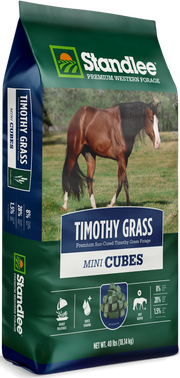
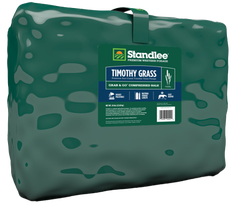
Premium timothy grass hay forage products serve well in this role, delivering consistent, lower-NSC nutrition that anchors the diet while pasture access is established.
Best Time of Day for Grazing
Research on diurnal NSC variation in cool-season grasses supports early morning as the safest time for turnout for horses with metabolic concerns. [1]
NSC concentrations tend to be lowest before and just after sunrise, before sustained photosynthesis drives sugar accumulation higher through the day. The highest-risk window is sunny afternoons after cold overnight temperatures.
Practical guidance recommends limiting or eliminating afternoon turnout if the previous night dropped below 40°F and the day is clear and bright. A dry lot or sacrifice paddock with hay access is the better option on those days.
Using Grazing Muzzles Effectively
Grazing muzzles are among the most well-supported tools for controlling spring pasture intake. One widely cited study found that properly fitted muzzles reduced grass dry matter intake by approximately 83 percent in ponies while still allowing movement and social grazing. [8]
Muzzles work best as part of a broader management strategy rather than a standalone fix. Introduce them a few weeks before spring turnout begins so horses can acclimate.
Check fit before every use. A muzzle that is too tight restricts airflow, and one that is too loose can be worked off or circumvented.
Pasture Management Strategies That Protect Your Horses
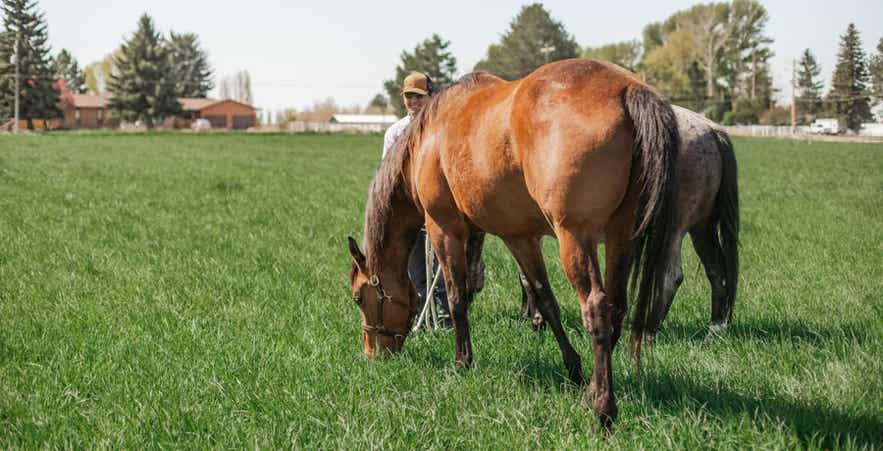
How you manage your land directly affects the NSC load your horses encounter every time they graze. Good pasture practices reduce risk for every horse on your farm.
Rotational Grazing and Rest Periods
Rotational grazing divides pasture into sections, with each section grazed in sequence while others rest and recover. The practice prevents overgrazing and gives grass time to reach a height and maturity where NSC levels are more moderate and stable. [9]
Cool-season grasses typically need three to five weeks of rest between grazing periods. Dividing a single pasture into three or four paddocks maintains access to grazing while allowing each section to recover fully. Even a simple two-paddock rotation offers real advantages over continuous use of the same ground.
Before spring turnout begins, walk your pastures to identify and remove any toxic or invasive plants that often emerge before grass fills in.
Pasture Height and Grazing Thresholds
Grass height is a reliable proxy for NSC concentration. Short, stressed, or overgrazed grass concentrates fructans in the lower leaf sheath and stem base. Pasture below three to four inches delivers some of the highest NSC per bite of any growth stage. [1]
Grass in the six-to-eight-inch range carries a more moderate profile and is safer for most horses.
Move horses off a paddock before the grass drops below 4 inches to protect both the plants and the animals. If grass grows past eight to ten inches before horses return, mow it down rather than turning horses into an overgrown pasture.
Mowing encourages more consistent regrowth and reduces weed pressure throughout the season. For horses with metabolic conditions, a sacrifice lot, a dry lot, or a bare paddock is used during peak-risk periods to keep them off live grass when it matters most.
Soil Health and Fertilization Timing
Maintaining a healthy, productive pasture requires replenishing nutrients over time. Testing your soil every three years is a good starting point. Your local agricultural extension office can help with the process.
Work with your equine nutritionist to ensure fertilization decisions are based on what your specific fields actually need.
When fertilizing, apply half in early spring and the remaining half in early summer, always before rainfall. Keep horses off treated areas until fertilizer granules are no longer visible on the surface, and allow at least two to three weeks following any application before grazing.
Nitrogen fertilization in particular drives rapid spring growth and temporarily elevates NSC concentrations, so timing matters.
Spring forage testing can identify your pasture's actual NSC, protein, and mineral content at specific growth stages, which is far more useful than estimating based on calendar date alone.
Balancing Spring Pasture With a Forage Foundation
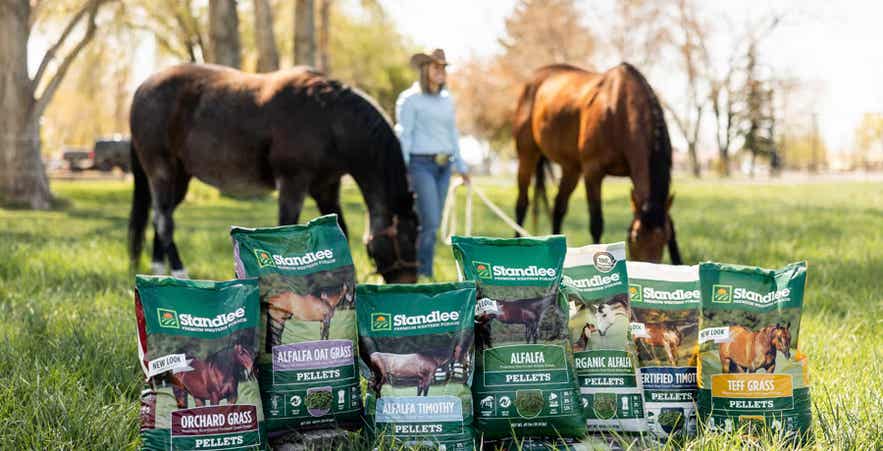
Spring pasture works best as one component of a managed diet. This is especially true during the transition period, when the pasture's nutritional profile is still shifting daily, and the horse's digestive system is catching up.
The Role of Hay During Spring Transitions
Many horse owners scale back hay as soon as the pasture regrows. But feeding dried forage has several benefits that fresh spring grass cannot reliably replace.
Quality hay delivers consistent, testable nutrition. Unlike spring pasture, which changes composition based on weather and growth stage, hay from a known source has a stable, measurable nutrient profile.
It provides the long-stem fiber the hindgut microbiome relies on, and it keeps horses supplied with forage during the hours when pasture access is limited. Maintaining hay access through spring transition reinforces the forage foundation of your horse's diet as seasons change.
Forage Testing and What to Look For in Spring
When evaluating forage for horses with metabolic concerns, the most relevant analytical metrics are:
- NSC: The combined total of water-soluble carbohydrates and starch. Most equine nutritionists recommend keeping dry matter intake below 10–12% for horses with EMS or insulin dysregulation. [10]
- ESC (Ethanol-Soluble Carbohydrates): The fraction most closely linked to the post-meal insulin response. Some practitioners track ESC plus starch separately from total NSC for horses with significant metabolic sensitivity.
- Crude Protein: Useful for assessing total diet protein balance and flagging excess from high-protein spring forage.
- Digestible Energy (DE): Indicates caloric density relative to the horse's workload, age, and body condition goals.
Recognizing Signs of Pasture Overexposure
Even with a solid management plan, some horses will show signs of consuming more spring grass than their system can handle. Catching those signs early can help prevent serious health outcomes.
Early signs of digestive upset typically appear within 12 to 24 hours of a significant increase in grazing time:
- Loose or watery manure
- Louder or more frequent gut sounds
- Visible bloating along the flank
- Mild restlessness or discomfort
These signs usually resolve when pasture access is reduced and hay is restored, but they are a clear signal that the transition was moving too fast.
More serious warning signs point toward developing laminitis:
- Increased digital pulse felt at the back of the fetlock
- Heat in one or more hooves
- Reluctance to walk or turn
- Repeated weight shifting between feet
- In front-limb laminitis, the most common presentation, the horse extends its front legs forward and shifts weight toward the hindquarters
Laminitis is a medical emergency. The window between early warning signs and significant damage can be very short. If laminitis is suspected, remove pasture access immediately and call your veterinarian without delay.
Forage Foundation for Spring
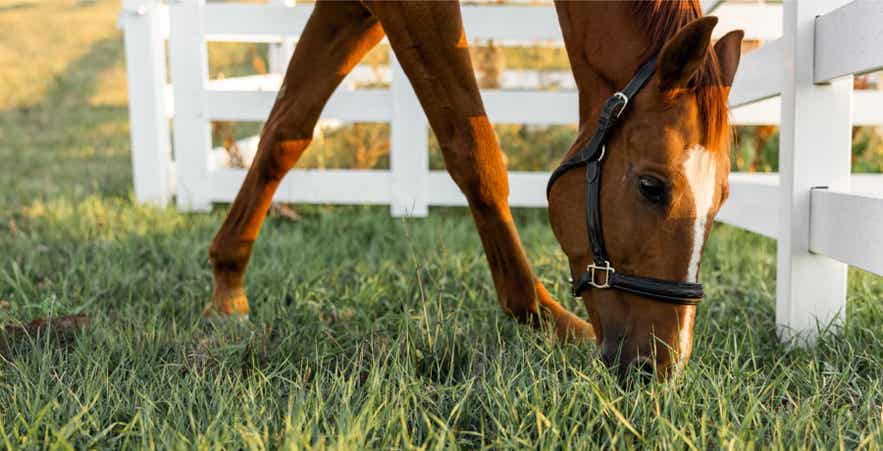
Spring pasture management does not need to be complicated, but it does require intention and consistency.
The combination of variable NSC content, shifting nutritional profiles, and significant differences in individual horse risk makes this one of the most important seasons to monitor carefully.
Know your horse's metabolic risk level, transition slowly, time turnout to reduce NSC exposure, and keep quality forage at the center of the diet during spring. Pair those practices with proactive pasture management, and you can prepare your horse for a successful transition to spring pasture.
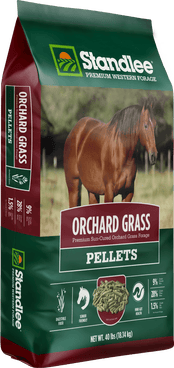
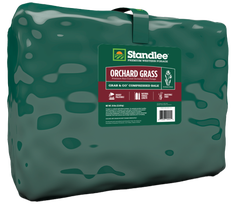
Building your spring feeding plan around a Forage Foundation™ means starting with what you can control and measure. Standlee's premium forage products deliver consistent, quality-tested nutrition that complements and stabilizes your horse's nutrition program year-round.
Use the Forage Finder to identify the Standlee products best suited to your horse's age, workload, and health status, including options well-suited for metabolic horses and easy keepers navigating spring turnout.
Frequently Asked Questions
Is spring grass safe for horses?
Spring grass is safe for most horses when introduced gradually and managed thoughtfully. The primary concern is its elevated NSC content, which can trigger insulin spikes and digestive disruption in susceptible animals.
When should I start letting my horse graze on spring pasture?
Begin when the grass reaches 4 to 6 inches, starting with 15 to 30 minutes per day, adding about 15 minutes every 3 to 5 days. Horses with metabolic conditions or a history of laminitis may need a slower or permanently restricted schedule.
What time of day is safest for spring grazing?
Early morning, before daytime photosynthesis raises sugar concentrations, is the safest window for at-risk horses. Avoid afternoon turnout on sunny days following cold nights, when NSC levels peak.
How do I know if my horse has eaten too much spring grass?
Watch for loose manure, loud gut sounds, bloating, or mild restlessness within 12 to 24 hours of increased grazing. Heat in the hooves, increased digital pulse, or reluctance to move are more serious signs that require an immediate call to your veterinarian.
Do grazing muzzles really work, and are they safe?
Research shows properly fitted muzzles reduce grass intake by approximately 83 percent in ponies while still allowing movement and social grazing. They are most effective when used alongside turnout timing and pasture rotation rather than as a standalone measure.
What horses are most at risk for laminitis on spring pasture?
Horses with EMS, insulin dysregulation, PPID, a BCS above 6, or a history of laminitis carry the highest risk. Ponies, Morgans, Paso Finos, Andalusians, and easy-keeper types are generally more susceptible than leaner performance breeds.
Should I still feed hay when my horse has access to spring pasture?
Yes. Hay provides essential long-stem fiber for hindgut health, reduces grazing intensity when fed before turnout, and delivers consistent lower-NSC nutrition that offsets the variability of spring grass.
How does rotational grazing help manage spring pasture for horses?
Rotating horses through paddocks in sequence allows each section to rest and recover to a height where NSC levels are more moderate. A three-to-four-section rotation with three to five weeks of rest between uses works well for most spring scenarios.
Scientific References
- Longland AC, Byrd BM. Pasture nonstructural carbohydrates and equine laminitis. J Nutr. 2006.
- Menzies-Gow NJ, et al. Prospective cohort study evaluating risk factors for the development of pasture-associated laminitis in the United Kingdom. Equine Vet J. 2017.
- de Laat MA, et al. Equine laminitis: Induced by 48 h hyperinsulinaemia in Standardbred horses. Equine Vet J. 2010.
- Durham AE, et al. Pituitary Pars Intermedia Dysfunction (PPID) in Horses. Vet Sci. 2022.
- Treiber KH, et al. Evaluation of genetic and metabolic predispositions and nutritional risk factors for pasture-associated laminitis in ponies. J Am Vet Med Assoc. 2006.
- Respondek F, et al. Effects of dietary short-chain fructooligosaccharides on the intestinal microflora of horses subjected to a sudden change in diet. J Anim Sci. 2008.
- Watts KA. Forage and pasture management for laminitic horses. Clin Tech Equine Pract. 2004.
- Longland AC, et al. Effects of grazing muzzles vs not wearing a grazing muzzle on pasture dry matter intake by ponies. J Equine Vet Sci. 2011.
- Williams CA, et al. Effects of 27 mo of rotational vs. continuous grazing on horse and pasture condition. Transl Anim Sci. 2020.
- Frank N, et al. Equine metabolic syndrome. J Vet Intern Med. 2010.
Additional Learning Resources
From the Standlee Barn Bulletin Blog
- Equine Metabolic Syndrome in Horses: Symptoms, Risks, Diet & Management
- Cresty Neck: A Precursor to Metabolic Disease in Horses
- Feeding Senior Horses: Complete Guide to Senior Horse Nutrition
- Selecting the Proper Forage for Your Horse
- What Makes a High-Quality Forage? A Hay Buyer’s Guide
From the Standlee Beyond the Barn Podcast
- Ep. 35: Pro Tips for Getting Pastures and Horses Ready for Spring Grazing
- Ep. 113: Three Changes to Make When Transitioning Horses Back to Work
- Ep. 061: The Key to Getting the Most Out of Your Horse Pasture
From the Standlee Nutritional Papers
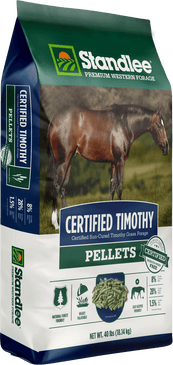
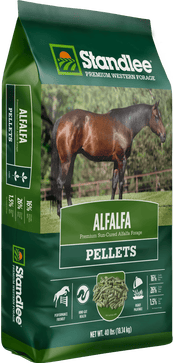
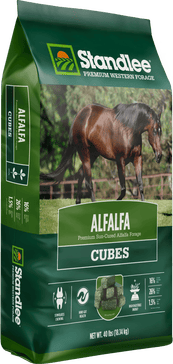
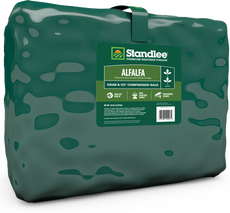
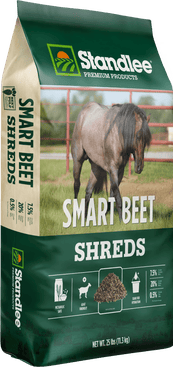
Products featured in this post
Enjoying the Standlee blog?
Subscribe to Standlee emails and get our newest content (and coupons, offers, and other great stuff) sent to your inbox!
Subscribe Now