Topline Guide: Building and Maintaining Your Horse's Topline Muscles
Poor topline is one of the most common concerns horse owners bring to their veterinarians and nutritionists, and one of the most consistently misunderstood.
A horse can appear to have a healthy body condition and still have a poor topline. Both nutrition and training play a role in topline development. Yet many horses are fed diets that lack the nutrients their topline muscles need to grow.
These muscles stabilize the back, support the rider, drive forward movement, and absorb the physical demands of work. When they are underdeveloped, everything downstream suffers, from gait quality to saddle fit to soundness.
Topline development in horses depends on the quality of protein in the diet, the type and consistency of forage, an exercise program that actually targets the right muscle groups, and a clear understanding of health factors that impact muscle growth.
Keep reading for a complete, research-backed guide to understanding, building, and maintaining your horse's topline muscles.

Join Our Email List Today!
Be the first to get the latest news, promotions, updates and more from Standlee when you join our email list!
By signing up for email, you are agreeing to receive news, offers, and information from Standlee Premium Products, LLC®. You can also visit our Privacy Policy. Easy unsubscribe links are provided in every email.
Key Takeaways
- The horse's topline is made of muscle, so changes in topline condition reflect changes in muscle mass, not fat.
- Poor topline most often results from deficiencies in protein quality, specifically the limiting amino acids lysine, methionine, and threonine, not from too little total protein.
- Exercise initiates muscle protein synthesis, but nutrition supplies the building blocks to complete it.
- Forage type and quality significantly influence protein quality and amino acid supply in the equine diet.
- Senior horses, easy keepers, and horses with hindgut or metabolic conditions face additional topline challenges that require individualized management.
- Visible topline improvement typically requires 60 to 90 days of consistent, combined nutritional and exercise management.
What Is Topline in Horses?
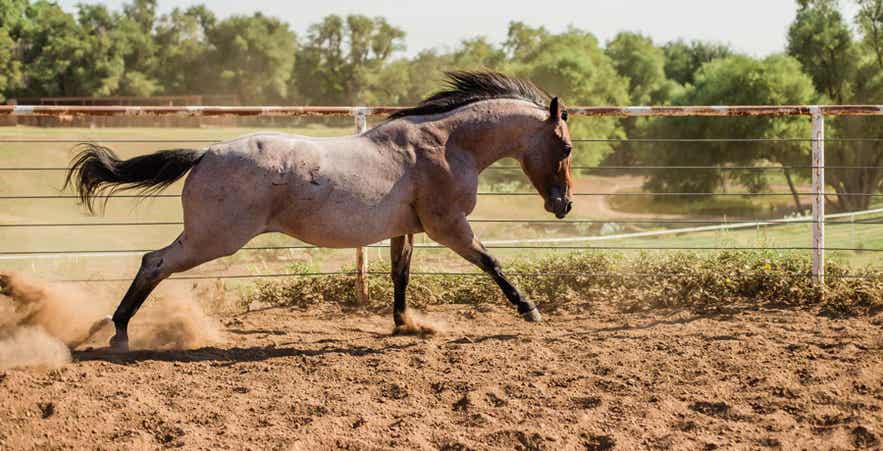
Topline refers to the muscle mass along the horse's neck, back, loin, and hindquarters.
The primary muscle groups along the topline include the trapezius and splenius in the neck and shoulder, the longissimus dorsi spanning the length of the back, and the gluteal muscles across the croup.
Together, these muscles provide postural stability, propulsive power, and structural support during movement.
Your horse's topline reflects nutritional and physical health more directly than almost any other visible measure. But topline is not the same as body condition. A horse can carry excess fat and still show significant topline loss.
As a result, Body Condition Score (BCS) alone is insufficient for evaluating topline health. The Topline Evaluation Score (TES) was developed specifically to assess muscle development independent of fat cover.
TES uses scores from A (full, well-developed muscle) to D (severe muscle loss). This system gives owners and veterinarians a consistent, repeatable way to track changes over time.
Why Topline Condition Matters
Topline is more than an aesthetic concern, and treating it as one is part of why so many topline issues go unresolved longer than they should.
The epaxial muscles that run along the spine are the primary stabilizers of the horse's axial skeleton during movement. When they are underdeveloped, the horse cannot support its own back effectively under work.
Horses compensate by shortening their stride, bracing through the neck and poll, reducing collection, and altering joint loading, which puts additional stress on the limbs.
Saddle fit problems, back soreness, and behavioral resistance under saddle are all frequently linked to poor topline.
Topline condition is also increasingly recognized as a welfare indicator. In older horses, progressive topline loss is often the earliest visible sign of age-related muscle wasting.
Causes of Poor Topline in Horses
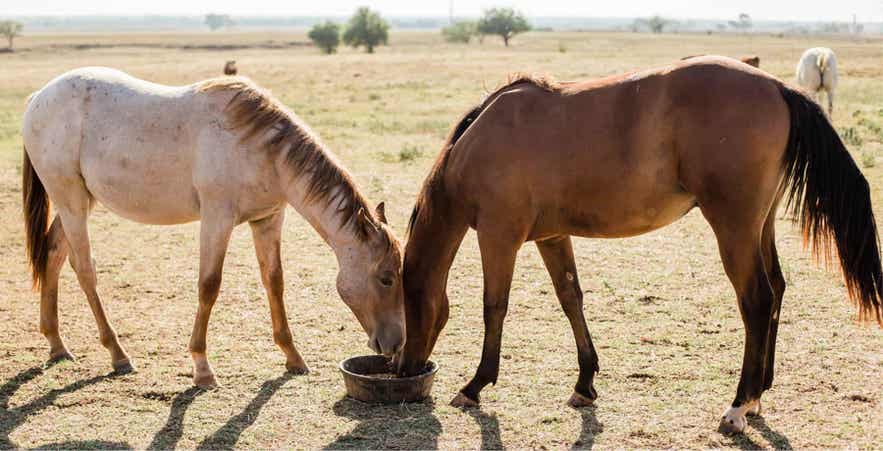
Several factors drive topline loss, and they often interact. Understanding how is essential before making changes.
Protein Quality vs. Quantity
Most forage-based diets provide adequate crude protein for a horse at maintenance. But they often lack a sufficient supply of essential amino acids.
Amino acids are the building blocks from which muscle protein is assembled. Essential amino acids for horses are those that cannot be synthesized in the body and must be provided by the diet. [1]
When even one essential amino acid falls short, protein synthesis stalls regardless of total crude protein intake.
Lysine, methionine, and threonine are the primary limiting amino acids for horses. These amino acids often act as the weakest link in a chain that determines how much muscle the body can actually build.
Age and Health Conditions
Older horses experience declining protein digestibility, reduced nutrient absorption, and age-related muscle wasting, which makes topline maintenance progressively harder. [7]
In senior horses with pituitary pars intermedia dysfunction (PPID), the hormonal dysregulation associated with the condition actively promotes muscle catabolism, causing topline deterioration.
Conditions such as polysaccharide storage myopathy (PSSM) can also impair topline development and should be ruled out with veterinary guidance before attributing poor topline to nutrition or training.
Hindgut Health and Nutrient Absorption
A healthy hindgut is essential for amino acid bioavailability. When fermentation is disrupted due to dysbiosis, colitis, or other hindgut problems, protein absorption declines.
Even when the diet provides adequate amino acids, topline improvement requires healthy digestion to absorb them. Consistent access to high-quality forage supports the hindgut microbiome and the stable fermentation environment that efficient nutrient absorption depends on.
The Nutritional Building Blocks of Topline
No amount of training produces results without good nutrition. Getting it right means understanding protein quality, the specific amino acids most likely to be limiting, and the role energy status plays in the process.
Crude Protein and Amino Acids
Crude protein (CP) measures total dietary nitrogen, not usable amino acids. Two horses eating diets with identical crude protein levels can have dramatically different amino acid availability depending on their protein sources.
A 2024 study compared horses fed a balanced amino acid profile (BAL) to those fed a standard protein diet (STD) during a 12-week exercise program. Despite similar total protein intakes, the BAL group showed greater cellular-level muscle hypertrophy, as confirmed by muscle biopsy. [3]
Research suggests that protein sources with a more complete essential amino acid profile also produce significantly greater activation of the mTOR signaling pathway, the primary molecular mechanism for muscle protein synthesis. [4]
These findings support the conclusion that amino acid balance is the primary driver of muscle development. Adding crude protein beyond what is needed raises nitrogen excretion. It does not build topline.
Lysine, Methionine, Threonine
Lysine, methionine, and threonine are the most important amino acids for topline development. [1]
Lysine is the first limiting amino acid in most horse diets. It is critical for collagen synthesis, lean tissue development, and calcium absorption.
Methionine is essential for glutathione synthesis (the body's primary antioxidant pathway), tissue integrity, and creatine production.
Threonine supports skeletal muscle function, gut mucous barrier integrity, and cartilage health.
One study found that targeted lysine and threonine supplementation improved muscle mass scores in both young and aged horses over 14 weeks. These results suggest amino acid supplementation can be a useful tool for topline support across life stages. [2]
Energy and Calories
Improving protein quality without meeting energy requirements is a common reason progress stalls despite otherwise appropriate nutritional changes.
Muscle protein synthesis cannot occur in a caloric deficit. A horse in negative energy balance will catabolize muscle for fuel, so adequate body condition must come first.
How Forage Choice Shapes Topline
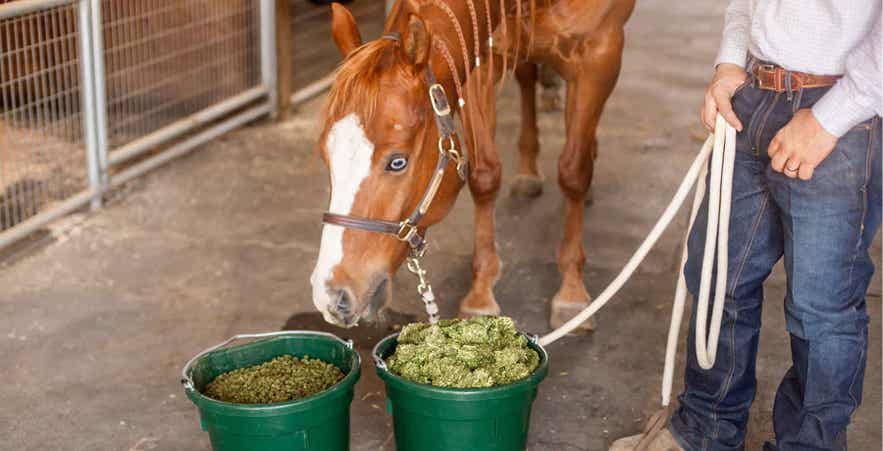
Forage delivers the majority of a horse's daily protein, energy, and amino acids. Feeding the right hay is the most impactful single step most owners can take to support a healthy topline, and the most frequently overlooked.
Grass Hay
Grass hays are the right starting point for most horses. But for topline support, not all grass hay is equal.
Timothy provides moderate protein and a relatively low calorie content, making it particularly well-suited for easy keepers and horses with metabolic concerns. However, timothy alone often cannot meet the amino acid demands of horses in heavy work, seniors with declining protein utilization, or any horse actively trying to build muscle.
Orchard grass offers higher protein levels and a higher calorie density, making it well-suited for horses that need more nutritional topline support. Horses tend to find it highly palatable, which supports consistent intake, but the higher NSC content may not be suitable for all horses.
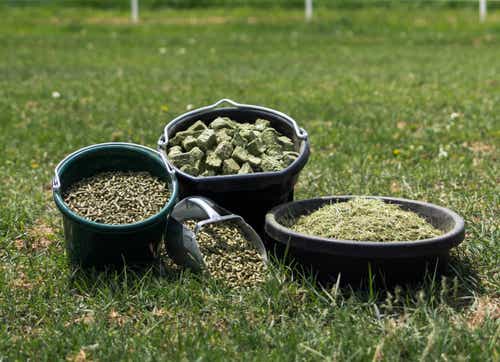
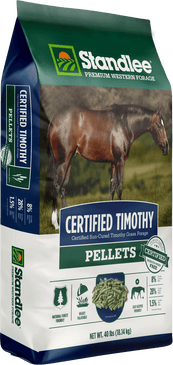
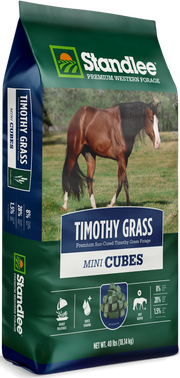
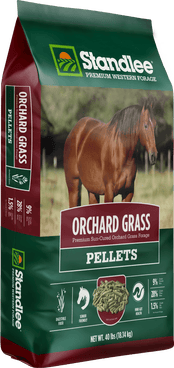
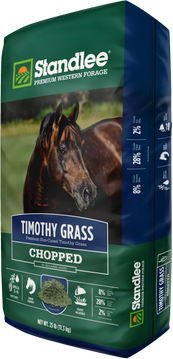
Maturity and quality can also influence the nutritional value of grass hay. Standlee offers both Timothy Grass and Orchard Grass in compressed bale, pellet, and cube forms, all grown and harvested under controlled conditions to deliver guaranteed nutritional profiles.
Alfalfa
Alfalfa provides the highest crude protein and the most favorable amino acid profile among popular forages for horses.
A 2024 controlled feeding study of 11 geldings found that alfalfa hay had substantially higher crude protein than meadow hay. The study also found that alfalfa positively influenced hindgut fermentation, supporting both protein supply and digestive health. [5]
This legume hay is an excellent source of lysine. One analysis found that an alfalfa hay diet provided 151% of the lysine requirement for horses, while an oat hay diet provided only 34%. [6]
Alfalfa is particularly valuable for horses in moderate to heavy work, seniors with elevated protein needs, and horses with persistent topline deficits despite adequate caloric intake.
However, feeding alfalfa as the sole forage source in an equine diet can lead to an imbalanced Ca:P ratio due to its high calcium content. Alfalfa is most commonly recommended as a supplemental forage to complement a diet based on grass forage.
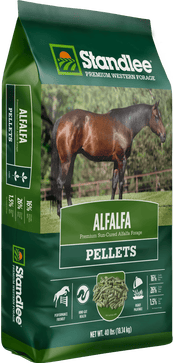
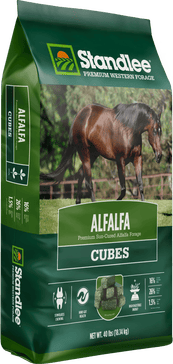
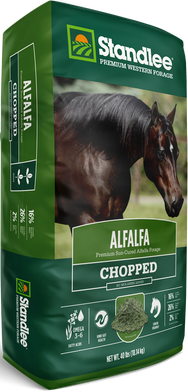
When fed as cubes, pellets, or chopped forage, it provides a consistent, convenient way for horse owners to increase protein quantity and quality in a forage-based diet.
Quality and Consistency
Topline improvement requires sustained amino acid delivery over weeks and months. Depending on the supplier, the same type of hay can vary in protein content and lysine concentration from batch to batch.
Standlee products are grown and harvested under controlled conditions in the nutrient-rich soils of southern Idaho, producing high-quality forage with consistent nutritional content. For owners working to build or restore topline, that consistency is a practical nutritional advantage.
Exercise and Topline Development
Nutrition and exercise both influence topline development. Without a targeted training approach, even an optimal diet cannot translate into visible topline improvement.
Why Exercise Matters
Muscle protein synthesis is triggered by the physical stress placed on muscle fibers during work. Without that stimulus, amino acids are excreted rather than incorporated into muscle tissue.
Nutrition and exercise are interdependent. Adequate energy and protein quality should be in place before increasing training volume, so the body has the building blocks to respond productively to the work.
Exercises That Build the Topline
Not all movement builds topline equally. Effective training recruits the epaxial muscles and engages the hindquarters so the horse uses their topline correctly.
Hill work is one of the most effective tools available. Incline exercise requires the horse to engage the hindquarters, activate the core, and stabilize through the back with every stride.
Research found that four weeks of incline exercise produced measurable increases in epaxial muscle profile in horses, with improvements visible as early as week two. [8]
Ground poles and cavaletti encourage the horse to lift through its back to clear each obstacle. Research confirms increased core and epaxial muscle activation during pole work, making it accessible and effective for horses at any fitness level. [9]
Other exercises that may help build topline include:
- Transitions: Frequent changes within and between gaits require the horse to continually reorganize its balance and recruit the stabilizing muscles of the back and hindquarters.
- Lateral work: Leg yield, shoulder-in, and similar movements add bend and balance demands along with epaxial engagement.
- Long-and-low: Stretching encourages a free-swinging back and develops suppleness alongside strength.
- In-hand exercises: Long-lining, groundwork, lunging, and dynamic mobilization exercises all contribute to muscle development.
Tracking Progress
Meaningful topline improvement typically requires 60 to 90 days.
Progressing gradually in duration and intensity allows the musculature to adapt without the risk of overuse injury. Maximizing turnout in varied terrain adds continuous low-level stimulus between sessions.
Photograph the horse every two to three weeks to track progress. Side-by-side comparisons reveal changes that daily observation misses.
Special Considerations
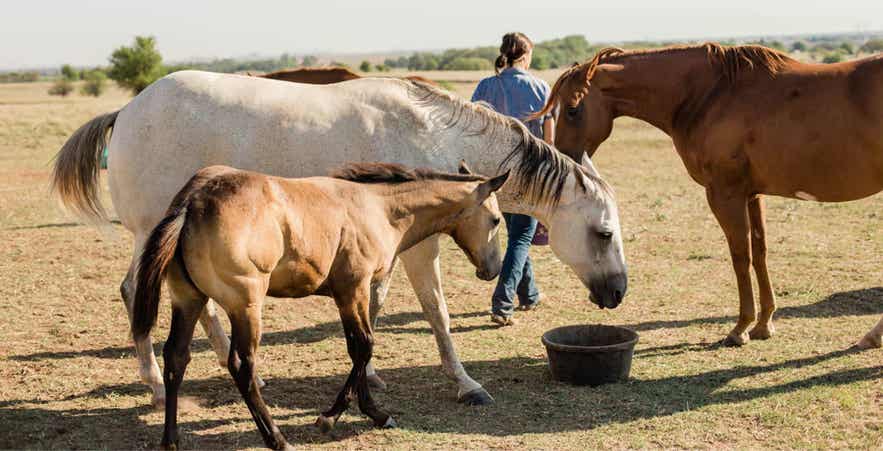
Some horses face additional challenges when it comes to building and maintaining topline.
Senior Horses
Older horses need higher protein quality to maintain topline. Declining digestive efficiency, reduced nutrient absorption, and age-related muscle wasting all compound with age. [7]
For horses with compromised dentition, soaked alfalfa cubes, pellets, or chopped forage deliver the nutritional density of alfalfa in a form that aging teeth can manage.
Easy Keepers and Overweight Horses
Easy keepers often appear well-fed but are chronically amino acid-deficient. Restricting hay to manage weight reduces protein and amino acids alongside calories, which can lead to a persistently poor topline.
Adding a measured amount of alfalfa to the daily hay ration can help improve amino acid supply while maintaining weight-management goals. Supplementation with essential amino acids can also promote muscle growth without adding calories.
Horses With Hindgut Issues
Horses with chronic hindgut dysfunction often absorb less protein than their diet provides.
Consistent, high-quality forage is foundational for hindgut health. Abrupt changes in hay type, feeding schedule, or forage quality destabilize the hindgut microbiome and further undermine bioavailability.
Work with your veterinarian to address any existing concerns and prioritize feeding a forage-based diet to support a healthy hindgut.
A Practical Framework for Building a Better Topline
Step 1: Assess topline separately from body condition. Evaluate the neck, back, loin, and croup independently and note the difference between muscle mass and fat.
Step 2: Rule out medical causes. Sudden, asymmetrical, or rapidly progressive topline loss warrants a veterinary evaluation before making nutritional or training changes.
Step 3: Audit the forage program. Evaluate hay type, quality, and maturity. A forage analysis is the most direct way to confirm the actual protein and lysine supply.
Step 4: Upgrade forage quality before adding supplements. Improving the protein quality of the base diet is often more effective and cost-efficient than layering supplements on top of a nutritionally insufficient forage program.
Step 5: Confirm adequate energy status. Topline development cannot begin in a caloric deficit. Restore energy balance first if the horse is underweight.
Step 6: Build a targeted exercise program. Incorporate hill work, transitions, ground poles, and lateral work. Progress gradually and allow adequate recovery between sessions.
Step 7: Adjust for life stage and health status. Seniors, PPID horses, easy keepers, and horses with GI conditions need individualized programs. Involve a veterinarian and equine nutritionist when health conditions are a factor.
Step 8: Track progress objectively. Plan for 60 to 90 days, or more, of consistent management. Use photographs over time rather than daily visual impressions.
Improving Topline in Horses
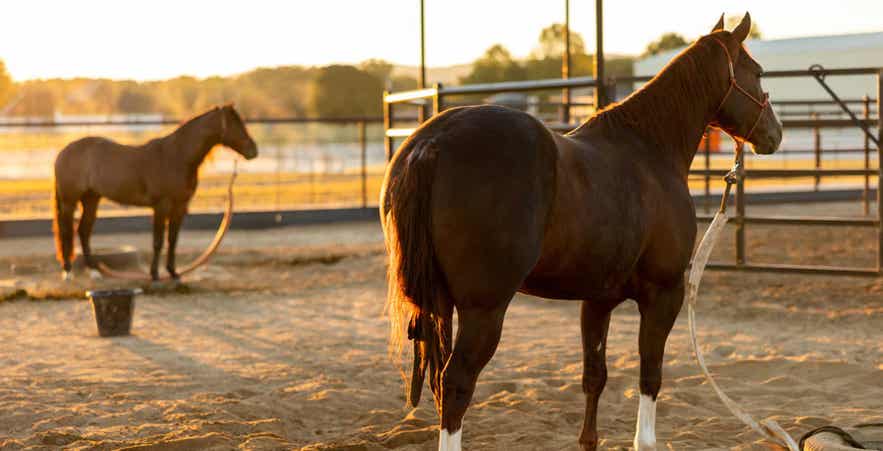
Topline development is one of the clearest windows into a horse's overall health.
Improving topline requires nutrition that delivers the right amino acids in the right amounts, and an exercise program that gives the body a reason to use them.
Choosing a high-quality, consistent forage matched to the horse's needs is the most practical starting point, often before any supplement is needed.
Standlee offers a full range of premium alfalfa and grass forage products in forms designed to work for horses at every life stage and workload.
Use the Standlee Forage Finder® to identify the right forage type and form for your horse's specific situation.
Frequently Asked Questions
What is the topline in horses, and how is it measured?
The topline refers to the epaxial muscles along the horse's neck, back, loin, and hindquarters. It is assessed using the Topline Evaluation Score (TES) alongside the Body Condition Score (BCS), because a horse can carry adequate fat cover while simultaneously losing significant topline muscle.
What does poor topline in a horse look like?
Common signs include a visible spine, a flat or sunken back, a hollowed loin, and hindquarters that lack muscular fill, regardless of the horse's overall body weight.
Can nutrition alone build a horse's topline without exercise?
No. Exercise provides the mechanical stimulus that initiates muscle protein synthesis, and nutrition provides the amino acids required to complete it. Both are necessary, and neither is sufficient without the other.
What is the best hay for improving a horse's topline?
Alfalfa offers the highest lysine content and most favorable amino acid profile of common forages, making it particularly effective for topline support. Adding alfalfa in pellet or cube form to a grass hay base is a practical strategy for horses that need improved protein quality without excess caloric intake.
Why does my horse have a poor topline even though I feed plenty of hay?
Most grass hays provide adequate crude protein, but many fall short on lysine, methionine, and threonine. Without sufficient levels of these limiting amino acids, muscle protein synthesis stalls regardless of total protein intake.
How long does it take to improve a horse's topline?
Meaningful topline improvement typically requires 60 to 90 days of consistent nutritional and exercise management. Track progress through photographs rather than relying on daily visual impressions.
Do older horses need different nutrition to maintain topline?
Yes. Senior horses benefit from higher protein quality rather than more total protein, and often need forage in alternative forms such as soaked cubes, pellets, or chopped forage if dental issues limit hay consumption.
Can an overweight horse have a poor topline?
Yes. Restricting hay to manage weight without upgrading protein quality reduces amino acid delivery alongside calories, which can impair topline muscle development.
References
- Mok CH and Urschel KL. Amino acid requirements in horses. Asian-Australas J Anim Sci. 2020.
- Graham-Thiers PM and Kronfeld DS. Amino acid supplementation improves muscle mass in aged and young horses. J Anim Sci. 2005.
- Graham-Thiers PM and Bowen LK. Effect of balanced vs. standard protein on muscle mass development in exercising horses. Transl Anim Sci. 2024.
- Loos CMM, et al. Differential effect of two dietary protein sources on time course response of muscle anabolic signaling pathways in normal and insulin dysregulated horses. Front Vet Sci. 2022.
- Reisinger N, et al. Nutrient composition and feed hygiene of alfalfa, comparison of feed intake and selected metabolic parameters in horses fed alfalfa haylage, alfalfa hay or meadow hay. Animals. 2024.
- Rodiek AV. Hay for horses: alfalfa or grass? Proc 31st Calif Alfalfa Forage Symp. 2001.
- National Research Council. Nutrient Requirements of Horses. 6th ed. National Academies Press. 2007.
- Fair N, et al. Four weeks of incline water treadmill exercise can contribute to increase epaxial muscle profile in horses. Vet Med Int. 2023.
- Shaw K, et al. The effect of ground poles and elastic resistance bands on longissimus dorsi and rectus abdominus muscle activity during equine walk and trot. J Equine Vet Sci. 2021.
Additional Learning Resources
From the Standlee Barn Bulletin Blog
- Feeding Senior Horses: Complete Guide to Senior Horse Nutrition
- Forage for Performance Horses
- How to Supplement Your Horse’s Diet with High-Quality Hay
From the Standlee Beyond the Barn Podcast
- Ep. 070: The Reason Why Your Horse Has a Poor Topline
- Ep. 026: What Format of Hay Should I Feed My Horse and Why Does It Matter?
From the Standlee Nutritional Papers
Products featured in this post
Enjoying the Standlee blog?
Subscribe to Standlee emails and get our newest content (and coupons, offers, and other great stuff) sent to your inbox!
Subscribe Now