Episode Notes
On this episode of Beyond the Barn, host Katy Starr chats with elite barrel racer, Sherry Cervi, about growing up in a rodeo family and becoming one of the most highly decorated barrel racers in the sport, including:
- What separates a truly exceptional barrel horse from the rest and why it takes more than talent alone
- What she pays attention to when it comes to keeping her horses feeling their best through training and competition
- Her advice she would share with barrel racers finding their way and facing challenges in their career
Behind Sherry’s success is a family that helped shape not only the competitor she became, but even more so the horsewoman she is today. And with three of the legendary Dinero’s offspring dominating the 2026 AQHA Barrel Horse of the Year rankings, the legacy she and her father, Mel Potter, have built together is still making its mark on the sport and will continue to for years to come.
🎧 Listen now on the Beyond the Barn podcast
Have a topic idea or feedback to share? We want to connect with you! Email podcast@standlee.com
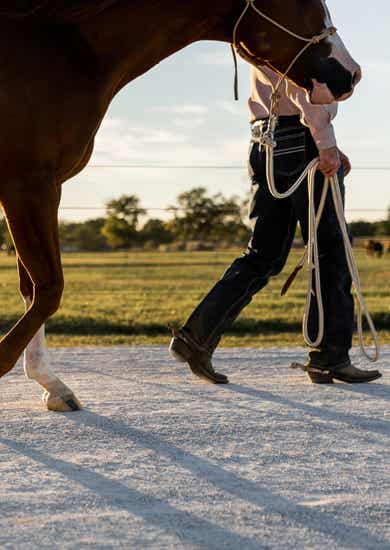
Episode Art Credit - Sam-Sin Photography
______________________________
Connect with Sherry on social platforms –
______________________________
*Views and opinions expressed by guests are their own and do not necessarily reflect the view of Standlee Premium Products, LLC.* _______________________________
Katy Starr (00:01):
Hi, I'm Katy Starr, and you're listening to Beyond the Barn. Join me on this journey as we bust equine and livestock nutrition myths and sit down with some of the most intriguing experts from across the country. We'll also take you behind the scenes of how premium western quality forage is grown and brought to your favorite farm and ranch retail store. I'm so glad you're here. Welcome back to another episode of Beyond the Barn. Today, I'm excited to introduce someone who has made an incredible mark on the world of professional barrel racing. Sherry Cervi is a four-time world champion, 19-time NFR qualifier, and the first barrel racer to surpass $2 million and later $3 million dollars in career earnings. She has also been recognized for her contributions to the Western industry and her dedication to horsemanship, including her induction into the National Cowgirl Hall of Fame.
Katy Starr (01:01):
Sherry, thank you so much for joining us today on the Beyond the Barn podcast.
Sherry Cervi (01:04):
Oh, thank you for having me. I'm really excited about doing this with you.
Katy Starr (01:08):
Yeah. So, just to kind of get us started, why don't you tell us just a little bit about where you grew up and your background with horses?
Sherry Cervi (01:16):
So, I'm from Marana, Arizona. My parents both competed in rodeo. My dad went to the very first NFR in Dallas, Texas. And then my mom made the NFR in the barrels three times in the 70s. So, I feel like I was born into a family that loved horses and that competed. They didn't go on and do it professionally. Rodeo was kind of their hobby, but they still competed as I was growing up. And so, we had horses and I fell in love with horses at an early age. And my dad's businesses were in Wisconsin, so I would spend the summers in Wisconsin and I would go to gymkhanas and Little Britches rodeos in Wisconsin and come back and do junior rodeos and high school rodeos in Arizona. So, horses have been a part of my whole life.
Katy Starr (02:05):
Yeah. That's amazing. And your family had a cranberry farm in Wisconsin, is that right?
Sherry Cervi (02:11):
Mm-Hmm. They still do. Definitely. So, the home cranberry marsh was started in 1880. And my nephew now is running it and managing it. And so, yeah, it's definitely a unique agricultural business growing cranberries because there's only certain areas in the United States that you can grow them. And Wisconsin's a big provider of cranberries.
Katy Starr (02:36):
Right. Well, and I wouldn't necessarily associate a cranberry farmer with rodeo. And so, I think that's so fascinating. I love that that was something that was important for your dad to continue and still along the lines with doing rodeo. You mentioning that he was at the first NFR. I saw that when I was doing some research and I just though that was so amazing how cool of a story that is.
Sherry Cervi (03:02):
Yeah, he had lived a pretty diversified life. He didn't come from a Western background. His mom took him to the Tucson Rodeo when he was seven years old. And he wanted to be a cowboy after that. And basically he self-taught himself. And the only reason they were in Arizona is because he had asthma really bad. And so, his mom took him down there and they started going to Arizona in the wintertime and Wisconsin in the summers. So, he would go to school in the wintertime in Arizona and that's how he met my mom. And they were married for, I think a little over 70 years.
Katy Starr (03:38):
Wow. That's so amazing.
Sherry Cervi (03:41):
Yeah. But he loved the Western industry. He was very influential, I feel like, in doing a lot of things to benefit the Western industry. But he also grew cranberries and was into agriculture and was in the cattle business and some short stint in the sheep business and you know, I mean, he just, he liked doing a lot of things.
Katy Starr (04:01):
Jack of all trades there.
Sherry Cervi (04:02):
Yes. Yes.
Katy Starr (04:04):
And so, growing up and doing rodeo, you didn't just do barrel racing, right? Like what else was an important part of growing up in the rodeo world for you?
Sherry Cervi (04:14):
So, I did all the events that you could do in the high school rodeos and junior rodeos. I ran poles, goat tied, team roped, was in the cutting. And I'm very thankful that I did all those events because I feel like it made me a better rider and the mental game and just competing in all those different events. I love riding cutting horses. Mm-Hmm. If I wasn't a barrel racer, I probably would be riding cutting horse because it's so much fun. And so, I did all the events, but barrel racing was always my favorite just because I loved going fast and the connection I had with my horses.
Katy Starr (04:54):
Hmm. Yeah. That's so awesome. And so, this might be a tough question. I know that you've had so much experience within the horse industry, but is there a memory that stands out for you as a kid with horses, like a moment growing up that you just, you'll never forget about?
Sherry Cervi (05:12):
I feel like I have a lot of great memories with horses. Every horse that I've had growing up and even in my adult years has taught me something. Mm-Hmm. But probably the very first, my real barrel horse, I went from a pony to rope horses my parents would put me on. And then my real barrel horse that he actually knew what he was doing and having success on him was really special to me. And I feel like that got me really hooked into barrel racing and being competitive. His name was Dudley. And he was a backup horse to a very good friend of ours for the NFR. And my parents got him and he taught me a lot.
Katy Starr (05:52):
Hmm. That's so awesome. And how old were you when you were riding Dudley?
Sherry Cervi (05:57):
I think I was 12 or 13 years old when I got him.
Katy Starr (06:01):
That's such a good time in life. Yeah.
Sherry Cervi (06:04):
Yeah. It is.
Katy Starr (06:05):
So, another tough question, I know that you've had so many great horses in your life. So, if you have even more than one, that's okay. But is there a horse in your life that you would call or refer to as like your heart horse or one that really significantly changed your life?
Sherry Cervi (06:23):
When people ask me that I said, "That's like picking, you know, your favorite kid."
Katy Starr (06:27):
Yeah.
Sherry Cervi (06:27):
because it's hard to do, but definitely Stingray is going to be my heart horse in my lifetime. I'm very thankful for everything that every horse has done for me, but we raised her, trained her, and then what she did for me in the competitiveness and barrel racing was huge. But now what she's doing is giving me great little babies. I'm so thankful for her. And she definitely changed my life and my family's life.
Katy Starr (06:56):
Oh, absolutely. And what does it feel like, I mean, because you've had horses from different, I guess you could say walks of life in a sense, but the fact that with Stingray that this horse is such an important part of your life, a horse that you guys were able to raise and train on your own, what does that mean to you to be able to do that?
Sherry Cervi (07:18):
I think as a breeder, it's huge because you always hope for those horses that are going to be able to compete at that level. And the fact that she did that for us and it was huge for our stud, Dinero, to prove what he could produce. It was fun for me, obviously, as a competitor, but my dad as a breeder to be able to see his pride and joy watching something that he's bred and raised because he believed in his program, believed in his breeding business and those bloodlines. He was stuck to his guns of what he believed in as far as when it came to breeding mares to certain studs and vice versa. So, that's very important to me and I'm thankful I got to see that.
Katy Starr (08:06):
Yeah, that is so amazing. And even to see that your dad didn't come from a rodeo equine background, but that's something that he taught himself and like, what a testament to him and his ability to just really learn and educate himself about the industry and just to see what he's accomplished. That's just really cool.
Sherry Cervi (08:28):
Yeah. Absolutely.
Katy Starr (08:29):
So, Sherry, what do you love most about the Western industry and why is it so important to you?
Sherry Cervi (08:37):
That's a great question because I think there's so many good things about the Western industry. I think my dad's proof that you don't have to come from a background in the Western industry, that you can get into it and make a livelihood, have a passion for it. The cool thing about the Western industry is I feel like it's a small family and everybody's there to... If you don't know something, there's somebody that does know the answer and they'll help you figure it out. I think it's a great place to raise kids. I think it teaches the responsibility of taking care of things, working hard for things. And I do youth races and I'm seeing more and more kids that didn't come from a Western background that they watched a random rodeo or had a friend and they fell in love with the horse and they now want to be a barrel racer and the parents are all in and they're learning just right alongside the kids how things work and stuff.
Sherry Cervi (09:34):
So, I think it's, I don't know, it's been very, very good to me. And I hope that I've contributed back to making it better.
Katy Starr (09:45):
Oh, absolutely. Yeah. Especially with your youth championships that you put on and do that to support the future generation. It's been really incredible to see what you've done with that and how you've given back. So, I love that.
Sherry Cervi (09:57):
Thank you.
Katy Starr (09:58):
So, talk to us a little bit about your lifestyle outside of the rodeo arena. What does everyday life look like for you?
Sherry Cervi (10:06):
Well, I don't have very many other hobbies besides horses. Horses are my hobby and my profession and just riding young horses and getting them to be better. I almost ride every single day. We also run yearling cattle in Wisconsin and I actually just got back from there from shipping cattle. We don't own them, but we run our cattle for some good friends. And so, dealing with that and if I'm not rodeoing and spending the summer in Wisconsin, then we do a lot of pasture riding. But my everyday livelihood has something to do with horses every single day.
Katy Starr (10:43):
Uh-Huh. Yeah. No, that's awesome. And you also enjoy chickens .
Sherry Cervi (10:49):
I was going to leave that out, but yes.
Sherry Cervi (10:54):
It started out, we had just some random chickens at my house when I was growing up. And now it's kind of a thing because they make me happy. And so, yes, I do have some special chickens that go from place to place with us. And not all my chickens have names, but a couple of the better ones, they do. And I do occasionally find myself sitting in the chicken coop just having some peace and quiet watching my chickens. So, it's very peaceful.
Katy Starr (11:22):
And what is it like when you happen to take, like Dottie makes the rounds with you sometimes. But what is it like bringing a chicken on the road with you when you travel around?
Sherry Cervi (11:32):
I haven't actually taken a chicken to a rodeo yet. I've controlled myself, but - ... They do go from... We spend the winter in Arizona and then we come to Texas and so they'll go from place to place. But chickens are pretty low maintenance. And they don't take up very much room. So, the few times I have taken her, like, I took her to my youth race and the kids loved her. But yeah, I would say she's my emotional support chicken.
Katy Starr (11:58):
That's a good one to have. So Sherry, as someone who knows a thing or two about barrel racing, what makes a good barrel horse? What do you look for?
Sherry Cervi (12:11):
So, I think that one of the most important things for a barrel horse is their heart. Mm-Hmm. And you really don't know that until you start riding them and put them in certain situations because the most athletic horse sometimes isn't the best one out there, but they win because they're going to try every single time. Obviously, in today's world, barrel racing is so tough. Mm-Hmm. There are more and more people breeding just for barrel racing. 15 years ago, you didn't really see that. They were getting horses off of the track and making them into barrel horses. And there was a few breeders around that were breeding for performance, rodeo performance horses. But now it's huge. There's so many great mares that they've bred and now are producing, which is fun, because back in the day, the mares didn't get much credit. And it was all about the stud.
Sherry Cervi (13:02):
And I think now everybody's realizing that you can breed a great mare to an average stud and you're still going to have a good horse. Mm-Hmm. So, that's fun watching that. And I just think that a horse that's athletic is important and the will to want to learn and to try is very important. And you can breed for that all day long, but in the end, it's, you never know which horse is going to make it or not.
Katy Starr (13:29):
What it's going to come out as, right? That can be tricky. So, what would you say is maybe one of the most common mistakes that you see new barrel racers make?
Sherry Cervi (13:42):
Hmm. Somebody that's just getting in the industry. Mm-Hmm. Is that what you're talking about?
Katy Starr (13:52):
Yeah.
Sherry Cervi (13:53):
So, I would say that they get the wrong advice, to say that there's a lot of knowledge out there. Which is awesome. And I think you have to be always willing to learn. But I think that somebody new coming into the industry, you want to make sure that you have, whether it be a role model or somebody that you seek to help you get better, that that person is really in your corner. Mm-Hmm. I think it's really important. And, you know, kids also that are coming in because they're, some kids, if they have enough bad experiences, they're not going to stay hooked or you could get a kid hurt, which is scary. And so, I just, I think it's really important as a parent, a new parent to the Western industry coming in to make sure that your kid is with somebody that really can help them. Just general horsemanship is important. Yeah. And finding somebody to help you with that.
Katy Starr (14:45):
Yeah. That's really great. And to piggyback off that, what advice, aside from like looking for good role models, somebody that's really going to support you, what advice would you give to any of our listeners that are involved in rodeo and maybe they just, they want to get better at barrel racing and they don't quite know what to do? What advice do you have for them?
Sherry Cervi (15:06):
I think if you stay open-minded and you always have that willingness to learn is very important. Doesn't matter what stage of a rider you are, I still feel like I have a lot to learn. And don't be afraid to ask questions because some people, I think they're worried that it's going to sound stupid or that it's going to show that maybe they don't know and they're just not secure enough with themselves to be like, "Hey, I don't know the answer to this." Right. Ask the question because you won't learn unless you just ask it. And I'll ask the same question to a couple different people because I want to know different opinions. Right. And I take what works best for me and then I apply it. And so, I think that's important too, to not just get tunnel visioned of one person that you're going to listen to and oh, nobody else knows anything because that's not true.
Sherry Cervi (15:59):
There's just, I am not a fan of social media. I think it's a necessary evil. Mm-Hmm. But there's so much knowledge at our fingertips, which is really awesome. And I think that if we take the positive out of all of the social media and can use it to our benefit, it's good.
Katy Starr (16:17):
Right. Absolutely. Well, and kind of going off of what you said about making sure that you talk to the right people, have the right mentors, and thinking about when you're asking questions, being worried that it might be a dumb question, I think that can tell you a lot about a person is if you're asking someone for some insight or some help in how they respond to you, I think that can give you a lot of good insight into whether that person is a good one for you to be working with and to help you grow as a barrel racer, as a person or anything like that.
Sherry Cervi (16:55):
Oh, absolutely. Honestly, people come and ask me questions or want to come ride with me and stuff and I can tell within the first about 10 minutes if you really are there to learn something or if you're there just to say that you've rode with me. And unfortunately that happens. Yeah. And I think that if you're going to go and ask somebody or seek help, like really go wanting to learn something and to take something, and you may not get that quick fix that you're looking for.
Katy Starr (17:24):
Right.
Sherry Cervi (17:25):
But the knowledge that you have for the years down the road and something, you know, I mean, I may have learned 10 years ago, I can apply it to like now on a horse. Right. And so, just be storing all that knowledge, but I think you have to go with an open mind and not that, "Well, you didn't help me today." Well, if you really think about what you were taught, probably it will help you down the road.
Katy Starr (17:51):
Right. That is really great advice. Sherry, has there ever been a moment during your riding career that you've decided to not run a horse even when you really wanted to compete or needed to compete? What goes into making a decision like that?
Sherry Cervi (18:08):
I've always tried to take the best care of the horses that I can, and I won't run on bad ground. I have fallen enough in my career that, one, I don't want to hit the ground and get myself hurt, or hurt my horse. And so, I've chose to not run certain horses and where there may be a lot of money added and I needed to run them, but the ground wasn't good enough to run that horse and a different horse would handle it better. So, yeah, lots of times.
Katy Starr (18:39):
And when you have a horse that's competing at a really high level, how do you approach building their diet around their workload? What role does forage play into the foundation of that?
Sherry Cervi (18:53):
Yeah, I think nutrition is such a huge part of the horse's obviously daily lives, but being a competitive horse and not having your horse, his nutrition right for him can make it to where you're not as competitive. And if he's not as strong as he should be and doesn't feel as good, it's just like us. Like if we're eating bad and, and unhealthy, we don't want to go run and work out. And so, I still feel like I'm learning on nutrition, but nutrition is huge. And perfect world, I like having them out on a pasture. Where they can be eating all day long. If you don't have that, then I like to keep hay in front of them to where they can just be nibbling a little bit like what Mother Nature designed them to be doing is eating, you know, all day. And so, some horses need more, some horses need less.
Sherry Cervi (19:45):
And I adjust to that horse. I don't just blanket, this is what everybody's getting no matter what. I pay attention to what each horse needs to benefit them.
Katy Starr (19:56):
Yeah, that is so excellent. And then what are some other things that you pay close attention to when caring for a horse that is competing at such a high level?
Sherry Cervi (20:05):
You know, I, definitely they're that work, if they're sore or they need a break or usually your horses will try to tell you, you know, something in how they're working. And I think that it's really important as a competitor to listen to your horse and listen to your gut because usually your gut's going to be, you know that something's not right, but the dollar signs and you kind of get lost in, in tunnel vision of need to be running this horse. But I think it's important to really listen to your horse. And I'm not saying to run to the vet every time something goes wrong, but be aware of they need a little bit of a break or you do need to change their diet or you do need to help them with supplements or something like that. I think educate yourself so that you know the things to do when the horse needs it.
Sherry Cervi (20:56):
Being a professional barrel racer, you have to almost be a vet yourself so that you can know things and fix things as they come up and have good vets as contacts to help you.
Katy Starr (21:08):
Right. Yeah, that's so good. One of the things that we talk about a lot on the podcast is knowing kind of what your horse's normal is. So, then when something goes wrong, then you know, first of all, if you do need to end up calling the vet right. And so, we talk about that a lot with their normal vital signs and all of that. But I think along with behavior and like eating and all of that too, because if you have a horse that maybe every day they are really great about eating their food and then all of a sudden there's a day where they're not eating, like the horse is obviously telling you something and since they can't communicate with us with words we have to be really good at paying attention to the other physical cues that they're showing us to be able to help them in what they need, so.
Sherry Cervi (21:57):
This winter, I had a mare that she would always clean her hay up. And I noticed for about a couple days that she was just leaving the stems and I was like, this is not her normal. Mm-Hmm. And I immediately started treating her for ulcers and she two days later went back to eating.
Katy Starr (22:13):
Back to normal.
Sherry Cervi (22:14):
Back normal. Just, you know, must of the stems were kind of bothering her stomach a little bit, but helped her out. And so, yeah, I think knowing your horse is very, very important.
Katy Starr (22:25):
Excellent. And one of the things that you, as you were kind of prepping for this interview, one of the things that you previously shared with me that I thought was really, really interesting was that you're not naturally an outgoing person, but you've kind of had to step out of your comfort zone throughout your whole career. So, how have you learned to navigate that? And do you feel like those experiences have changed you as a person or is that still something that you have to work through?
Sherry Cervi (22:52):
I think it's something that I still always have to work through. You know, I don't love public speaking. Yeah. But I've had to do it quite a bit. And obviously at my youth races, you know, I talk to all the kids. We do a little grand entry and I talk to them, you know, so there's 320 kids at every race and, and I talk to. And, and so I feel like it's a work in progress. Mm-Hmm. I still feel, you know, like I want to get better and pretty reserved and kind of stay to myself type person. But I feel like I've been put in this position to, you know, help people if they need it. So, you know, I don't want to not try to do something, you know, to help the industry get better.
Katy Starr (23:33):
Yeah. Well, I think it's so encouraging, especially all the work that you do with a lot of the youth. I think that's great to kind of show them that sometimes in life we have to do things that scare us, that intimidate us, that, you know, are really hard for us to do. Yeah. But we can still do it even when we're scared and we can still push through. And I think that's so inspiring and encouraging for kids to see. So, I love that you challenge yourself in that way to help others. And so, that's, that's really amazing.
Sherry Cervi (24:07):
Well, you know, I think the thing is there's a lot of things that are out of my comfort zone and that I can't control in, you know, the rodeo world and barrel racing. And it's just like life. There's a lot of things you can't control and you can either choose to deal with it and keep moving on or not. And so, I think it's important for kids to understand.
Katy Starr (24:26):
So, Sherry, when you're working toward a goal and things don't go the way that you had hoped they would, how do you go about handling that?
Sherry Cervi (24:36):
It's hard because I feel like if you've put 110% in and you really have tried and done all the work and it doesn't work out, you know, it's hard to be like, "Okay, I'm going to try this again." But I think, you know, when I was younger, barrel racing was my worst event. The other events that I did, I was definitely better at, but I loved barrel racing and it was, you know, my passion. And so, I think it's real important to know that when you do set goals and it doesn't turn out the way that you want, to remember the end goal, that life isn't easy, things are not always fair. If you really want that goal and that you have to just keep trying and, you know, put the negative behind you, learn from the past and what, why didn't it work? What do I need to change?
Sherry Cervi (25:26):
And, you know, there's been years when I was trying to make the NFR and I get out there and I didn't, and I just like, okay, I have to go home and regroup. And, you know, when a couple years that I didn't have the horsepower, just wasn't in the cards, so I had to go home and that's when I made Stingray and she came back. So, I think it's, you have to really dig deep and how bad do you want something? And having a good support system behind you that helps you achieve those goals is very important. But I see a lot of young girls that want to go out there and try, but it's hard and they don't stick it out and they quit.
Katy Starr (26:04):
Yeah. I think if it's something, like you mentioned, I think if it's something that you want bad enough, the ones that are most successful, right? And this could go for barrel racing, this could go for honestly anything in life. Being dedicated and disciplined and willing to pursue even through the hard, even through the failures, a lot of the most successful people in life and, you know, you being obviously one of the most successful barrel racers, like, you failed plenty of times and you wouldn't have gotten to where you are or where you have without those failures. They're such learning tools for us, and I think that can be hard for kids to understand sometimes. How can you learn by not doing well at something? But man, I think that's where most of the growth comes from.
Sherry Cervi (26:51):
I think also in today's world, what's really hard is that we see all the stuff on social media, everybody's good stuff. Yeah. And it's easy to compare and be like, "Well, I'm not doing that good," or, "My horse isn't as far along as that horse." And going and they're not showing you what's happening every single day. Right. They're not showing you how hard it is to get that horse to that point or, you know, the knockdown barrels or the no times you're getting, me included. Like, we don't see the real behind the scenes that everybody struggles. It's not just you. It's part of life. So, I think it's, you have to be able to, you know, be like, "Okay, I'm going to stop looking at what this person's doing. I'm going to worry about myself and stay in your lane."
Katy Starr (27:40):
One thing that I have always worked with my girls so much on in everything that they do in their life is not getting so much caught up in what other people are doing, whether it be competing in any sports or whatever it may be. But what did you do today and what can you do tomorrow to be better than you were today? And so, focusing more on how to improve yourself against yourself than totally getting caught up in what other people are doing, because I think that can really slow you down.
Sherry Cervi (28:10):
Absolutely. Yes, for sure.
Katy Starr (28:11):
So, I know horses teach us a lot of things, but what would you say is probably the most important thing that horses have taught you in your life so far?
Sherry Cervi (28:20):
Probably patience, you know, because every horse is not the same caliber or their learning is not as fast as the next one. And so, some horses, you have to go slower and, you know, take your time. And, you know, I've learned to have a lot of patience, still learning. And having confidence in your horse is huge, and that can carry over into having confidence in yourself, because your horses feel that. If you are always second guessing yourself, it reflects in your competitiveness. Mm-Hmm. And so, I think having confidence in you and your horse is huge.
Katy Starr (28:57):
That's so good. And how have horses changed or made an impact on your life?
Sherry Cervi (29:04):
They've taken me to places that I would've never been able to go or accomplished, you know, my goals without those horses. The things, the places that I've been able to compete because of my horses, you know, those memories will stay with me forever. There's been so many cool things that have gotten me into doing just things in life.
Katy Starr (29:28):
What would you say is probably the best piece of life advice that you've ever gotten from an older cowboy or cowgirl, and how has that held up?
Sherry Cervi (29:38):
My mom and dad were both real big in always try your best, try to do your best. You know, it may not be the best that day. But as long as you try, that's all you can do. And I think, you know, I've tried to remember that my whole career, just do your best. And sometimes you'll win first and sometimes you won't, but you can't always control that. They were real big on how you live your life outside the arena is very important.
Katy Starr (30:04):
So, who in your life, Sherry, would you say has probably been your greatest inspiration? Can you tell us a little bit about them?
Sherry Cervi (30:12):
Definitely my mom and dad both impacted my life and inspired me, you know, through my career, even, you know, when I was young and even till today. They just, they sacrificed a lot for me when I was younger, taking me to junior rodeos and high school rodeos. I played high school basketball, so we would go from a game Friday night, drive all night to the rodeo the next day. And you know what I mean? They just, they sacrificed a lot for me to have the opportunities. And the older I get, I realize that and I think that's huge for kids to understand what parents do for you, you know, when you're, you're younger, be grateful. And, you know, just my mom was a great horse woman and got to ride with her for many years before she had to stop riding and so grateful for what she's taught me that I still use today.
Katy Starr (31:04):
That's so special. I love that. And you talking about basketball, there is a picture of, I think, was there a group of you going to, was it your first NFR and there's a picture of you and you're in basketball shoes? Everybody else is in boots. I kind of love that. Basketball is something that's, I love basketball. I also love rodeo, but tell me about that because I though that, I was like, oh my gosh, I love this picture so much.
Sherry Cervi (31:36):
Well, it was an accident and yeah, it was several, several years ago that when you go to the NFR and you take a group picture with each event. And I knew that I was going to take a picture, but I didn't really think about that it was going to be from head to toe. Yeah, I showed up in my basketball shoes. But playing basketball was huge part of my high school years and I am so glad that I did that because it taught me to, you're on a team. It's not just about yourself. You know, rodeo is so much individual, but learning to work with others and being a part of a team was awesome. And I'm so glad that I had those years and did that.
Katy Starr (32:18):
That's so great. I completely agree. Being able to work with a team is so important and I think it does bleed into your own personal individual competition or whatever that you're doing in life. Yes. I think it makes you better as an individual when you are able to see what you can do and accomplish when you're working together as a team. So, that's awesome.
Sherry Cervi (32:40):
Yep.
Katy Starr (32:41):
Yeah. And Sherry, so when you think about the kind of life that you want to, or that you've built and the legacy that you want to leave, what are some of the things that matter most to you?
Sherry Cervi (32:53):
I hope that I have led my life outside of the arena. You know, can impact kids or, you know, older people that just things that I've dealt with in my life that have overcome, that it can help somebody else deal with just life in itself. I hope that I have impacted some kids' lives to the better. That's really important to me, helping kids, no matter if they're going to be barrel racers or not, just helping them. I think 18 and under, you're such a volatile age and there's so many roads and crossroads that you're coming to in your life and the decisions that you're making. And so, if I have helped a kid maybe make a better decision, that's important to me, I hope that I've left the barrel racing world better than when, when I started.
Katy Starr (33:45):
Is there any memory that kind of stands out to you of an experience that with all the kids that you've worked with, with your youth championships and everything, an encounter or something that you have worked with a kid and you've realized what an impact that you've had on their life?
Sherry Cervi (34:02):
There are so many stories that we get at every race that, you know, we hear about what, you know, a kid is going through outside of barrel racing world and that, that weekend that we provide for those kids to be there with their family, they'll never forget. And I couldn't really just pick one because there's been so many and so many important kids that, that we've met. But that is our goal. I have a great team that helps me. You know, the youth race is my passion, but my good friends have made it their passion too. And so, they come and they help, you know, three weekends a year put on an amazing barrel race. And that is our goal is that we provide a place for you to come with your family and make new friends and you have a memorable weekend that win or lose, it's something that you will never forget and we give that opportunity for that kid and their family.
Katy Starr (35:01):
That's such a great way to give back to the industry. I love that. And so, Sherry, I must ask as we are kind of starting to round out this interview, but what is your favorite Standlee product?
Sherry Cervi (35:14):
Oh, I love the Alfalfa Timothy pellets at home, but I've got to where when I'm on the road, I just give the Alfalfa pellets because, you know, it's higher in protein and I feel like my horses need it, you know, when they're traveling to be able to just the hours spent in the trailer, I think they need more protein. And the straight Alfalfa is kind of a natural like stomach buffer, you know, because of the calcium that it has in it. So, I think that anything you can do to help your horse's stomach is positive. So, I'm going to probably the Alfalfa pellets.
Katy Starr (35:50):
Yeah, that preventative stuff. I'm a big believer in setting yourself up, setting your horse up for getting them right from the get-go, especially when it comes to nutrition, right? And it can come, you know, with other horse care and everything as well. But if you are doing things right just in your every day, what you're providing them, it's going to help you out in the long run and hopefully help you prevent other bigger issues from coming up later down the road. So, it's a good way to do it. Sherry, how can our listeners stay connected with you after this episode?
Sherry Cervi (36:25):
Facebook, Instagram. I have a Sherry Cervi fan page. That's probably the best way that they can.
Katy Starr (36:33):
Awesome. We'll make sure that we link those in our show notes so our listeners can follow along with you and your journey. And Sherry, thank you so much for joining us today and just giving us a little bit of your time to talk to us about your experiences with horses and the rodeo industry and just all that you're doing to give back to the industry as well. You're just such an amazing person and role model that I think a lot of people look up to and we appreciate you so much for being on today.
Sherry Cervi (37:02):
Oh, well, thank you so much. I enjoyed being on here with you and I love barrel racing, love horses. So, thank you for letting me talk about it.
Katy Starr (37:10):
Yeah. Thanks for listening to the Beyond the Barn podcast by Standlee Forage. We'd love for you to share our podcast with your favorite people and subscribe on Apple, Spotify, or your favorite listening platform. Until next time, keep your cinch tight and don't forget to turn off the water.
WRITE A REVIEW
If you enjoy the Beyond the Barn Podcast, please consider taking a minute to rate and review the podcast on these popular platforms.


SUBSCRIBE & NEVER MISS AN EPISODE



CONNECT WITH US
We LOVE hearing from our listeners and Standlee family. Drop us a line! Do you have an interesting topic or question you’ve been dying to get the answer to? Send it our way.
Send SuggestionsNOMINATE A GUEST TO BE ON OUR PODCAST
Has a friend or mentor’s story changed your perspective? We want our listeners to be inspired to live vicariously through our guests' life experiences. Reach out to us at podcast@standlee.com