Choosing the Best Chicken Coop Bedding: A Complete Guide to Healthier Backyard Chickens
Proper bedding is one of the most important — and often most overlooked — parts of maintaining a clean, healthy chicken coop. From moisture management and odor control to flock comfort and overall coop hygiene, the bedding you choose plays a major role in supporting the daily environment your chickens rely on. Understanding how different bedding materials function can help backyard flock owners create healthier, more manageable coop conditions throughout every season.
Key Takeaways
- Proper chicken coop bedding plays a major role in flock health, moisture control, and ammonia management.
- Clean, dry bedding helps support respiratory health and reduces harmful bacteria buildup.
- Straw bedding is one of the most effective and practical bedding options for backyard chickens.
- Zeolite and Sweet PDZ® Coop Refresher help absorb moisture and reduce ammonia odors within the coop.
- Bedding management impacts egg cleanliness, overall coop hygiene, and flock comfort.
- Consistent coop maintenance and quality bedding are essential parts of responsible poultry care.

Join Our Email List Today!
Be the first to get the latest news, promotions, updates and more from Standlee when you join our email list!
By signing up for email, you are agreeing to receive news, offers, and information from Standlee Premium Products, LLC®. You can also visit our Privacy Policy. Easy unsubscribe links are provided in every email.
Why Chicken Coop Bedding Matters More Than Most Backyard Flock Owners Realize
As backyard chicken ownership continues to grow across the United States, more flock owners are learning that successful poultry care goes far beyond feed and fresh water alone. While nutrition, predator protection, and coop design are all important, one of the most overlooked aspects of backyard poultry management is bedding.
Choosing the best chicken coop bedding directly affects flock health, coop cleanliness, air quality, moisture control, and overall bird comfort. Bedding is not simply a material covering the coop floor — it plays an essential role in maintaining a healthier environment for chickens year-round.
Whether you are raising backyard chickens for fresh eggs, homesteading, family projects, or small-scale meat production, understanding bedding management can make a significant difference in the health and comfort of your flock.
The Role of Bedding in a Chicken Coop
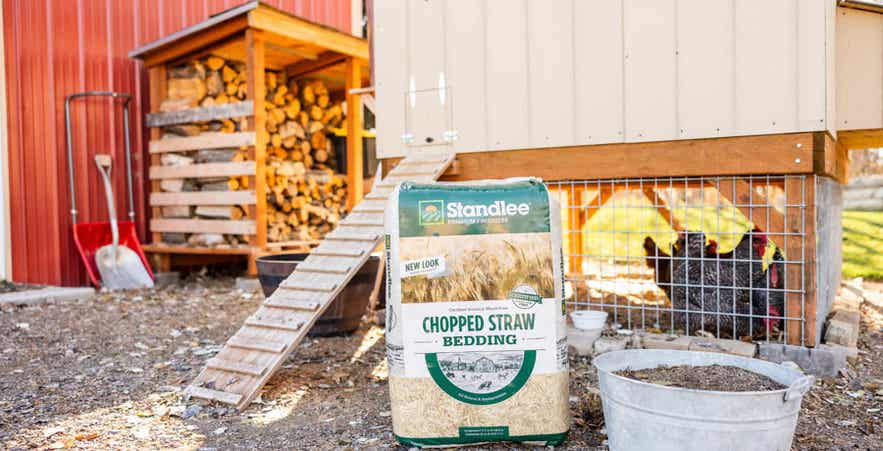
Chicken coops naturally accumulate moisture from manure, spilled water, humidity, respiration, and everyday flock activity. Without proper bedding management, damp conditions can quickly lead to ammonia buildup, bacterial growth, parasites, odor problems, and unhealthy air quality.
One of the primary jobs of chicken coop bedding is moisture absorption. Effective bedding materials help pull moisture away from manure and coop flooring, helping maintain drier conditions throughout the coop.
Controlling ammonia is equally important. As manure decomposes, ammonia gas is released into the environment. Excessive ammonia levels can negatively impact respiratory health, irritate eyes, increase stress, and contribute to poor overall coop conditions.
Beyond moisture and odor control, bedding also supports comfort and natural behavior. Chickens instinctively scratch, peck, forage, and interact with their environment throughout the day. Proper bedding encourages these behaviors while helping create a more enriched and comfortable coop setting.
Good bedding management also contributes to cleaner eggs, healthier nesting areas, and easier coop maintenance over time.
What Makes the Best Chicken Coop Bedding?
When evaluating the best bedding for backyard chickens, several important factors should be considered.
Effective poultry bedding should absorb moisture efficiently while helping control odor and ammonia levels. It should also remain relatively low dust to support respiratory health while still creating a soft, comfortable surface for chickens to move through naturally.
Bedding should also support easy cleanup and composting. Many backyard chicken owners compost used bedding for gardening and landscaping purposes, making compost compatibility another valuable benefit.
Among the many bedding options available today, straw continues to remain one of the most practical and effective materials for backyard poultry management.
Why Straw Bedding Works Well for Chickens
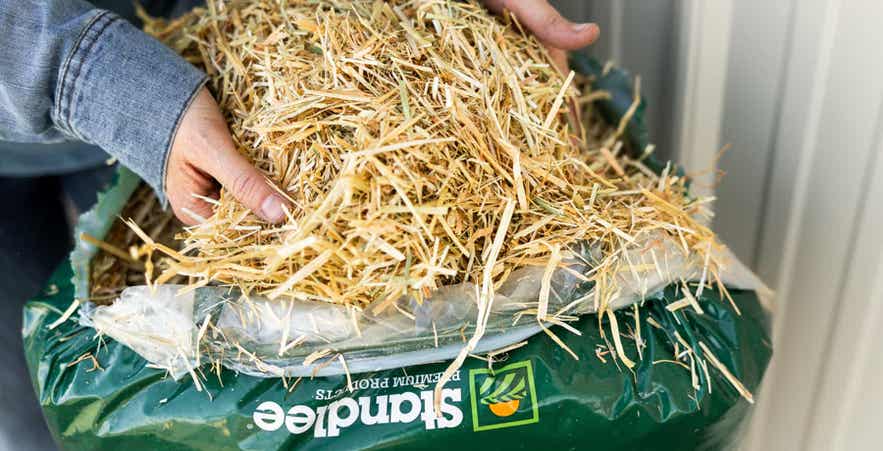
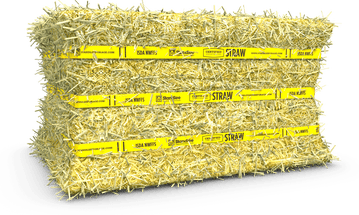
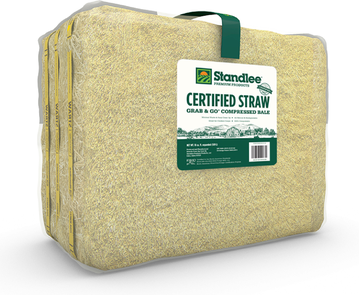
Straw bedding has long been trusted in poultry care because it offers an effective balance of absorbency, insulation, comfort, and composting ability.
Quality straw bedding helps create a drier coop environment by absorbing excess moisture while also providing cushioning throughout the coop floor and nesting areas. Straw also encourages natural scratching and foraging behaviors that chickens instinctively perform throughout the day.
One of the biggest advantages of straw bedding is its versatility. Straw can function effectively in nesting boxes, coop floors, and deep litter systems while still breaking down efficiently during composting.
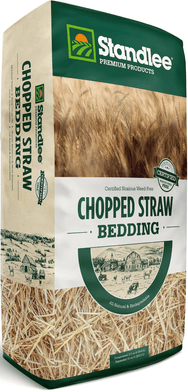
Standlee Certified Chopped Straw is processed into smaller, more manageable pieces that help create more consistent bedding coverage throughout the coop. The chopped format helps improve spreading, handling, and overall bedding uniformity while remaining comfortable for birds. It is also certified noxious weed free, helping reduce concerns about unwanted contaminants entering the coop or compost system.
For many flock owners, straw bedding offers an ideal combination of practicality, cleanliness, and overall coop support.
Why Moisture Control Is Critical in Poultry Bedding
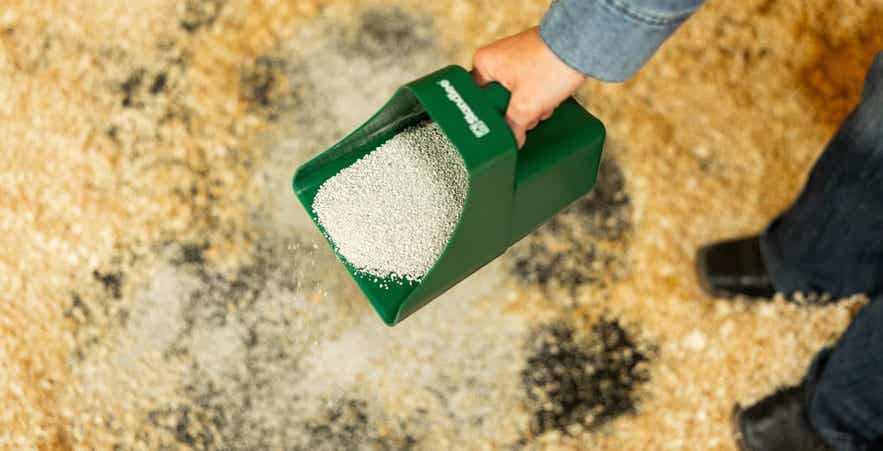
Moisture is one of the biggest challenges within any chicken coop environment.
When bedding becomes excessively wet, it creates ideal conditions for bacteria growth, odor accumulation, parasites, and unhealthy air quality. Damp bedding may also contribute to dirty eggs and increased respiratory irritation for birds.
Seasonal weather changes can further complicate moisture management. Spring humidity, winter condensation, and rainy conditions can all increase moisture accumulation within the coop.
Because of this, successful chicken litter management requires bedding materials that consistently support dryness and airflow while helping absorb excess moisture before conditions deteriorate.
Maintaining dry bedding is one of the most important aspects of keeping a cleaner and healthier coop environment.
The Importance of Ammonia Control in Chicken Coops
Ammonia management is another critical part of poultry bedding systems.
As manure breaks down, ammonia gas is naturally released into the coop. In poorly ventilated or damp conditions, ammonia can accumulate quickly and negatively impact flock health.
Chickens exposed to elevated ammonia levels may experience respiratory stress, eye irritation, and decreased comfort within the coop environment. Ammonia odor is also one of the clearest signs that bedding conditions need attention.
Proper ventilation helps reduce ammonia buildup, but bedding management plays an equally important role.
This is where zeolite-based products can significantly improve overall coop conditions.
Manage Odor and Moisture in Chicken Coops with Zeolite
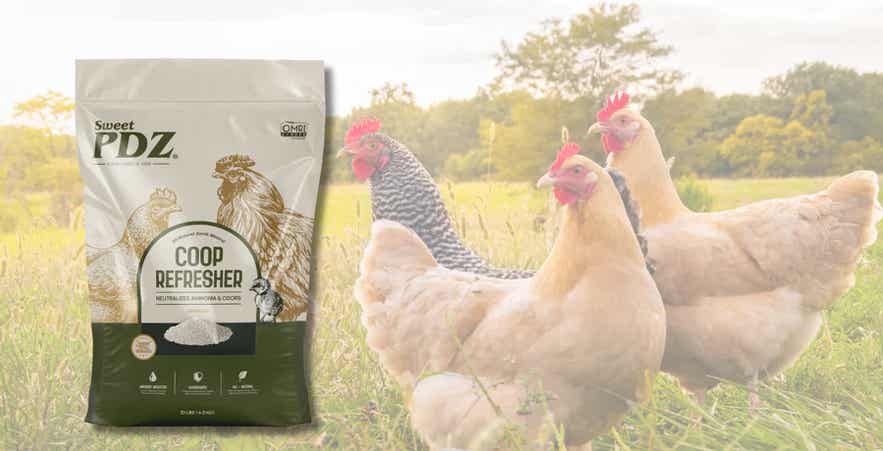
Zeolite is a naturally occurring mineral recognized for its ability to absorb moisture, odors, gases, and liquids. Its unique honeycomb-like structure allows it to trap ammonia particles and excess moisture within the coop environment.
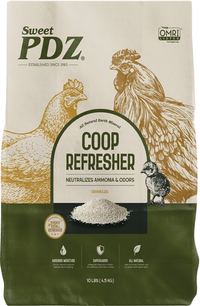
Products like Sweet PDZ® Coop Refresher utilize natural zeolite minerals to help neutralize ammonia odors and support drier coop conditions. Applying Sweet PDZ beneath or alongside bedding materials can help improve overall air quality while reducing excess moisture buildup.
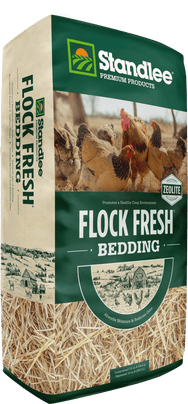
Managing ammonia is especially important in enclosed coop environments where ventilation and humidity levels fluctuate throughout the year. By helping absorb moisture and control odor, Coop Refresher works alongside bedding materials like Certified Chopped Straw and Flock Fresh Bedding to support healthier coop conditions overall.
Another advantage of zeolite is its ability to help preserve nitrogen within composted litter by reducing ammonia loss. As a result, spent bedding material may become an even more valuable fertilizer source for gardens and landscaping.
Because of its moisture-absorbing and odor-control properties, zeolite has become an increasingly important component of modern poultry bedding management.
How Flock Fresh Bedding Supports Backyard Chicken Health
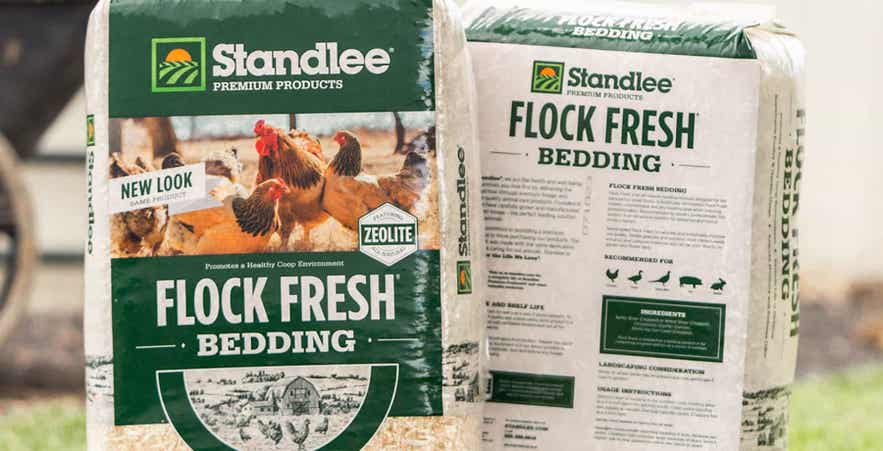
While chopped straw provides an excellent bedding foundation, combining additional ingredients can help create even better coop conditions.
Flock Fresh Bedding builds upon the benefits of chopped straw by incorporating both zeolite and chopped alfalfa into the bedding blend.
The inclusion of zeolite helps support moisture absorption and ammonia control, while chopped alfalfa encourages chickens to scratch and interact more actively with the bedding itself.
Alfalfa also provides additional enrichment value for chickens that naturally peck and forage throughout the day. As chickens turn and aerate the bedding naturally, it helps improve airflow and supports healthier composting activity within the coop. This turning action may also help reduce moisture concentration in specific areas.
By combining chopped straw, zeolite, and alfalfa together, Flock Fresh Bedding supports a cleaner, more comfortable coop environment while encouraging natural chicken behavior.
Deep Litter Method vs. Frequent Coop Cleanouts
A common question among backyard flock owners is whether to use a deep litter method or perform frequent full cleanouts.
The deep litter method involves layering fresh bedding over existing bedding while allowing gradual decomposition to occur over time. When properly managed, this method may provide insulation benefits and support natural composting activity within the coop. However, deep litter systems require careful moisture management and ventilation to prevent excessive ammonia buildup.
Frequent cleanouts provide more immediate control over bedding conditions and are commonly preferred by smaller backyard flock owners.
Both methods can work successfully depending on flock size, coop setup, climate, and management style. The most important factor is maintaining dry, low-odor bedding conditions regardless of the approach used.
How Bedding Supports Poultry Respiratory Health
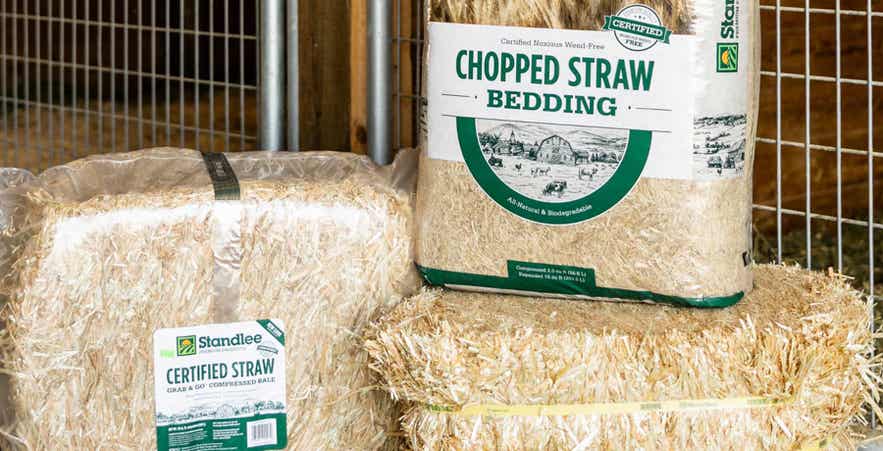
Respiratory health is one of the most important parts of poultry care, especially within enclosed coop environments.
Dusty, damp, or ammonia-heavy bedding can negatively impact air quality and increase respiratory stress in chickens. Maintaining clean, low-dust bedding alongside proper ventilation helps create a healthier environment overall.
Using chopped bedding materials, moisture-control products, and zeolite-based odor management can all help support improved air quality within the coop.
Because chickens spend significant time close to the coop floor and bedding surface, maintaining healthy bedding conditions remains essential to overall flock wellbeing.
The Connection Between Bedding and Egg Cleanliness
Bedding quality in chicken coops directly affects nesting box cleanliness and egg quality.
Wet or heavily soiled bedding may contribute to dirty eggs and increased bacterial exposure. Clean, dry bedding helps support cleaner nesting areas and more comfortable laying conditions for hens.
Because hens spend extended time in nesting areas, bedding comfort and consistency are important parts of maintaining a cleaner coop environment overall.
Building a Better Coop Environment Starts with Better Bedding
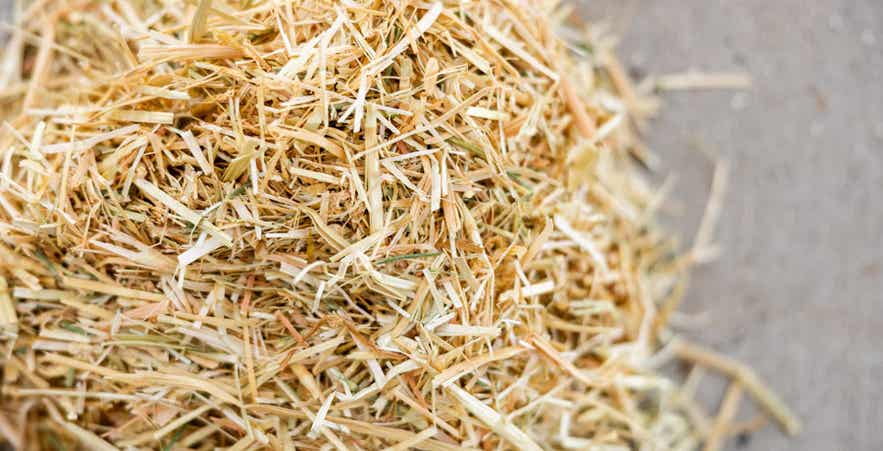
Many flock owners focus heavily on feed and coop construction while underestimating how important bedding management truly is. However, bedding influences nearly every aspect of the coop environment — from moisture and odor control to respiratory health and overall cleanliness.
Choosing the best chicken coop bedding means selecting materials that support flock comfort, ammonia management, natural behavior, and long-term coop hygiene.
At Standlee, products like Certified Chopped Straw, Flock Fresh Bedding, and Sweet PDZ® Coop Refresher are designed to help simplify bedding management while supporting healthier conditions for backyard chickens.
By prioritizing clean, dry bedding and consistent coop maintenance, flock owners can help create healthier environments for their birds year-round.
Final Takeaway: Proper Bedding Supports Poultry Health
Proper bedding management is one of the most important aspects of responsible backyard chicken care. Bedding directly impacts moisture control, odor management, respiratory health, nesting cleanliness, and overall flock comfort.
Whether using chopped straw alone or combining bedding with products like Sweet PDZ® Coop Refresher and Flock Fresh Bedding, maintaining dry and consistent coop conditions helps support healthier birds and easier management overall.
At Standlee, we believe proper poultry care starts from the ground up. Similar to the principles behind the Forage Foundation™, creating a clean and consistent coop environment helps support healthier birds, easier management, and improved long-term flock wellbeing.
Frequently Asked Questions
What is the best bedding for a chicken coop?
High-quality straw bedding is one of the best options for chicken coops because it supports moisture absorption, insulation, composting, and natural scratching behavior. Chopped straw and enhanced bedding blends with zeolite can further improve coop conditions.
What does Sweet PDZ® Coop Refresher do in a chicken coop?
Sweet PDZ® Coop Refresher utilizes natural zeolite minerals to help absorb moisture and neutralize ammonia odors within the coop. It can be used alongside bedding materials to help support cleaner air quality and healthier coop conditions.
How often should chicken coop bedding be changed?
Bedding replacement frequency depends on flock size, coop conditions, and management style. Bedding should remain dry and relatively odor-free. Wet or compacted bedding should be removed promptly to help maintain healthier coop conditions.
Why is ammonia control important in chicken coops?
Ammonia buildup from manure can negatively affect respiratory health and overall flock wellbeing. Proper bedding and ventilation help reduce ammonia levels and support healthier air quality inside the coop.
Is straw better than wood shavings for chickens?
Both bedding types can work, but straw offers strong absorbency, composting benefits, insulation, and enrichment for natural scratching behavior. Chopped straw products may also provide more consistent coverage and easier handling.
Why do chickens scratch through bedding?
Scratching and pecking are natural chicken behaviors tied to foraging and exploration. Bedding that supports these behaviors helps provide enrichment and encourages activity within the coop.
Additional Learning Resources
From the Standlee Barn Bulletin Blog
- Choosing the Right Bedding for Horses, Poultry & Livestock
- How to Raise Chickens: A Complete Backyard Chicken Care Guide
- Chick Brooder Setup: How to Raise Baby Chicks Safely
From the Standlee Beyond the Barn Podcast
Enjoying the Standlee blog?
Subscribe to Standlee emails and get our newest content (and coupons, offers, and other great stuff) sent to your inbox!
Subscribe Now