Beet Pulp for Horses: Nutrition, Benefits, and How to Feed It
Beet pulp is the fibrous feedstuff produced by the commercial processing of sugar beets.
What remains after this processing is a fiber-rich, highly digestible feed that is low in starch and sugar. That nutritional profile is why beet pulp consistently appears in feeding programs for a wide range of horses.
Horse owners use beet pulp to add weight without relying on grain, to stretch a forage supply, to support older horses that struggle to chew long-stem hay, and to provide safe energy for horses that do not tolerate high NSC.
Research backs each of these uses, and recent studies continue to clarify how beet pulp supports the equine hindgut microbiome.
Keep reading to learn what beet pulp is, what the science shows about its nutritional profile, which horses benefit most, and how to feed it safely as part of a forage-based program.
Key Takeaways
- Beet pulp is a low-sugar, high-fiber byproduct of sugar beet processing. The sugar is extracted during manufacturing, leaving a fiber-rich feed with low NSC.
- Its primary fiber is pectin, a soluble, highly fermentable fiber that fuels the hindgut differently from the cellulose and hemicellulose in grass hay.
- Beet pulp is not a complete feed. It works best as a complement to forage, not a standalone diet.
- Soaking is often recommended but is not required for all healthy horses, particularly when feeding shredded forms.
- Beet pulp suits a wide range of horses, including hard keepers, performance horses, senior horses, horses with metabolic conditions, and those with limited access to hay.
- Some beet pulp varieties have added molasses, while others are molasses-free.

Join Our Email List Today!
Be the first to get the latest news, promotions, updates and more from Standlee when you join our email list!
By signing up for email, you are agreeing to receive news, offers, and information from Standlee Premium Products, LLC®. You can also visit our Privacy Policy. Easy unsubscribe links are provided in every email.
What Is Beet Pulp?
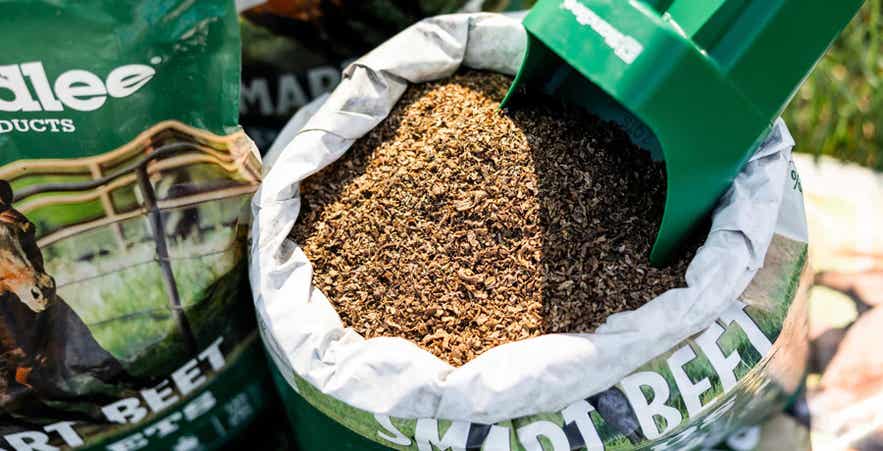
Beet pulp is the fibrous material that remains after sucrose has been extracted from sugar beets (Beta vulgaris) during commercial sugar production.
The extraction process removes the majority of the sugar, leaving a pulp that is rich in structural carbohydrates and very low in the simple sugars most horse owners try to minimize.
After extraction, the pulp is dried to approximately 10% moisture content, then formed into either shredded flakes or compressed pellets. Some products include molasses added back for palatability, while others are molasses-free.
Beet pulp provides digestible energy without a significant starch load, giving it a nutritional profile that few other feed ingredients can replicate. [1]
Why Beet Pulp Is a Valuable Fiber Source
Beet pulp’s value in equine diets comes down to the type of fiber it contains and how the horse’s digestive system handles it.
Pectin and Hindgut Fermentation
The dominant fiber fraction in beet pulp is pectin, a soluble structural carbohydrate that ferments rapidly and extensively in the cecum and large colon.
Pectin breaks down more completely during hindgut fermentation than the cellulose and hemicellulose that make up the bulk of grass hay fiber, yielding volatile fatty acids (VFAs) that serve as a direct energy source for the horse. [1]
Beet pulp is often called a “super-fiber” in equine nutrition. The horse extracts more usable energy per unit of fiber compared to other forage sources, without the blood glucose spike associated with starch or sugar.
Supporting the Hindgut Microbiome
A 2023 study investigated the effect of partially replacing dietary hay with sugar beet pulp on the fecal microbiota of healthy adult horses. Horses receiving beet pulp showed shifts in microbial taxa over time, including those involved in butyrate production. This short-chain fatty acid supports gut mucosal integrity and local immune function. [2]
The study’s authors described sugar beet pulp as a promising equine prebiotic candidate and noted its potential as a preventive management tool against colic and colitis. These findings suggest beet pulp may help shift the microbial environment toward populations associated with better hindgut health.
A controlled study in exercised horses found that replacing a portion of cereal grain with sugar beet pulp helped limit hindgut dysbiosis while sustaining the high energy supply horses needed for work. [3]
Horses on the beet pulp diet showed higher cecal VFA concentrations compared to horses fed a hay-only ration, consistent with robust fermentation from a highly digestible fiber source.
Calorie-Dense Without the Starch
Beet pulp is energy-dense relative to most grass hays, but the calories come from fermentation rather than starch digestion.
Research comparing grain, oil, and beet pulp as energy sources in exercised Thoroughbreds found that beet pulp maintained body weight and supported exercise performance on par with high-grain diets, despite delivering calories entirely through fermentable fiber. [4]
High starch intake can overwhelm the small intestinal capacity, causing undigested starch to spill into the hindgut, ferment rapidly, lower cecal pH, disrupt microbial populations, and increase the risk of colic and laminitis. Feeding beet pulp helps lower these risks.
Which Horses Benefit Most from Beet Pulp?
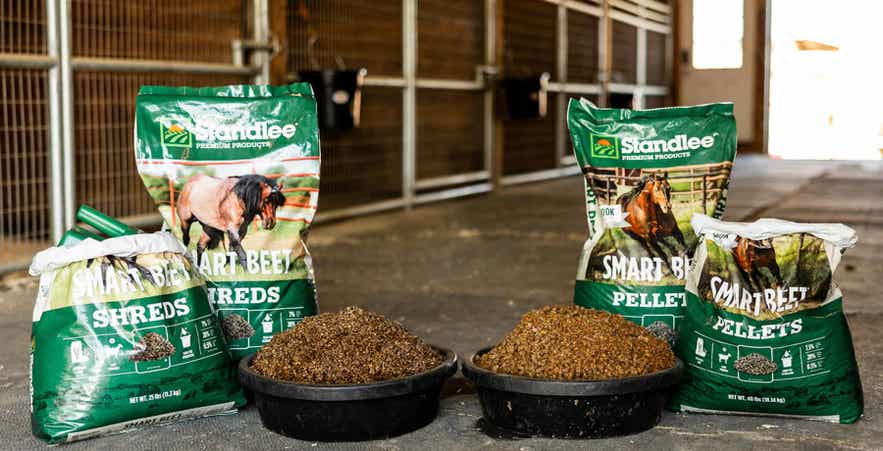
Beet pulp is broadly useful, but it offers the clearest advantages for specific groups of horses whose dietary needs align with its nutrition profile.
Senior Horses
Dental wear and dental disease are among the most common reasons older horses struggle to maintain weight and body condition.
As the ability to chew long-stem hay declines, a horse can still fail to extract adequate fiber and energy even when provided with free-choice, high-quality hay.
Soaked beet pulp is a well-established option for senior horses with compromised dentition. It forms a soft, palatable mash that is easy to consume and digest without the chewing demands of long-stem forage.
A clinical review of senior equine nutrition confirmed that in horses with severe or irreversible dental problems, heavily soaked sugar beet pulp is an appropriate alternative to long-stem hay, alongside soaked hay cubes and chopped forage. [5]
For more on nutritional programs for older horses, see Standlee’s Complete Guide to Feeding Senior Horses.
Hard Keepers and Performance Horses
For horses that struggle to hold weight or that have elevated energy demands from work, beet pulp adds digestible calories without increasing grain. More grain means more starch, which carries risks for horses already prone to digestive upset or metabolic stress.
Research on exercised Standardbred geldings found that replacing a portion of oats with molassed sugar beet pulp did not alter overall energy digestibility, supporting beet pulp’s role as a practical partial grain replacement in performance diets. [6]
Horses with Insulin Dysregulation or Metabolic Conditions
Horses with equine metabolic syndrome (EMS) or insulin dysregulation require close management of dietary NSC. Beet pulp’s low starch and sugar content make it a more appropriate energy source than cereal grains or high-NSC hay for many of these horses.
However, beet pulp that contains molasses may not be appropriate. Research comparing glucose and insulin responses to different fiber sources found that molassed sugar beet pulp produced postprandial insulin responses comparable to oats. [7]
These results underscore why molasses-free varieties, or products containing only low-sugar CSB, are the right choice for horses with carbohydrate sensitivity when part of a carefully managed feeding plan, developed in consultation with a veterinarian or equine nutritionist.
For more on dietary management of EMS, see Standlee’s Guide to Equine Metabolic Syndrome.
Horses with Limited Hay Access
When hay supply runs short, forage quality is inconsistent, or a horse cannot consume enough long-stem forage to meet daily fiber requirements, beet pulp can help extend the ration. It is compact, shelf-stable, and easy to feed.
It cannot, however, fully replace hay for most horses. Forage remains the foundation of equine nutrition, providing the chewing time, saliva production, and digestive motility benefits that beet pulp alone does not supply.
For strategies to manage a limited forage supply, see How to Extend Your Hay Supply When Hay or Pasture Is Limited.
Soaked vs. Unsoaked Beet Pulp
Whether horse owners must soak beet pulp before feeding is one of the most persistent questions in equine nutrition. Research suggests it depends on the horse, not a universal rule.
Addressing the Choke and Bloat Concern
The concern that dry beet pulp will expand dangerously in the esophagus or stomach is long-standing but largely overstated.
Research examining the water-holding capacity of common equine feeds found that beet pulp, particularly pelleted forms, has the highest water-holding capacity of feeds tested, which the authors identified as a risk factor for esophageal obstruction in horses prone to bolting feed or with limited water access. [8]
But for healthy horses with good dentition, free access to water, and normal eating speed, dry shredded beet pulp is generally manageable.
Pelleted beet pulp expands more than shredded beet pulp upon contact with water, warranting more caution in horses that eat quickly.
When Soaking Makes Sense
Although not necessary for all healthy horses, soaking beet pulp offers many advantages. Soaking is the right call in several situations:
- Senior horses or those with dental disease: A soaked mash is easier to chew, reduces discomfort, and improves nutrient extraction.
- Horses with a history of choke: Any horse prone to esophageal obstruction benefits from wetter, softer feed.
- Hot weather: Soaked beet pulp helps meet daily water intake during summer, when increased heat increases hydration needs.
- Fast eaters: Horses that bolt feed are at elevated risk of choke, regardless of what they’re eating. Soaking slows consumption.
Standlee recommends soaking Smart Beet Pellets and Shreds in a 2:1 water-to-beet-pulp ratio for at least 15 minutes, or until completely softened. Discard any uneaten soaked beet pulp promptly, particularly in warm weather when fermentation and mold can develop within hours.
For more on soaking protocols and their effect on sugar content, see Standlee’s nutritional paper about soaking beet pulp to reduce sugar content.
How to Feed Beet Pulp to Horses
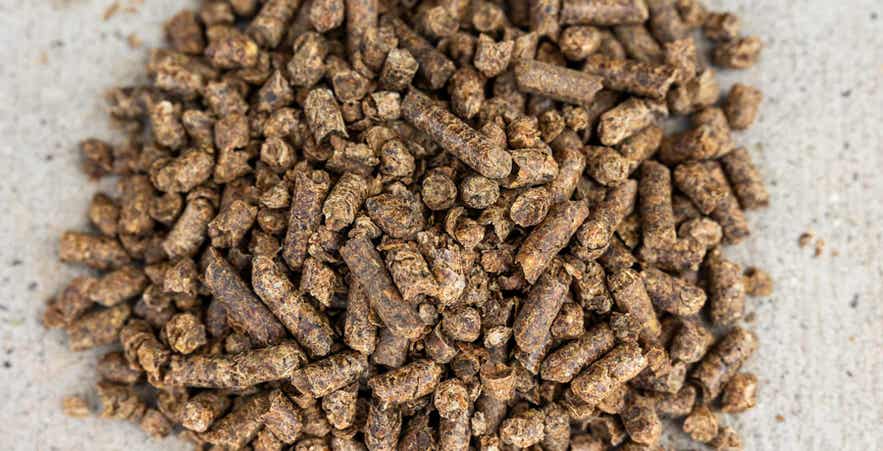
Feeding beet pulp correctly should focus on fitting it sensibly into the total diet.
How Much to Feed
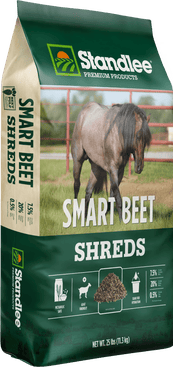
Standlee Smart Beet Pellets and Shreds can be fed to mature horses at 0.05% to 0.2% of body weight per day, adjusted for size, workload, and total diet composition.
For a 1,000-lb horse, that translates to approximately 0.5 to 2 lbs of dry beet pulp per day. When beet pulp is used to extend a forage ration during periods of hay shortage, horse owners may increase that amount under the guidance of their veterinarian or nutritionist.
Regardless of how much beet pulp is included in the diet, horses still need to meet their forage requirements of 1.5% to 2% of body weight in dry matter per day. Beet pulp can count toward that total, but it should not replace all long-stem forage for horses that can still consume hay.
Introducing Beet Pulp
Introduce beet pulp gradually over 7 to 10 days.
A significant increase in fermentable fiber requires time for the hindgut microbial population to adapt. Rushing the transition can cause loose manure or mild digestive upset, particularly in horses coming off lower-fiber diets.
Understanding Beet Pulp for Horses
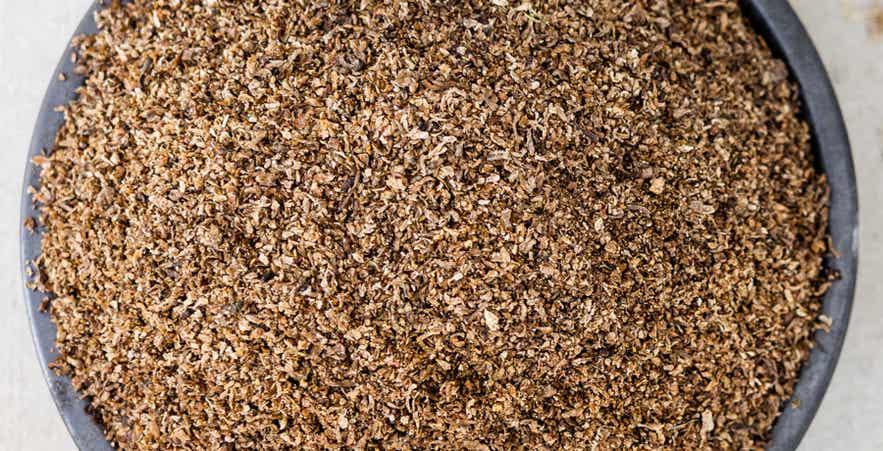
Beet pulp offers horse owners a feed that provides digestible energy from fermentable fiber, with starch and sugar kept low.
That combination explains its popularity across horse disciplines, age groups, and health conditions. Research supports its role in hindgut health, calorie provision for performance and hard-keeping horses, and dietary management of senior and metabolically sensitive horses.
Used well, it is safe, versatile, and effective. It works as part of a forage-based feeding program that first covers the horse’s core nutritional foundation. When that foundation is solid, beet pulp is a practical, research-backed way to fill in the gaps.
To build a complete feeding plan for your horse, use Standlee’s Forage Finder to identify the right forage products for your horse’s age, workload, and health status.
Frequently Asked Questions
Is beet pulp safe for horses with Cushing’s disease (PPID)?
In most cases, yes. Horses with PPID often have concurrent insulin dysregulation, which calls for close NSC management. Unmolassed beet pulp has a low NSC profile. It is generally appropriate for this population, but the full diet should be reviewed with a veterinarian.
Can horses eat beet pulp every day?
Yes. Beet pulp is safe to feed daily within appropriate quantities. It functions as a consistent dietary fiber and energy source.
Does beet pulp need to be soaked before feeding?
Soaking is strongly recommended for senior horses, horses with dental issues, and horses prone to choke. Healthy horses with good dentition, normal eating habits, and free access to water can generally manage dry shredded beet pulp.
How long should I soak beet pulp?
Standlee recommends soaking Smart Beet products in a 2:1 water-to-beet-pulp ratio for at least 15 minutes, or until completely softened. Full rehydration can take up to 2 hours, depending on water temperature and product form. Always feed fresh and discard leftovers promptly.
Is beet pulp a good replacement for hay?
Not as a complete replacement for most horses. Beet pulp is a strong forage complement and partial hay replacer, particularly for horses with dental limitations. However, it does not provide the same health benefits as forage in horses that are still capable of consuming conventional hay.
What is the difference between beet pulp shreds and pellets?
Both are dried sugar beet pulp. Shreds are the loose fibrous form and absorb water more quickly. Pellets are compressed, making them easier to measure and store, but slower to rehydrate.
Can beet pulp help a horse gain weight?
Yes. Beet pulp is more energy-dense than most grass hays and provides additional digestible calories through fermentable fiber rather than starch. For underweight horses or hard keepers, it is a practical way to increase caloric intake without a heavy grain load.
How does beet pulp affect calcium-to-phosphorus balance?
Beet pulp is high in calcium and very low in phosphorus. When fed alongside other calcium-rich ingredients, such as alfalfa, or phosphorus-heavy feeds like cereal grains, the overall Ca:P ratio in the diet may need adjustment.
Is beet pulp high in sugar?
No. The name is misleading. Sucrose is removed during processing, leaving a product typically below 10% NSC. Molasses-added varieties will test higher; molasses-free products are the lower-NSC option.
Can soaked beet pulp go bad?
Yes. Dry beet pulp stores well in cool, dry conditions with a long shelf life. Soaked beet pulp is perishable. Always feed it fresh and discard anything left over, especially in warm weather, where it can mold and ferment within hours.
References
- Wróblewska P, et al. Dried Sugar Beet Pulp as a Source of Soluble Dietary Fibre in Equine Nutrition: A Review. Anim Nutr Feed Technol. 2021.
- Ford T, et al. Effect of Sugar Beet Pulp on the Composition and Predicted Function of Equine Fecal Microbiota. Biology. 2023.
- Grimm P, et al. Partial substitution of cereals with sugar beet pulp and hindgut health in horses. J Equine Vet Sci. 2021.
- Crandell KG, et al. A comparison of grain, oil and beet pulp as energy sources for the exercised horse. Equine Vet J Suppl. 1999.
- Jarvis NG. Nutrition of the aged horse. Vet Clin North Am Equine Pract. 2009.
- Palmgren Karlsson C, et al. Effect of molassed sugar beet pulp on nutrient utilisation and metabolic parameters during exercise. Equine Vet J. 2002.
- Hansen TL, et al. Postprandial Blood Glucose and Insulin Responses of Horses to Feeds Differing in Soluble Fiber Concentration. J Equine Vet Sci. 2020.
- Humer E, et al. Characterizing the Moisture Expansion of Common Single and Mixed Equine Feeds by Their Water-Holding Capacity and Nutrient Composition. J Equine Vet Sci. 2018.
Additional Learning Resources
From the Standlee Barn Bulletin Blog
- Feeding Senior Horses: Complete Guide to Senior Horse Nutrition
- Equine Metabolic Syndrome in Horses: Symptoms, Risks, Diet & Management
- How to Extend Your Hay Supply When Hay or Pasture Is Limited
From the Standlee Beyond the Barn Podcast
- Ep. 048: Beet Pulp – What Is It and Why Do Horses Need It?
- Ep. 073: Navigating the Diet Struggle: Feeding Your Carb Sensitive Horse
- Ep. 029: How to Feed a Senior Horse and When They Need to Be Fed Differently
From the Standlee Nutritional Papers
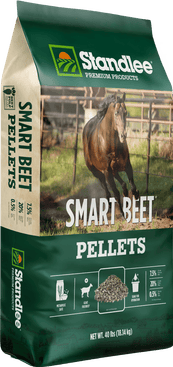
Products featured in this post
Enjoying the Standlee blog?
Subscribe to Standlee emails and get our newest content (and coupons, offers, and other great stuff) sent to your inbox!
Subscribe Now