What Do Goats Eat? Complete Goat Nutrition & Feeding Guide
All goats need proper nutrition and a balanced diet to stay healthy. Whether you care for a large herd of dairy goats or a few beloved pets, understanding the fundamental principles of goat nutrition is essential for managing your herd.
Like cows and sheep, goats are ruminants that need large volumes of fibrous roughage to maintain normal digestive function. But that doesn't mean they eat the same diet. Goats have unique feeding preferences that significantly affect their nutritional requirements.
Keep reading to find out how to formulate the best forage-based diet for your goats based on their individual needs.
Key Takeaways
- Goats are browsers whose diet should consist primarily of forage.
- Forage type and quality are the most important considerations when feeding goats.
- Fiber is essential for rumen function and digestive health in goats.
- Concentrates and supplements should be fed strategically, not routinely.
- Feed forage-based products formulated to support goat health.
What Do Goats Eat?
Goats should eat mostly forage. That includes browse, pasture, baled hay, chopped forage, or forage pellets, depending on their individual needs.
Not all goats need concentrates or supplements. But some goats, especially growing kids, pregnant does, and lactating does, may need more energy or protein than forage alone can provide. [1]
Most goats consume roughly 2% to 4% of their body weight in dry matter each day, though actual intake varies with forage quality, body size, climate, production level, and age.
Feeding Ruminants
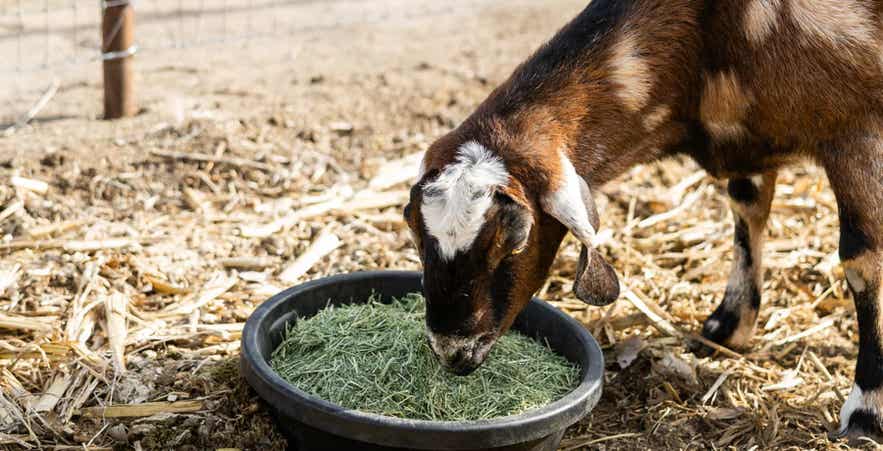
Goats are ruminants. They have a specialized four-chambered stomach, called the rumen, housing billions of microbes that ferment plant-based food. This process helps break down tough plant fibers and convert feed into volatile fatty acids, the main energy source for goats. [2]
Ruminants also regurgitate their food as semi-digested "cud" to chew it again and soften it.
Feeding programs should be built around supporting your goat's rumen health. Without a healthy rumen and microbial population, goats cannot extract the energy and nutrients they need from their diet.
Goat Nutrition Basics
According to Deborah Niemann, the author of Raising Goats Naturally, "Everything about your goat's health is centered on good nutrition."
To keep your goat healthy, their diet must provide adequate essential nutrients. All goats have basic nutritional needs for fiber, energy, protein, minerals, vitamins, and water.
Fiber
Dietary fiber, or roughage, is not just filler. It supports rumen health, stimulates saliva production, and promotes normal digestive function in goats. [3]
Research evaluating fiber content in goat diets focuses on physically effective fiber, which combines chemical fiber content (NDF) with physical particle size. Long-stem forages are the primary sources of physically effective fiber in goat diets.
This type of dietary fiber requires chewing, which stimulates saliva production and helps maintain rumen health. Studies in goats show that dietary physically effective fiber can alter rumen bacterial communities and rumen function. [4]
Energy
Energy supports daily maintenance, movement, growth, pregnancy, and milk production. Dietary energy is measured in calories. The amount of calories your goat needs depends on their age, use, and lifestyle.
Goats fed diets that don't meet their energy requirements may lose body condition, grow slowly, or underperform reproductively. Goats fed more energy than they need, especially from concentrates, are more likely to develop digestive problems or become over conditioned. [2]
Protein
Protein provides the amino acids needed for growth, muscle repair, tissue maintenance, fetal development, and milk synthesis. Growing kids and breeding goats usually need higher-quality protein support than other goats at maintenance. [1]
Vitamins and Minerals
Minerals influence bone development, immune function, reproduction, and milk production. Calcium, phosphorus, sodium, potassium, magnesium, copper, zinc, and selenium are all important minerals in your goat's diet.
Vitamins also play essential roles in metabolism and health. In goat feeding programs, vitamin status often depends on forage quality and access to fresh forage.
Recent research in dairy goats suggests dietary mineral requirements shift significantly during early lactation. Other factors that can contribute to vitamin and mineral imbalances include local soil, forage, and water conditions. [5]
Water
Water is an important but often overlooked component in your goat's diet. Proper hydration is essential for digestion, milk output, and body temperature regulation.
Heat, salt intake, pregnancy, lactation, and dry feed intake can all influence hydration needs. To prevent dehydration, goats should always have access to clean, fresh water.
Forage for Goats
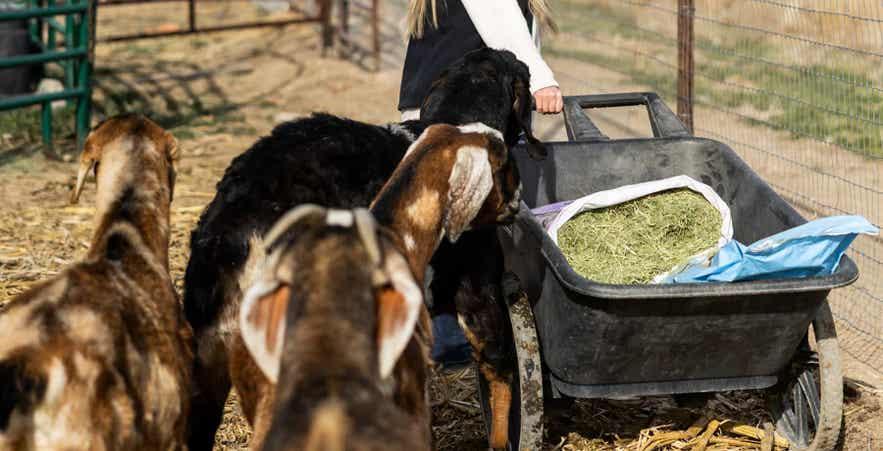
Forage should be the foundation of every goat diet. A forage-first approach also aligns with the natural diet goats evolved to thrive on. Forage sources for goats include browse, pasture, hay, and alternative forage forms such as pellets and cubes.
Browse and Pasture
Goats are browsers, not grazers. While they may sometimes graze head down on pasture, goats typically prefer reaching for leafy weeds, shrubs, twigs, vines, and woody plants. This preference sets goats apart from cows and sheep.
While browsing supports natural feeding behavior, most goats can't get adequate nutrition from browse alone. Browse quality changes with season, maturity, drought, stocking pressure, and plant species.
Feeding Goats Hay
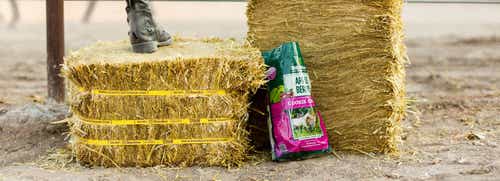
Hay and hay products help create more consistency when pasture and browse are unavailable or unreliable. The best feeding program for most goats starts with a foundation of good-quality hay.
Look for hay that is:
- Clean and free of mold
- Appropriate in maturity and leafiness
- Consistent from bale to bale
- Not excessively dusty
Research on forage quality and particle size in goats shows that physical characteristics of hay can influence intake behavior, sorting, and rumen function. However, appearance alone cannot reveal nutrient content. [6]
Hay analysis is the best way to determine the nutritional value of the hay you feed your goats. Consider sourcing your hay from a supplier that provides nutritional information to ensure your forage is appropriate for your goat's needs.
The best type of hay for your goats depends on their age, life stage, body condition, and other feeds in the diet. Common types of hay fed to goats include timothy, alfalfa, and orchard grass hay.
Alfalfa vs. Grass Hay for Goats
Alfalfa is a legume hay that is typically higher in protein, calcium, and overall nutrient density than many grass hays.
Goats that may benefit from alfalfa include:
- Growing kids
- Does in late gestation
- Lactating dairy goats
- Underweight goats
Because nutrient demands rise sharply during growth, pregnancy, and lactation, a nutrient-dense forage can help meet requirements without forcing the ration to rely too heavily on grain. [5]
In general, most goats do well on grass hays. High-quality grass hay provides the fiber needed for rumen health and can be fed free choice without overfeeding certain nutrients.
"Quality grass hay is good for all goats, for at least part of their diets," Niemann shared.
Feeding both alfalfa and grass hay can help provide balanced nutrition in your goat's diet. Some suppliers offer blended forages, such as alfalfa-timothy blends, that are suitable for goats.
Forage Forms and Alternatives
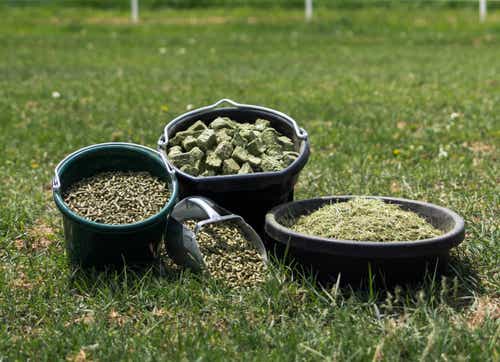
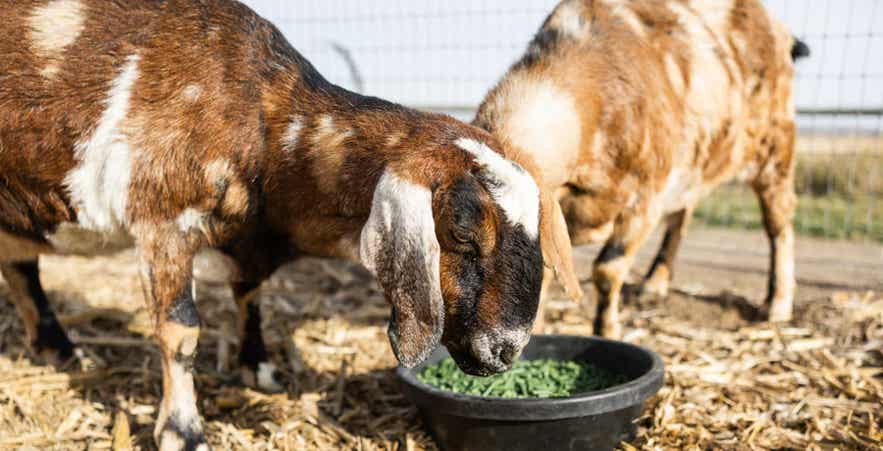
Traditional hay bales aren't the only way to feed forage to goats. Depending on your feeding program, goats may also do well on chopped forage or forage pellets.
These alternative forage forms can be useful when long-stem hay is difficult to store, when owners want more consistent quality, or when waste needs to be reduced. They also typically feature a guaranteed analysis with nutritional information, making it easier for goat owners to formulate a balanced diet.
Forage pellets are a convenient source of concentrated nutrition, but their smaller particle size means they have less physically effective fiber than chopped hay. Goats still need some long-stem forage in their diet to support rumen health.
Feeding both chopped forage and forage pellets ensures goats get adequate physically effective fiber while delivering consistent nutrition.
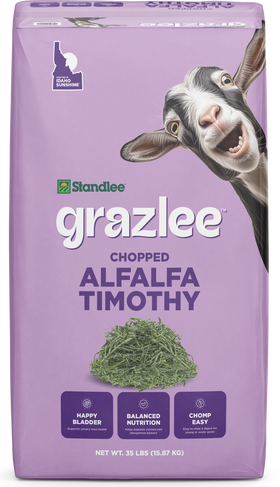
Standlee's Grazlee Chopped Alfalfa Timothy for goats offers balanced nutrition by combining protein-rich alfalfa with the digestible fiber of timothy hay to support rumen function.
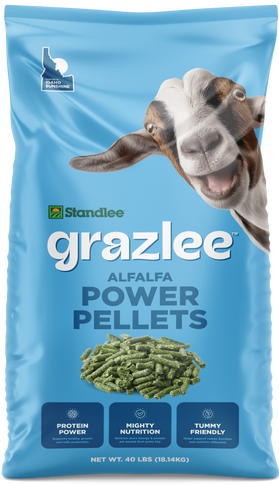
Standlee's Grazlee Alfalfa Power Pellets for goats provide high-quality protein from premium alfalfa in an easy-to-feed format that reduces dust, waste, and storage challenges.

Concentrate Feeds and Supplements
Forage should be the foundation of your goat's diet. However, some goats may benefit from additional concentrates or supplements. And while many goat owners feed treats, it's important to ensure you choose treats that support your goat's overall health and nutrition.
Do Goats Need Grain or Concentrates?
Niemann stresses that not all goats need grain. "As ruminants, goats do best without any type of grain, and goat feed is primarily grain."
Concentrates can be helpful when forage alone does not meet nutrient requirements, such as in some lactating dairy goats, rapidly growing kids, or underweight animals needing additional energy sources. But grain should be fed strategically, in measured amounts, and introduced gradually.
Too much starch and sugar can disrupt rumen fermentation and lead to nutritional disorders. Published research supports keeping forage as the base of the ration and using concentrates to fill specific nutritional gaps, rather than using them as the foundation of the diet. [3]
Feeding grain can also increase the risk of urinary tract problems in goats. "Bucks and wethers should not be fed any type of grain or goat feed routinely because it can wind up causing urinary stones," Niemann added.
Goat Supplements
A balanced diet for goats provides adequate minerals, not just salt. Providing free access to a goat mineral block can help ensure your goats consume enough salt and balanced amounts of other trace minerals.
Feed and forage products formulated with ammonium chloride, such as Standlee's Grazlee Chopped Alfalfa Timothy, can help support urinary tract health in goats. Ammonium chloride acidifies urine, helping break down or prevent crystals that can cause blockages.
Goat Treats
For many owners, treats are useful as a training aid, enrichment tool, or convenient reward. But they should never make up more than a small portion of the daily ration.
The best treats for goats are typically forage-based options that support natural chewing behavior without adding excessive sugar or starch. That makes them a better fit for a forage-first feeding program than highly processed, high-sugar treats.
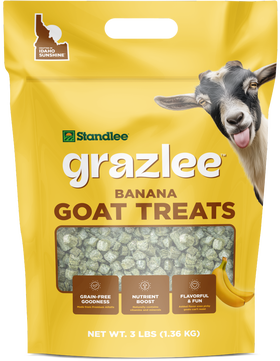
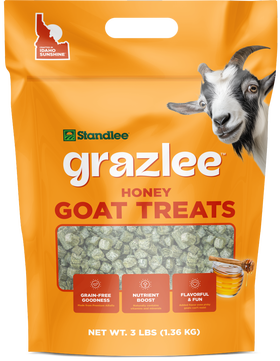
Standlee's Grazlee Banana Goat Treats and Grazlee Honey Goat Treats are small, bite-sized cubes made from compressed alfalfa hay with added natural flavor and no unnecessary fillers or additives.
How to Feed Goats
A good goat feeding program starts with the basics. Goats need a forage-first diet that supports rumen health and provides adequate fiber, energy, protein, vitamins, minerals, and water.
The most effective way to improve goat nutrition is to focus on forage. Evaluate hay quality, feed an appropriate type of forage, and add concentrates only when needed. When the diet fits the goat, health and performance usually improve.
"If you get the nutrition right, everything else falls into place," Niemann concluded.
If you want help choosing the right forage for your goat, explore Standlee's Forage Finder, Feed Calculator, and store locator to build a forage-first feeding plan for your herd.
Frequently Asked Questions
What is the best thing to feed goats?
High-quality forage, fresh water, and a balanced goat mineral are the foundation of the daily diet.
Can goats live on hay alone?
Some maintenance goats can do well on quality hay, minerals, and water, but growing kids, pregnant does, and lactating does often need a more carefully balanced ration.
Is alfalfa too rich for goats?
Not all goats need alfalfa, but this legume hay can be an excellent forage for goats with higher protein and calcium needs.
Do all goats need grain?
No. Most goats do not need grain if forage quality and dietary energy are sufficient.
How much hay should a goat eat per day?
Many goats consume about 2% to 4% of body weight in dry matter daily, with forage making up most of that intake.
Are forage pellets as good as hay for goats?
They can be a valuable addition to a forage program, especially for convenience and consistency, but they are not a full substitute for long-stem forage.
What minerals do goats need most?
Calcium, phosphorus, sodium, potassium, magnesium, copper, zinc, and selenium are important minerals in goat diets.
What should you not feed goats?
Avoid moldy hay, excessive grain, and abrupt ration changes. The safest strategy is a forage-first program that is gradually and thoughtfully adjusted.
References
- Teixeira IA, et al. Review: Update of nutritional requirements of goats for growth and pregnancy in hot environments. Animal. 2024.
- Mahgoub O, et al. Nutrient utilization and requirements in sheep and goats raised under different systems and fed low nutritional novel feeds for meat production. Animals (Basel). 2025.
- Mamuad LL, et al. Recent insight and future techniques to enhance rumen fermentation in dairy goats. Asian-Australas J Anim Sci. 2019.
- Xue B, et al. Changes in rumen bacterial community induced by the dietary physically effective neutral detergent fiber levels in goat diets. Front Microbiol. 2022.
- Mozelli Filho EJL, et al. Body content and mineral requirements of dairy goats in early lactation. Small Ruminant Research. 2024.
- Lopes DS, et al. Effects of forage quality and particle size on feed intake, sorting behavior, and ruminal kinetics in goats. Animals (Basel). 2023.
Additional Learning Resources
From the Standlee Barn Bulletin Blog
- What to Consider When Picking Hay to Feed Dairy Goats
- Feeding Goats in Winter: Smart Forage & Nutrition Strategies
- Nutritional Disorders in Goats: Signs & Prevention
- Understanding Goat Dehydration: Causes, Symptoms, & Solutions
- Grazlee: Forage-Based Nutrition for Goats & Livestock
From the Standlee Beyond the Barn Podcast
- Ep. 036: How to Feed Goats with Extension Educator, Carmen Willmore
- Ep. 076: Raising Sheep and Goats – How They're the Same and How They're Different
From the Standlee Nutrition Papers
Products featured in this post
Enjoying the Standlee blog?
Subscribe to Standlee emails and get our newest content (and coupons, offers, and other great stuff) sent to your inbox!
Subscribe Now