Table of Contents
Table of Contents
Weight Management in Horses
All Available Resources On This Topic
Standlee has created and actively maintains a wealth of resources about weight management for horses. Be sure to find all these resources on this page or simply click the button below to see them.
VIEW ALL RESOURCESThe Impact of Weight Management on Horse Health
Weight management in horses is a cornerstone of equine care, influencing everything from metabolic health to athletic performance. Horses that are overweight are at an increased risk of laminitis, insulin dysregulation, and joint stress, while underweight horses may fatigue more quickly and have poor immune function. Achieving and maintaining a healthy body weight involves several factors, including nutrition, understanding energy balance, and consistent monitoring.
A horse's body weight is a reflection of their overall health status. If a horse experiences sudden changes or unusual fluctuations in weight or appearance, or if dietary changes do not result in the desired outcome, a veterinary exam is always called for to rule out underlying medical conditions.
Understanding Energy Balance in Horses
Body weight in horses reflects the balance between calorie intake and energy output. When a horse consumes more calories than it burns, the excess energy is stored as fat. This is a state known as a positive energy balance, and it results in weight gain. Conversely, if calorie expenditure exceeds intake, body fat and sometimes muscle are mobilized to supply energy. This is a state known as a negative energy balance and results in weight loss.
In addition to dietary energy intake and activity level, other factors such as genetics, hormonal status, and environmental conditions also influence a horse's metabolism and ability to maintain body weight. While numerical weight can vary widely across breeds and body types, an ideal weight is best determined by assessing a horse's body condition and muscling rather than by scale or weight tape readings alone. For example, an Arabian and a Quarter Horse of similar height may have markedly different ideal weights due to breed-specific body composition.
An effective approach to weight management in horses begins with evaluating body condition rather than relying solely on the scale.
Related Reading: Counting Calories – Getting the Energy Content Right in Horse Diets
How to Assess Your Horse's Body Condition and Body Weight
The Henneke Body Condition Scoring (BCS) system is the gold standard for assessing fat coverage in horses. It uses a 1–9 scale, where 1 represents a severely emaciated horse and 9 represents extreme obesity. Most healthy horses will fall between a BCS of 4 (moderately thin) and 6 (moderately fleshy). Equine athletes competing in speed or endurance events may perform better at the lower end of this healthy range, while pleasure and performance horses may perform better at the higher end. A BCS less than 4 indicates the need for weight gain, while a BCS above 7 is considered obese and carries a greater risk for developing metabolic disorders.
Related Reading: Managing Body Condition with Forage
To complement a BCS assessment, body weight can be estimated using a commercially available weight tape or this formula: Body weight (lb.) = (Heart girth² × Body length) ÷ 330.
Taking regular assessments of BCS and body weight (ideally, every 4–6 weeks) is an effective strategy that can help detect weight changes before they impact health or performance. Keeping track of these measurements can be as simple as jotting down the numbers on the barn calendar or keeping a dedicated notebook for recording purposes.
If it is difficult to objectively assess your horse's body condition or weight, work with a trusted professional or your veterinarian to establish an accurate baseline.
Feeding Strategies for Weight Management in Horses
Nutrition plays a critical role in weight management. By aligning feeding strategies with individual needs, weight management in horses becomes a proactive tool to support metabolic health, digestive function, and their overall well-being.
Feeding Strategies for Overweight Horses
For overweight horses, the goal is to reduce the energy density of the diet without compromising essential nutrient needs or digestive health.
- Forage should remain the foundation of the diet – and even overweight horses need supplementation with either a ration balancer or vitamin/mineral supplement to fill in the nutritional gaps of a forage-only diet.
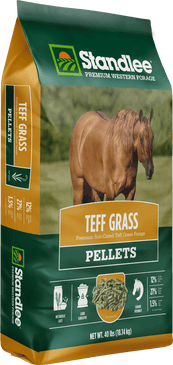
- Selecting lower to moderate quality forage with non-structural carbohydrate (NSC) content of 12% or less is recommended for overweight horses - overweight horses are also more likely to have metabolic disease. Standlee Teff Grass Pellets are a low-carb forage option (NSC guaranteed at 9%) with a moderate calorie content, making them a great option to utilize in rations for overweight and/or carb-sensitive horses. They can be used as meal base to combine with a ration balancer or supplements, and they can serve as a partial, low-carb and lower-calorie forage replacement if needed.
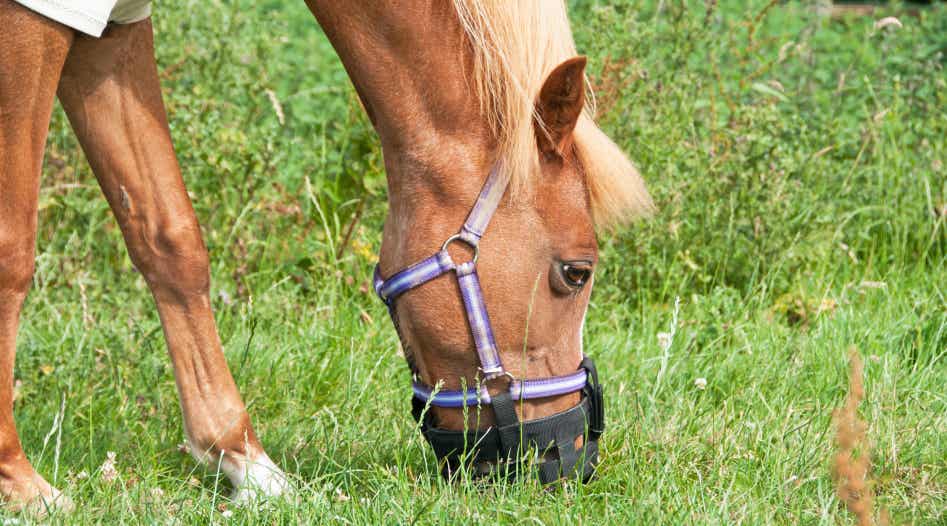
- Using slow feeders or grazing muzzles extends forage mealtime while limiting overconsumption – this is especially true when hay must be restricted to induce weight loss. Going from free-choice hay access to 1.5–2% body weight is a good place to start.
Related Reading: Teff Grass Pellets to the Rescue
Feeding Strategies for Underweight Horses
For underweight horses, increasing the calorie density of the entire ration is the goal. An effective and safe approach is to start with prioritizing calorie-dense forage.
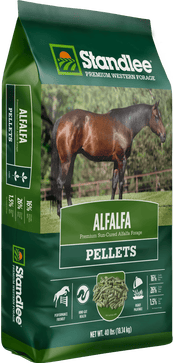
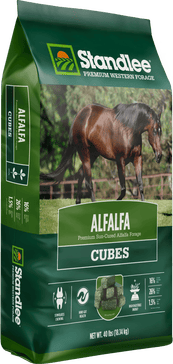
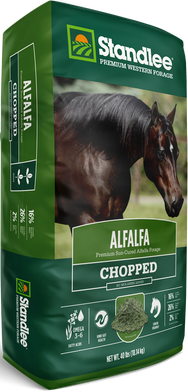
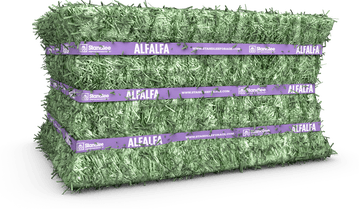
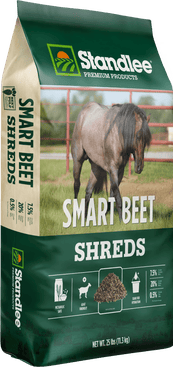
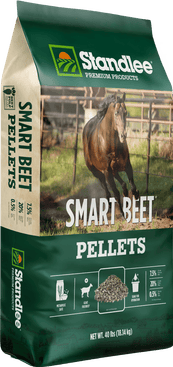
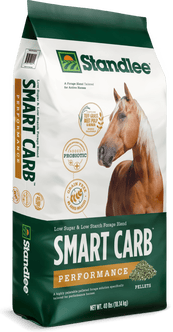
- Replace lower quality forages with high-quality, calorie-dense forage and forage products – some examples include alfalfa and beet pulp. Standlee Alfalfa (pellets, cubes, chopped, and bales) and Standlee Beet Pulp (pellets and shreds) are calorie-dense and can fully or partially replace grass forages to promote weight gain. Standlee Smart Carb Performance is a low-carb, blended forage product that contains calorie-dense alfalfa, beet pulp, rice bran, and flaxseed – an effective and convenient way to supplement lower calorie forages.
- Pair calorie-dense forage with a fat-added, fortified concentrate feed – look for ones that offer essential nutrients along with added calories from fat and fiber. When feeding concentrates for weight gain, a good rule of thumb is to keep meal size to 0.5% body weight or less to maintain digestive health. Consider dividing the daily ration into three or more meals per day to maximize digestive efficiency.
Related Reading: 3 Ways to Safely Prep Your Underweight Horse for Winter
Exercise and Energy Expenditure in Horses
Exercise influences not only energy expenditure but also metabolic health. Regular physical activity improves insulin sensitivity and builds muscle, both of which are key factors for weight management in horses that are overweight. Incorporating regular exercise (assuming the horse is sound), even if it is simply hand-walking, turnout, or light riding, can help accelerate weight loss safely. Conversely, underweight horses may benefit from a temporary reduction in workload, followed by a gradual conditioning program to rebuild lean muscle mass without creating excessive calorie deficits.
Monitoring and Adjusting the Weight Management Plan
Effective weight management requires regular evaluations of your horse's BCS and weight, paired with appropriate dietary adjustments. Overall energy balance can fluctuate due to changes in environment, such as pasture quality and weather changes, workload, and metabolism. Staying on top of these changes by making regular adjustments as needed is key to helping a horse maintain a healthy weight.
Supporting Long-Term Weight Management in Horses
Managing weight in horses requires understanding the relationship between nutrition, exercise, metabolism, and environment. Using proven tools like body condition scoring, body weight assessment, and controlled feeding allows owners to make informed adjustments that support long-term health. Whether helping a horse shed excess pounds or safely add condition – consistency, observation, and data-driven decisions are the foundation of successful weight management.
References
1. Henneke, D. R., Potter, G. D., Kreider, J. L., & Yeates, B. F. (1983). Relationship between condition score, physical measurements and body fat percentage in mares. Equine Veterinary Journal, 15(4), 371–372.
2. Geor, R. J., & Harris, P. A. (2009). Dietary management of obesity and insulin resistance: countering risk for laminitis. Veterinary Clinics of North America: Equine Practice, 25(1), 51 – 65.